The United States Senate narrowly defeated a war powers resolution on Thursday that sought to curtail President Donald Trump’s military operations against Iran, marking the latest chapter in a deepening constitutional struggle over executive war-making authority. The 49-50 vote fell just short of the simple majority required to advance the measure, which aimed to mandate the immediate cessation of unauthorized hostilities in the Middle East. While the resolution failed to pass, the vote highlighted significant fractures within both parties, as three high-profile Republicans broke ranks to support the Democratic-led initiative while one prominent Democrat joined the Republican majority to block it.
Republican Senators Susan Collins of Maine, Lisa Murkowski of Alaska, and Rand Paul of Kentucky crossed the aisle to vote in favor of the resolution, reflecting a growing unease among some conservatives regarding the President’s long-term strategy in the region. Conversely, Senator John Fetterman, a Democrat from Pennsylvania, voted with the Republican bloc to sink the measure, providing a crucial vote for the administration. The final tally was further impacted by the absence of Senate Minority Leader Mitch McConnell, who remains away from the Capitol as he recovers from a fall sustained in June.
The legislative showdown occurred against a backdrop of rapidly escalating violence across the Middle East. Over the previous 24 hours, the U.S. military launched a massive wave of airstrikes targeting dozens of sites within Iran, including military command centers and missile facilities. These strikes were described by the Pentagon as a direct response to Iranian-backed attacks on American bases in Jordan. President Trump, who had recently vowed to hit Tehran “very hard,” justified the escalation as a necessary deterrent, despite warnings from diplomatic observers that the two nations are on the precipice of an all-out regional war.
Regional Instability and the Widening Conflict
The failure of the Senate’s latest effort to halt Trump’s Iran hostilities comes as the conflict appears to be spreading beyond the immediate borders of the belligerents. On Thursday, reports emerged of drone strikes at the Egyptian gas import hub in the port of Damietta, marking the first time Egypt has been directly targeted since the current hostilities began in February. The attacks ignited fires on a U.S.-owned floating storage facility and a Greek-owned tanker, though no injuries were reported. While the Egyptian government confirmed the drone activity, the source of the launch remains unverified, raising fears that the maritime corridor of the Strait of Hormuz is no longer the only flashpoint for global energy security.
In addition to the strikes in Egypt, Kuwaiti officials accused Iran of a missile strike that hit a civilian building, resulting in at least one fatality. Jordan also reported incoming missiles for a second consecutive day. Analysts suggest these flare-ups indicate that the conflict has entered "uncharted territory," where traditional de-escalation channels have failed. The Pakistani foreign ministry, acting as a key mediator, stated it is doing its "utmost" to bring all parties back to the negotiating table, but the renewed exchange of fire has significantly dampened hopes for a permanent peace deal.

The Standoff Over the Attorney General Nomination
While the Senate grapples with war powers, a parallel crisis has emerged within the Senate Judiciary Committee regarding the nomination of Todd Blanche to become the next U.S. Attorney General. A planned committee vote on Blanche’s confirmation was abruptly scrapped on Wednesday night after two key Republicans, Senators John Cornyn of Texas and Thom Tillis of North Carolina, demanded further assurances regarding a controversial legal settlement between the Trump administration and the Internal Revenue Service (IRS).
The dispute centers on a $1.8 billion “anti-weaponization fund” and a provision in the Trump-IRS settlement that allegedly grants the President, his sons, and their related businesses blanket immunity from tax audits for all matters up until the current year. Senator Cornyn told reporters on Thursday that he would not support Blanche until he receives a written guarantee that the fund has been permanently scrapped and that the tax immunity does not extend to future filings or third parties.
President Trump responded to the delay via social media, characterizing the two senators as "holdouts" whose political careers he claimed to have ended by refusing to endorse them. Trump suggested he might temporarily withdraw Blanche’s name only to re-nominate him once Cornyn and Tillis leave office next year. Cornyn, who recently lost his primary to a Trump-backed challenger, dismissed the President’s comments as a "negotiating technique," insisting that his concerns about the rule of law and fiscal transparency are shared by many of his colleagues.
Economic Pressure and Federal Reserve Dissent
The geopolitical tension is having a measurable impact on the U.S. economy, which the Commerce Department reported grew at a sluggish 1.5% pace in the second quarter. This figure fell below economists’ expectations and represented a deceleration from the 2.1% growth seen in the first quarter of 2026. Rising energy prices, driven by the volatility of the Iran war, have kept inflation stubbornly above the Federal Reserve’s 2% target.
The Personal Consumption Expenditures (PCE) price index rose 3.7% last month compared to a year ago. While this was a slight decrease from May’s figures, the persistence of "core" inflation has created a rift within the Federal Reserve. Although the central bank chose to leave interest rates unchanged for the fifth consecutive meeting, three regional Fed presidents dissented, arguing for an immediate hike to combat elevated prices. This level of internal disagreement—the first time in a decade that so many officials have dissented in the same direction—underscores the precarious nature of the current economic environment.
Federal Reserve Chair Kevin Warsh acknowledged the difficulty of the situation, noting that consumer spending is beginning to show signs of fatigue as the "wartime economy" pushes grocery bills and fuel costs higher. Oil prices, which had briefly dipped following a short-lived peace announcement earlier this month, have climbed back toward record highs as the U.S. and Iran resumed direct military engagements.
Public Opinion and Political Consequences
The Senate’s latest effort to halt Trump’s Iran hostilities reflects a growing disconnect between the administration’s foreign policy and the sentiments of the American electorate. A new AP-NORC poll released this week found that approximately two-thirds of U.S. adults believe the war with Iran is not worth fighting. This sentiment is shared by a vast majority of Democrats and independents, as well as nearly 40% of Republicans.
The poll results suggest that the conflict, which has lasted five months and resulted in the deaths of at least 18 U.S. service members, is becoming a significant liability for the President ahead of the upcoming midterm elections. Senator Elizabeth Warren, an outspoken critic of the administration, highlighted these figures following the vote, noting that more than 600 Americans have been injured in a war she described as "totally avoidable."
Democratic leadership in the Senate has vowed to continue forcing votes on the issue. Senate Minority Leader Chuck Schumer implored his colleagues to "listen to the American people" and end what he termed a "foreign policy dumpster fire." Schumer argued that the President’s focus on "playing keyboard warrior on Truth Social" has left American troops at unnecessary risk while the conflict expands to new fronts like Egypt.
Senate Leadership and the Road Ahead
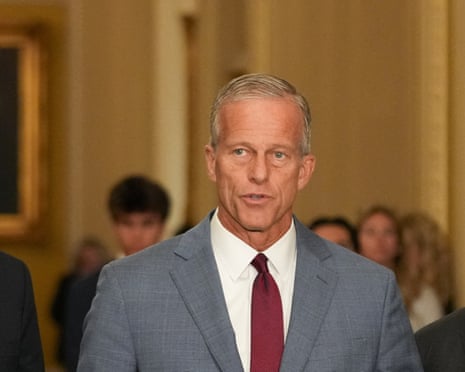
The legislative gridlock is further complicated by an internal power struggle between President Trump and Senate Majority Leader John Thune. Thune is currently resisting pressure from the White House to cancel the five-week summer recess to pass the "Save America Act," a restrictive voting bill favored by the President. Trump has openly questioned Thune’s leadership, suggesting that the South Dakota Republican lacks the "votes or the will" to kill the filibuster and advance the administration’s domestic agenda.
Thune, however, has maintained a pragmatic stance, telling reporters that "math is math" and that the party does not have the necessary 60 votes to overcome a Democratic filibuster. He expressed a desire for Republican candidates to spend the summer months drawing contrasts with their opponents on the campaign trail rather than engaging in internal party warfare.
As the Senate prepares for its recess, the rejection of the war powers resolution leaves the President with a virtually clear path to continue military operations in the Middle East without immediate legislative interference. However, the narrow margin of the vote and the defection of three Republican senators signal that the administration’s mandate for war is far from absolute. With a stagnant economy, a stalled Cabinet nomination, and a widening regional conflict, the political and military stakes for the United States have rarely been higher in the modern era. The failure of the Senate’s latest effort to halt Trump’s Iran hostilities ensures that the debate over the limits of executive power will remain a central theme of the 2026 political landscape.