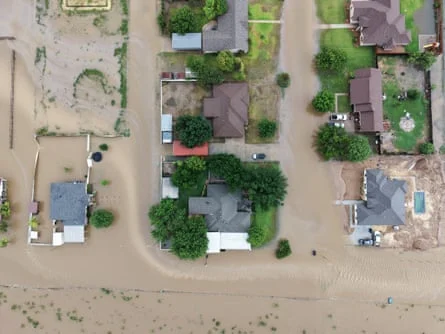
As record-breaking torrential rains inundate Texas neighborhoods and a relentless heat dome remains anchored over the American Southwest, a noticeable silence has fallen over the halls of power in Washington. Despite a summer defined by choked air from Canadian wildfires reaching as far south as Florida, the urgent rhetoric once used by Democratic leaders to describe the climate crisis has largely faded from the national campaign trail. This strategic retreat, which political analysts have dubbed “climate hushing,” is now facing a coordinated backlash from environmental activists who argue that ignoring the planet’s warming is both a policy failure and a political miscalculation.
The trend of climate hushing emerged as some Democratic strategists and policy advisors suggested that emphasizing global warming might alienate moderate voters concerned primarily with the cost of living. However, grassroots organizations are now launching a nationwide counter-offensive during the federal summer recess to force the issue back into the spotlight. Led by the Climate Action Campaign, a coalition of environmental advocacy groups is mobilizing across 20 states to demand that their representatives reconnect extreme weather events to the underlying climate crisis.
The Rise of Climate Hushing in Modern Politics
For years, the Democratic platform centered on the "existential threat" of climate change, culminating in significant legislative efforts to transition the nation toward renewable energy. In recent months, however, that fervor has cooled in public discourse. Observers note that many candidates and incumbents have shifted their messaging toward "energy independence" and "manufacturing jobs," deliberately omitting the environmental justifications for these policies.
This pivot is not accidental. Internal party debates have frequently centered on the idea that "climate" is a polarizing term that can be weaponized by opponents to suggest higher gas prices or intrusive regulations. By practicing climate hushing, some politicians hope to bypass the culture-war aspects of the environment and focus on the economic benefits of the green transition.
Activists, however, argue that this silence creates a vacuum. Bill McKibben, the prominent environmental author and co-founder of 350.org, contends that the grassroots base is more concerned about the climate than ever before. He argues that the history of the environmental movement shows that progress only occurs when there is sustained, vocal pressure from the public. According to McKibben, the disconnect between the physical reality of the planet and the rhetorical reality of the political class has reached a breaking point.
Grassroots Mobilization Against Climate Hushing
The Climate Action Campaign has organized a series of events intended to coincide with the period when lawmakers return to their home districts to meet with constituents. These actions are designed to be as diverse as the communities they represent, involving local chapters of the Sierra Club, the racial justice organization NAACP, and Third Act, a group specifically for older Americans concerned about the legacy they are leaving for future generations.

In Michigan, demonstrators are targeting Republican representatives like Bill Huizenga, criticizing his support for legislation that bolsters fossil fuel production. Meanwhile, in Arizona, young activists are taking a different approach by meeting with Democratic Representative Adelita Shirley Grijalva. Grijalva has remained a vocal advocate for climate action, and the activists intend to bolster her position, encouraging her to resist the trend of climate hushing and continue speaking plainly about global warming.
Margie Alt, director of the Climate Action Campaign, described the current political atmosphere as a missed opportunity. She characterized the refusal to talk about the climate crisis as "the climate denial of 2026." By organizing petitions and rallies, Alt’s coalition hopes to convince House Democratic leader Hakeem Jeffries and Senate Democratic leader Chuck Schumer that the climate must remain a top-tier priority if they hope to maintain the enthusiasm of their base.
Data Challenges the Efficacy of Climate Hushing
While some consultants believe that silence is the safest path, new research suggests that climate hushing may be unnecessary or even counterproductive. A July study from the University of California, Santa Barbara, analyzed the impact of climate-centric messaging on Democratic candidates. The findings indicated that emphasizing climate change was either neutral or beneficial to the candidates’ standing, even in highly competitive races.
The study suggests that voters do not necessarily see a conflict between addressing the climate crisis and managing the economy. In many cases, candidates who spoke clearly about the transition to clean energy were perceived as more forward-thinking and better prepared for future economic shifts. This data directly contradicts the narrative that talking about the environment is a political liability that leads to voter alienation.
Furthermore, public opinion appears to be shifting in favor of more aggressive climate communication. A poll conducted by Data for Progress in July revealed that 61% of likely voters believe extreme weather has become more frequent over the last five years. This sentiment is not limited to one side of the aisle; nearly half of all Republicans surveyed acknowledged the increasing frequency of severe weather events.
Public Perception and the MAGA Divide
The divide between political rhetoric and public concern is perhaps most visible when comparing the "MAGA" platform with general population surveys. While former President Trump and his allies frequently dismiss climate change as a "hoax" or a "scam," a Yale survey from June found that roughly two-thirds of Americans are genuinely worried about global warming.
The gap between the rhetoric of the Republican base and the concerns of the broader public presents what McKibben calls a "massive political opening." By leaning into the issue rather than hushing it, Democrats could theoretically capture the support of the majority of Americans who are witnessing the effects of climate change firsthand in their own communities.
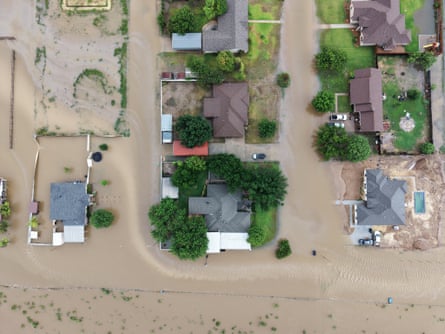
The impact of extreme weather is no longer a theoretical concern for most Americans. In Texas, the mid-July flooding in Ozona and surrounding neighborhoods served as a grim reminder of how infrastructure is failing to keep pace with changing weather patterns. In the North, the persistence of wildfire smoke has turned air quality into a daily health concern for millions, impacting everything from outdoor labor to children’s summer camps.
Consequences of Political Silence
The long-term consequences of climate hushing extend beyond the ballot box. Activists fear that if politicians stop talking about the climate, they will eventually stop legislating on it. Without a public mandate fueled by constant discourse, the political will to fund renewable energy projects, update the power grid, and regulate carbon emissions may evaporate.
The industry impact is also significant. Clean energy investors and manufacturers look for long-term political stability before committing billions of dollars to new projects. If the political leadership appears hesitant to even mention the word "climate," it sends a signal of uncertainty to the markets. This could slow the very transition that hushing-proponents claim they want to protect.
In the racial justice community, the NAACP and other affiliates point out that climate hushing often results in the neglect of "frontline communities." These are often lower-income areas or communities of color that are disproportionately affected by pollution and extreme heat. When the climate crisis is removed from the political agenda, the specific needs of these vulnerable populations are often the first to be forgotten.
The Path Forward for the Climate Movement
As the summer recess continues, the pressure on Democratic leadership is expected to intensify. The Climate Action Campaign and its partners intend to maintain their presence in the districts, using every heatwave and storm as a catalyst for conversation. Their message is simple: the climate cannot wait for a more "convenient" political window.
The debate over climate hushing is ultimately a debate over the nature of political leadership. While some see it as a pragmatic way to navigate a divided electorate, others see it as a retreat from reality. As the 2026 election cycle approaches, the success or failure of these grassroots activists will likely determine whether the environment remains a central pillar of American governance or a footnote in a larger economic debate.
For the activists on the ground, the goal is to make the political cost of silence higher than the cost of speaking out. By turning up the volume, they hope to ensure that when lawmakers return to Washington, the "hush" is replaced by a renewed commitment to addressing the most significant challenge of the century. The coming months will reveal whether the Democratic establishment listens to its consultants or its constituents.