The British government’s ambitious plan to overhaul the nation’s housing market is facing an immediate and severe challenge from a crumbling water infrastructure and a deepening environmental crisis. Across the East and South East of England, a region targeted for rapid residential development, the lack of sustainable water sources is emerging as a primary obstacle to the Labour government’s goal of building 1.5 million homes by the end of this parliament. This collision between urban expansion and ecological limits has forced a confrontation between local authorities, environmental regulators, and national policymakers.
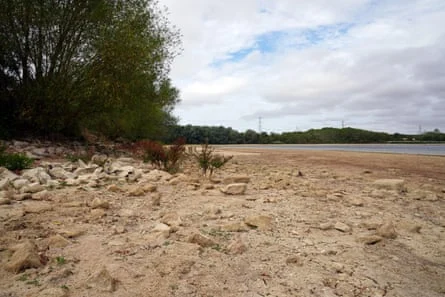
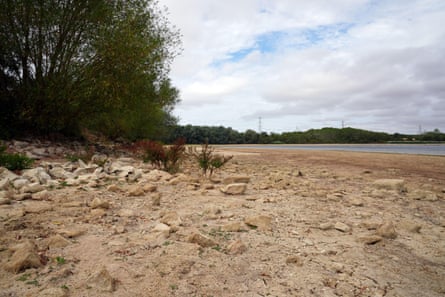
Half of the country was officially declared to be in a state of serious drought this week for the second consecutive year. The Environment Agency has issued stern warnings that the prolonged dry conditions are causing "dire consequences" for the national economy, the local environment, and native wildlife populations. These drought-stricken areas coincide almost exactly with the geographical zones where the government’s "build, baby, build" agenda is most aggressively focused, creating a paradox where new residents are being invited into regions that can no longer reliably provide water to existing ones.
In regions like Hampshire and Cambridgeshire, the environmental pressures have already reached a breaking point. Fenlands, which are critical for carbon sequestration and biodiversity, are reportedly close to collapse due to the over-extraction of water from underground aquifers. In other areas, the world-renowned chalk streams of England—habitats so rare they are often compared to the Great Barrier Reef—are being artificially maintained by the Environment Agency because natural flows have dwindled to dangerous lows.

The Infrastructure Deficit and the Housing Mandate
The disconnect between central government targets and local reality is perhaps most visible in Basingstoke, Hampshire. Paul Harvey, the Independent leader of Basingstoke and Deane council, has been vocal about the physical impossibility of meeting the new mandates. The council is currently being pressured to approve more than 1,000 new houses annually, despite evidence that the local water cycle cannot support such growth.
"We cannot magic up more water," Harvey stated, responding to the national government’s directive. "They say ‘build, baby, build,’ but it is something we cannot just wave a wand and do." Harvey pointed to a comprehensive water cycle study conducted by the council, which examined whether current supply and sewage treatment capacities could handle future residents. The findings were stark: the demand for water from new housing developments is projected to outstrip the limits of sustainable supply in the very near future.
The crisis is not limited to a single town. Across Kent, Hertfordshire, Essex, and Cambridgeshire, growth plans are hitting what experts call "environmental barriers." These barriers are the result of two converging factors: a climate crisis that has altered traditional rainfall patterns and a long-term failure by the privatized water industry to invest in critical infrastructure like reservoirs and transfer pipelines.
Environmental Regulators Sound the Alarm
The Wildlife Trusts, an organization monitoring the health of British ecosystems, has warned that water scarcity is no longer a seasonal concern but a permanent structural issue. Ali Morse, the organization’s water policy manager, noted that even under "normal" weather conditions, a third of the country no longer has additional river water available to serve new homes or industry.
"If we don’t secure new water supplies and become more efficient with our use, it’s clear that, under a changing climate, we won’t have enough water to meet the needs of both society and the environment," Morse said. The Environment Agency’s mapping suggests that the limits of sustainability have already been reached in many high-growth corridors.
In the area surrounding Basingstoke, the struggle to supply the existing population has pushed one of the largest remaining alkaline fens in southern England toward what Natural England describes as "irreversible ecological collapse." The situation has become so critical that the Environment Agency took the rare step of banning South East Water from extracting further water from the Greywell chalk aquifer. South East Water is currently appealing that decision, highlighting the desperation of utilities caught between regulatory limits and consumer demand.
Failed Promises and Siphoned Funds
The role of the water companies themselves has come under intense scrutiny. Critics argue that the current supply problems putting housing targets in England at risk are the direct result of corporate mismanagement. South East Water, for instance, failed to deliver a promised pipeline intended to channel water from the Surrey Hills to Basingstoke. Although the project was scheduled for completion by 2030, water regulators initially disallowed the necessary funding, and there is currently no timeline for its construction.
Local leaders have pointed out that while infrastructure was being neglected, financial resources were being directed elsewhere. Paul Harvey noted that the investment required to upgrade treatment works and end the reliance on crumbling water sources was instead "siphoned off to shareholders and executives" over decades of privatization. "Now the bill has come due," he remarked, describing a water sector caught between a regulator that refuses to fund infrastructure and an environment that can no longer sustain extraction.

In neighboring East Hampshire, the housing target has been increased by 98%, requiring 1,142 new homes per year. Damian Hinds, the Conservative MP for the area, questioned the long-term resilience of these plans. He argued that the existing infrastructure is fundamentally incapable of supporting development on such a massive scale without significant investment that has yet to materialize.
The Cambridgeshire "Deal-Breaker"
The crisis is perhaps most acute in Greater Cambridgeshire, where the government envisions a massive development corporation to spur economic growth. Ministers have suggested the region can host an additional 150,000 homes, effectively stripping decision-making power from local elected councils to accelerate the project.
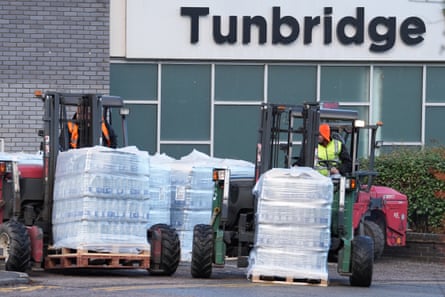
However, the village of Waterbeach serves as a cautionary tale. While 4,500 new homes are planned for the area, the current 5,726 residents are already living under a hosepipe ban. The Environment Agency initially blocked plans for these new developments due to water scarcity and the inadequacy of Cambridge Water’s supply strategy. While the objection was eventually lifted in late 2024, it was done so under the condition that extreme water efficiency measures be adopted.
These measures include a "water credit scheme" where developers pay to offset the water usage of their new buildings. They also include a strict limit of 89 liters of water per person per day—significantly lower than the national average. Yet, two years after the scheme was proposed, it is not yet operational, and no developer has paid into the fund.

Pippa Heylings, the Liberal Democrat MP for South Cambridgeshire, described the water situation as a "deal-breaker" for the government’s growth plans. "Locally it was agreed that growth needed to be staggered, and that the water transfer scheme and the new Fens reservoir had to be built in order to support it," she said. She criticized the government for attempting to "unlock" growth based on unproven and unmonitored credit sales.
Competing Demands: Housing vs. Data Centers
The water supply problems putting housing targets in England at risk are further complicated by the rapid growth of the technology sector. Cambridgeshire is currently seeing a surge in data center applications, including one of the largest planned facilities in England at the Sutton innovation campus. Data centers are notoriously water-intensive, requiring millions of gallons to cool the servers that power the digital economy.
Residents feel the squeeze of these competing interests. Former Cambridge city councillor Sam Davies noted that while citizens are told not to fill paddling pools and public splash pools are closed due to shortages, commercial growth continues at high speed. "No one wants to talk about the lack of water when it comes to commercial growth," she said.
The conflict has led to a standoff in the planning process. In Basingstoke, the local council, Natural England, and the Environment Agency have been unable to approve a local plan because the water simply does not exist to support the government’s housing mandates.
Government Response and Future Outlook
A government spokesperson defended the housing targets, asserting that a newly formed "water delivery taskforce" would ensure that housing is not constrained by water capacity. The government maintains that water companies have a legal duty to plan and deliver the necessary infrastructure and that officials are working closely with local councils in Cambridge and Basingstoke to address supply challenges.
However, the timeline for new infrastructure—such as the proposed Fens reservoir—stretches into the 2030s, while the housing targets are set for the immediate five-year term. This temporal gap leaves local authorities in a precarious position, forced to choose between defying central government mandates or approving developments that may lack basic utilities.
As the Labour government continues its "build, baby, build" push, the physical reality of a dry landscape and a neglected pipe network remains the ultimate arbiter. Without a massive and immediate injection of capital into the water sector, and a shift toward more sustainable extraction practices, the ambitious goal of 1.5 million new homes may remain a blueprint rather than a reality. The "red flags" being waved by environmental agencies and local leaders suggest that for much of England, the taps are already running dangerously close to empty.