President Donald Trump has signed two new executive orders designed to curtail birthright citizenship in the United States, a move that follows a Supreme Court ruling affirming the constitutional right and represents a significant recalibration of his administration’s immigration policy. These directives, issued on Thursday, are considerably narrower in scope than his previous, more sweeping attempt to redefine who qualifies for automatic citizenship at birth.
A Renewed Effort to Reframe Citizenship
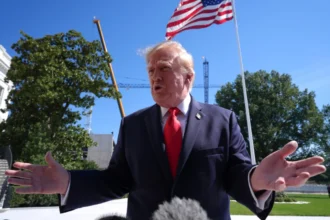
The executive actions signal a persistent effort by the Trump administration to chip away at the broad interpretation of the Fourteenth Amendment’s Citizenship Clause. The president, speaking from the Oval Office, expressed his dissatisfaction with the Supreme Court’s decision, which he characterized as "a very unfortunate decision" and that "they’ve made a joke out of it." He indicated that his administration was "making adjustments" to its strategy after facing legal and judicial roadblocks.
The first of the new orders aims to fortify and potentially expand an existing, albeit narrow, exception to birthright citizenship. Currently, this exception excludes children born to foreign diplomats stationed in the U.S. or to members of invading forces from automatically receiving citizenship. The administration’s intent appears to be to broaden the interpretation of who falls under this exclusionary clause, potentially impacting categories of individuals not explicitly covered by the current wording.
Targeting "Birth Tourism"
The second executive order directly confronts the practice colloquially known as "birth tourism." This order mandates that the Secretary of State and the Secretary of Homeland Security take steps to halt the entry of non-U.S. citizens who travel to the United States with the express purpose of giving birth on American soil. The administration views this practice as an exploitation of U.S. immigration laws and a strain on national resources.
The administration’s focus on birthright citizenship has been a cornerstone of its hardline immigration platform throughout Trump’s presidency. This renewed push, even after a significant legal setback, underscores the administration’s commitment to challenging established norms and legal interpretations concerning citizenship.
The Supreme Court’s Rejection and the Fourteenth Amendment
The current executive orders arrive in the wake of a decisive Supreme Court ruling in June that effectively blocked Trump’s initial attempt to redefine birthright citizenship. In January 2025, on what would have been the first day of his second term, President Trump signed an executive order seeking to reinterpret the Fourteenth Amendment. This order argued that children born to immigrants present in the U.S. without documentation or on temporary visas were not "subject to the jurisdiction" of the United States, and therefore, should not be automatically granted citizenship.
However, the Supreme Court, in a 6-3 decision, upheld the long-standing practice of birthright citizenship. The majority opinion emphasized that the Citizenship Clause of the Fourteenth Amendment, ratified in 1868, is clear and has been consistently interpreted to grant citizenship to nearly all individuals born on U.S. territory. The Court stated, "If Congress intended to limit American citizenship to the children of those domiciled in the United States, nothing in the succinct language of the Citizenship Clause conveyed that design."
Legal Precedent and Historical Context
The Supreme Court’s ruling affirmed that birthright citizenship in the U.S. is rooted in the Fourteenth Amendment, adopted after the Civil War to grant citizenship to newly freed slaves. The amendment states, "All persons born or naturalized in the United States, and subject to the jurisdiction thereof, are citizens of the United States and of the State wherein they reside." For over a century, this clause has been understood to confer citizenship to virtually everyone born within U.S. borders, regardless of their parents’ immigration status.
The Trump administration’s argument that the amendment was intended only for a specific historical context and had been subsequently misinterpreted was met with strong opposition from the Court. Chief Justice John Roberts, writing for the majority, dismissed this interpretation as a "dramatically revisionist view" with "scant evidence." He reaffirmed the amendment’s promise, stating, "The Framers of the Fourteenth Amendment extended that promise to ‘every free-born person in this land.’ We keep that promise today."
Broader Implications of the New Executive Orders
Despite the Supreme Court’s clear stance, the new executive orders represent an attempt to achieve similar objectives through more incremental and legally defensible pathways. By focusing on exceptions and the practice of birth tourism, the administration seeks to avoid a direct confrontation with the Supreme Court’s interpretation of the Fourteenth Amendment, at least for now.
However, these revised strategies are also widely expected to face significant legal challenges. Civil rights organizations and immigration advocacy groups have historically fought against attempts to limit birthright citizenship, citing its fundamental importance to American identity and the principle of equal protection under the law. Legal experts anticipate that any attempt to broadly deny citizenship based on parental status or visa type will likely be challenged in courts, potentially leading to further litigation.
The Political Landscape of Immigration
President Trump has consistently leveraged a strong stance on immigration as a key element of his political appeal. The debate over birthright citizenship is a potent symbol in this broader political conversation, tapping into concerns about national sovereignty, border security, and the economic impact of immigration. The administration’s continued focus on this issue signals its intent to keep immigration a central theme in future political discourse.
The Supreme Court’s decision in June was a notable setback for the president, especially given the conservative supermajority on the nine-judge panel. The fact that six justices, including several appointed by Trump, sided against his administration’s effort highlighted the deeply entrenched legal and historical precedent supporting birthright citizenship.
The Practice of "Birth Tourism" Under Scrutiny
The executive order targeting "birth tourism" aims to address what the administration views as an abuse of the U.S. immigration system. While the exact number of individuals who travel to the U.S. specifically to give birth is difficult to ascertain, the practice has become a talking point for those advocating for stricter immigration controls. Critics argue that it encourages illegal immigration and that these individuals often overstay their visas, placing a burden on social services.
Proponents of birthright citizenship counter that these children are born U.S. citizens and that denying them citizenship based on their parents’ status would create a permanent underclass of stateless individuals within the country. They also point out that many of these families contribute to the economy and are integrated into American communities.
Future Legal Battles and Public Discourse
The administration’s strategy with these new executive orders is likely to be a test of how far executive power can extend in shaping immigration policy when faced with constitutional limitations. The legal battles that are almost certain to follow will scrutinize the interpretation of existing statutes and the scope of executive authority in immigration enforcement.
The ongoing debate over birthright citizenship reflects deeper societal discussions about national identity, immigration, and the meaning of American citizenship. The administration’s persistent efforts ensure that this contentious issue will remain a focal point in public and political arenas for the foreseeable future. The coming months will likely reveal the legal viability of these new measures and their potential impact on families seeking to establish a life in the United States.