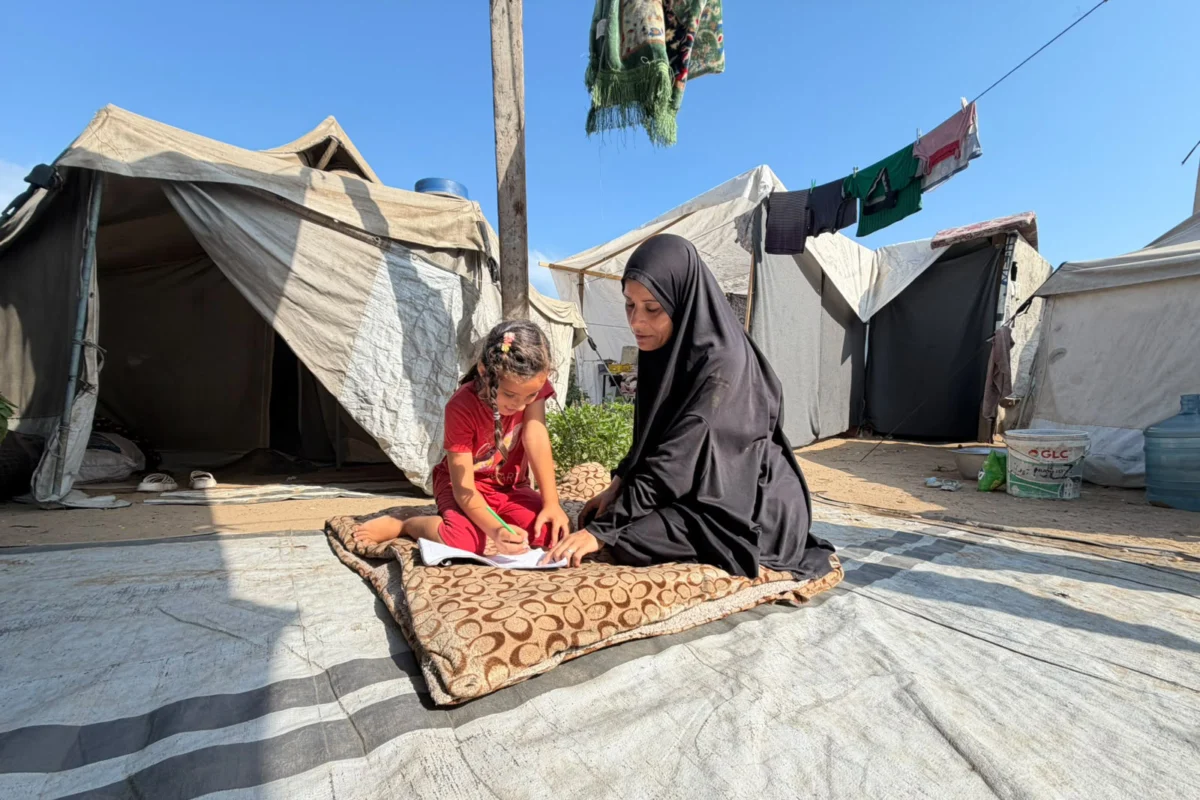
Central Gaza is a landscape of tents and desperation, where the specter of famine continues to haunt families already pushed to the brink. Sahar al-Bardini, a 35-year-old mother of three, meticulously prepares a meager breakfast for her young children in a makeshift shelter at the al-Zawaida camp. Even as her children, six-year-old Omar, four-year-old Sama, and three-year-old Mahmoud, eat, her mind races with the anxiety of securing their next meal.
Sahar has been the sole provider for her family since her husband was killed three years ago in an Israeli shelling in northern Gaza. The ongoing conflict and blockade have created an environment of pervasive scarcity, driving food prices to exorbitant levels. This grim reality fuels widespread concern that Gaza could be plunged into another devastating famine, a threat that looms larger with each passing day.
The lingering effects of the previous famine, which spanned from August to December 2025, are still evident in Omar and Sama’s frail bodies. During that period, the entire family, particularly the two older children, suffered from a severe lack of food and essential nutrients. Fresh produce like eggs and vegetables were scarce in the markets, and when available, their cost was prohibitive for most families.
Even with a slightly more regular, albeit still limited, food supply now, the family manages only one meal a day. The months of severe deprivation have left an indelible mark on Omar and Sama. Sahar recounts how her children became alarmingly weak, losing significant weight. It took approximately six months for them to gradually recover their health and physical strength, even after food became more accessible.
"My biggest fear is that my children will become weak again," Sahar confided, her voice heavy with worry. "I want to see them healthy, but the food they need isn’t easy for me to provide every day." This constant struggle highlights the profound and enduring impact of food insecurity on the most vulnerable.
The dire situation in Gaza has been underscored by recent warnings from the United Nations Office for the Coordination of Humanitarian Affairs (OCHA). Last week, OCHA issued a stark alert about a severe food emergency that could escalate into a full-blown famine. This pronouncement paints a grim picture of a population teetering on the edge of starvation.
Justin Brady, head of OCHA in Palestine, revealed that an alarming 67 percent of Gaza’s population is experiencing food insecurity. More disturbingly, over 200,000 individuals, representing roughly 10 percent of the territory’s population, are living in conditions that typically precede a formal famine declaration by the Integrated Food Security Phase Classification (IPC) standards. This statistic underscores the systemic nature of the crisis.
Community Kitchens: A Lifeline Amidst Scarcity
In areas like the one Sahar inhabits, community kitchens have emerged as a critical source of sustenance for numerous families. These kitchens provide meals, predominantly consisting of rice and other basic staples, with meat being a rare luxury. While these meals offer a crucial bulwark against outright starvation, they often fall short in providing children with the vital nutrients and protein essential for their growth and development.
"The meal fills their stomachs, but it doesn’t contain everything a child’s body needs to be properly nourished and regain strength," Sahar explained. "The children need a more varied diet—they need eggs, vegetables, fruit, meat, and other things. I try to provide whatever I can, but my means are limited." This highlights the qualitative deficit in the food available, even when quantity is marginally sufficient.

With limited financial resources, Sahar maximizes the utility of any food vouchers or humanitarian assistance she receives. However, these provisions are consistently insufficient to meet the family’s multifaceted needs. Food remains the absolute priority, followed by essential items like clothing, medicine, and other basic necessities for her children.
"When I receive food vouchers, I try to make the most of them," she said. "Everything is expensive, and I’m carrying the responsibility of three children on my own." Her words encapsulate the immense burden placed upon single parents in such a dire environment.
The Devastating Impact on Young Children
The long-term consequences of malnutrition are particularly acute for infants and young children. Shimaa, a 25-year-old mother, recounted her harrowing experience during the last famine. Unable to find sufficient milk for her two-year-old daughter, Selina, she was forced to resort to desperate measures.
"I tried to feed her whatever I had," Shimaa shared. "Sometimes I gave her lentils instead of milk because I didn’t have milk to give her. I work day and night so I can provide her with food and everything she needs—everything I do is so I can see her in better health." Her dedication underscores the fierce maternal instinct to protect and nurture, even against overwhelming odds.
Despite her relentless efforts, Shimaa’s family struggles to afford adequate food, leaving Selina chronically weak and severely malnourished. The effects of the famine have persisted long after the immediate crisis subsided.
"Even after the famine eased, its effects didn’t go away for my daughter," Shimaa lamented. "I’m worried about her, and I’m trying to do everything I can to help her get better." Her ongoing anxieties reflect the deep-seated trauma and long recovery period required for children who have endured severe nutritional deprivation.
Nutritional Deficiencies and Long-Term Health
Nutrition specialists emphasize that the current food crisis is forcing parents to rely on calorie-dense but nutrient-poor staples like rice and lentils for infant feeding. While these provide some energy, they create significant nutritional gaps, especially for children who experienced severe malnutrition during the previous famine.
Dr. Ghada Jibril, a nutrition specialist, explained the critical need for specialized care. "A child who has experienced severe malnutrition needs a period of regular nutrition and follow-up care to regain their weight and resume healthy growth," she stated. This highlights that recovery is not simply about having enough food, but about the right kind of food and consistent medical attention.
"The end of acute hunger does not mean that the effects of malnutrition disappear immediately," Dr. Jibril elaborated. "Children need a varied diet, not simply enough food to fill their stomachs. Protein, iron, vitamins, and minerals are essential for growth, brain development, and a strong immune system. Recovering from malnutrition takes time, appropriate food, and follow-up care." This underscores the complex and protracted nature of overcoming malnutrition.
Escalating Food Insecurity and Economic Strain
The economic realities in Gaza exacerbate the food crisis. The protracted blockade, coupled with the ongoing conflict, has decimated the local economy, leading to widespread unemployment and poverty. This economic collapse severely limits families’ ability to purchase even basic food items, regardless of their availability in the market.

The cost of essential food items has surged dramatically. What was once affordable is now a luxury, pushing families to make agonizing choices between food and other essential needs like healthcare and shelter. The reliance on external aid, while critical, is often insufficient to bridge the gap and is subject to the unpredictable flow of humanitarian assistance.
The current situation is compounded by damage to agricultural infrastructure and disruptions to supply chains, further limiting local food production and increasing dependence on imports. These imported goods are often subject to import duties and logistical challenges, driving up their prices.
International Response and Humanitarian Concerns
International humanitarian organizations are working tirelessly to provide aid, but the scale of the crisis often overwhelms their capacity. Food distributions, medical support, and nutritional programs are in place, but they struggle to reach everyone in need due to access limitations and the sheer number of people affected.
The international community faces immense pressure to increase humanitarian access and ensure the unimpeded flow of essential supplies into Gaza. Diplomatic efforts are underway to broker ceasefires and facilitate the delivery of aid, but progress has been slow and fraught with challenges.
The long-term implications of chronic malnutrition on a generation of children are a major concern. Developmental delays, weakened immune systems, and increased susceptibility to diseases are just some of the potential consequences. Addressing this requires not only immediate relief but also sustained investment in long-term recovery and development initiatives.
The Cycle of Hunger and Displacement
The ongoing cycle of conflict and displacement further entrenches food insecurity. Families are repeatedly forced to flee their homes, losing their livelihoods and access to their meager resources. This constant disruption makes it incredibly difficult to establish stable food sources and maintain a healthy diet.
Displaced populations often end up in overcrowded camps with limited access to clean water, sanitation, and healthcare, all of which are critical for preventing the spread of disease and ensuring overall well-being. These conditions create a fertile ground for malnutrition to take hold and spread.
The psychological toll of living under constant threat and deprivation is also immense. Parents struggle to cope with the stress of providing for their families, which can impact their ability to care for their children. This emotional burden adds another layer of complexity to an already dire situation.
A Call for Sustained Intervention
The repeated warnings of famine in Gaza are a stark reminder of the urgent need for sustained and effective international intervention. While immediate relief efforts are crucial, long-term solutions must address the root causes of the crisis, including the blockade, economic hardship, and the ongoing conflict.
Investing in sustainable agriculture, strengthening local economies, and ensuring equitable access to resources are vital steps towards building resilience and preventing future humanitarian catastrophes. Without a comprehensive approach that tackles both immediate needs and underlying structural issues, Gaza’s children will continue to face the grim reality of hunger and the ever-present threat of famine. The international community’s commitment to a lasting peace and a better future for the people of Gaza remains paramount.