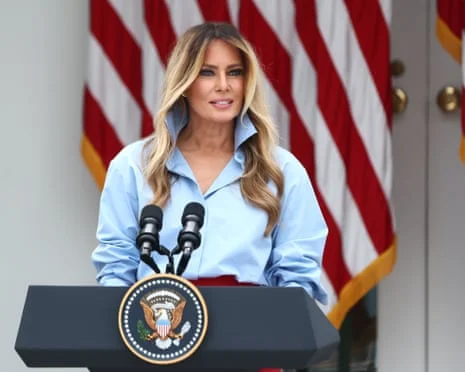
Donald Trump’s former personal attorney and longtime fixer, Michael Cohen, completed a dramatic political reversal on Thursday by hosting the president for a friendly, praise-filled interview on his New York City radio show. The conversation, broadcast on 77WABC, marks the first public exchange between the two men in eight years and signals a stunning reconciliation for a pair whose relationship had previously dissolved into federal courtrooms and congressional denunciations. Cohen, who famously characterized Trump as a "mobster" and a "cheat" during 2019 testimony, introduced the segment with the 1970s R&B hit "Reunited" playing in the background, telling his audience that the two men had moved past their grievances and chosen forgiveness over hatred.

During the recorded exchange, Cohen and Trump appeared to find common ground in their shared grievances against the justice system. Cohen reminded the president of his past role as a combative defender on cable news during the 2016 campaign, prompting Trump to respond that Cohen had been a "good advocate" before being "weaponized" by political opponents. Trump expressed respect for what he described as Cohen’s decision to "recant" previous statements, calling it a "very big thing." The dialogue stood in stark contrast to the 2024 criminal trial in Manhattan, where Cohen served as the star witness in the prosecution that led to Trump’s conviction on 34 felony counts of falsifying business records related to hush-money payments.
The Evolution of the Michael Cohen and Donald Trump Relationship
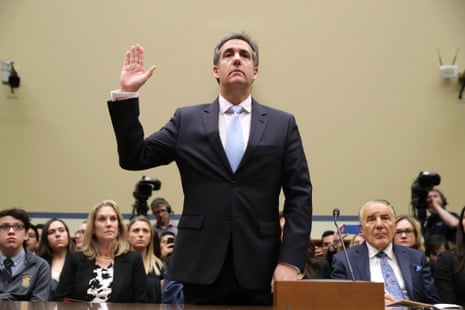
The path to this radio interview has been defined by extreme volatility. In 2018, Cohen pleaded guilty to several federal crimes, including campaign finance violations, tax evasion, and bank fraud. He admitted to orchestrating $280,000 in payments to silence two women, including adult film star Stormy Daniels, to prevent damage to Trump’s 2016 presidential bid. Following his sentencing to three years in prison, Cohen broke with the president, telling a Democratic-led House committee in 2019 that he was "ashamed" of his role in concealing Trump’s "illicit acts." He spent over a year in federal prison and the remainder of his sentence in home confinement, during which time he became one of Trump’s most vocal and vitriolic critics.
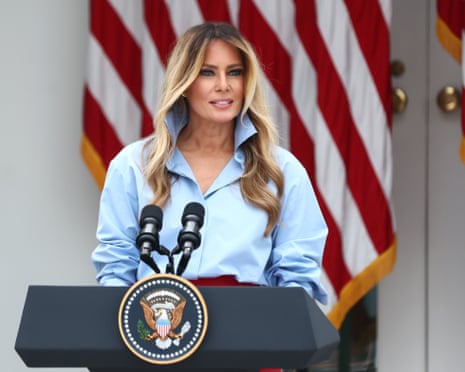
However, the tone began to shift following Trump’s return to the White House. Last year, Cohen claimed publicly that he had been "pressured and coerced" by New York prosecutors into providing anti-Trump testimony. Following the recording of Thursday’s radio interview, Cohen admitted to CNN that he has submitted a formal request for a presidential pardon. While he had previously sought clemency during the Biden administration with the support of Democratic lawmakers, his latest application features a revised cover letter directly appealing to Trump for a grant of clemency. When asked if the two discussed the pardon during the interview, Cohen remained coy, stating, "Maybe, maybe not."
Melania Trump Returns to the Public Eye in Rose Garden Event
While the president was mending fences on the airwaves, First Lady Melania Trump made a rare public appearance at the White House to promote her "Fostering the Future Together" initiative. Arriving earlier than scheduled to the Rose Garden, she addressed the audience with a self-aware nod to her frequent absences from the public stage, saying, "I heard you missed me. Here I am." The remark drew laughter from the gathered guests and highlighted the low profile she has maintained during the current administration. Records show the First Lady has made only 38 public appearances this year, a significant decrease compared to the same period during her husband’s first term.
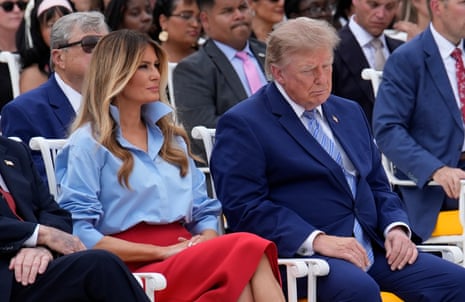
The event focused on expanding educational opportunities for the foster care community. In partnership with IndyCar and Fox Sports, the First Lady announced a new round of scholarships for foster children. Executives from the organizations presented her with an oversized novelty check for $2 million, intended to fund scholarships at Indiana University and Purdue University. President Trump attended the event alongside his wife but did not deliver remarks, remaining silent as the First Lady emphasized that the "greatest investment America can make" is in its children.
National Security and Personnel Controversies at the White House
The administration is currently navigating several internal controversies regarding personnel and security protocols. Questions have intensified this week surrounding Natalie Harp, a special assistant to the president and a former One America News Network host. Reports surfaced on Thursday alleging that Harp worked in the West Wing for nearly a year without obtaining a routine security clearance. According to sources familiar with the matter, Harp resisted the background investigation process until the White House counsel’s office and the president himself intervened.

David Axelrod, a former senior adviser to Barack Obama, characterized the allegations as a "deadly serious issue" if true, noting the risks of having an aide with close daily access to the president operating without formal clearance. Outgoing White House Press Secretary Karoline Leavitt defended Harp as a "loyal and hardworking" staffer but did not explicitly deny that there had been a delay in the clearance process. Meanwhile, the search for Leavitt’s successor is underway, with CNN commentator and conservative strategist Scott Jennings emerging as a frontrunner. Jennings reportedly met with White House Chief of Staff Susie Wiles recently to discuss the role, though no formal offer has been extended.
Economic Milestones: National Debt Hits $40 Trillion
On the economic front, the United States reached a historic and somber milestone on Wednesday as the gross national debt surpassed $40 trillion for the first time. The deficit has doubled over the last decade, fueled by significant spending under both the Trump and Biden administrations. Trump approved approximately $8.4 trillion in debt during his first term—largely driven by pandemic relief—while Biden approved $4.3 trillion. The non-partisan Congressional Budget Office has projected that the administration’s "One Big Beautiful Bill Act" will add another $3.3 trillion to the deficit, primarily through corporate and billionaire tax breaks.

The $40 trillion figure has sparked outrage across the political spectrum. Democratic Senator Mark Kelly of Arizona accused the president of running up the tab while his family "made billions," while Representative Jasmine Crockett of Texas criticized Republicans for lecturing families on "fiscal responsibility" after "maxing out the card." Conversely, Republican Representative Thomas Massie, who recently lost his primary, lamented the rising interest costs, which he calculated at roughly $4,000 per American per year. The economic news comes as the Labor Department reported that weekly jobless claims dropped to 206,000, suggesting a resilient but tightening labor market.
Military Shifts and Judicial Actions
The U.S. Navy is reportedly considering a controversial plan to rename a new aircraft carrier, the CVN-81, currently known as the USS Doris Miller. The ship was named in honor of Miller, a Black sailor and mess attendant who became a hero during the 1941 attack on Pearl Harbor by manning an anti-aircraft gun despite having no training. Reports suggest the Navy may remove Miller’s name and designate the vessel the USS Donald Trump. This follows a recent executive order from the president demanding the redesign of the carrier to replace modern electromagnetic fighter jet launch systems with old-fashioned steam-powered catapults.

In a separate legal development, the Democratic National Committee (DNC) filed a lawsuit against the Trump administration on Thursday. The suit alleges that the Department of Justice and the FBI failed to respond to Freedom of Information Act (FOIA) requests regarding potential plans to seize ballots or voting machines during the upcoming midterm elections. DNC Chair Ken Martin stated that the lawsuit is a necessary step to protect the "security, transparency, and integrity" of the electoral process, especially as the president has publicly discussed the possibility of declaring a national emergency to oversee the midterms.
International Tensions and the 2028 Convention
The administration’s foreign policy remains focused on "maximum pressure" against Iran. President Trump recently posted that he intends to implement the "most crushing economic operation" in history against the country. Iranian Foreign Minister Abbas Araghchi dismissed the threats on social media, pointing to the $40 trillion U.S. debt as evidence of a domestic American crisis. Simultaneously, the U.S. Treasury Department announced sanctions against 10 individuals accused of running a courier network that smuggled hundreds of millions of dollars to Hezbollah via commercial flights.
Domestically, the DNC has narrowed its list of potential host cities for the 2028 Democratic National Convention to Boston, Denver, and Philadelphia. The exclusion of Atlanta has drawn a sharp rebuke from Mayor Andre Dickens, who accused the party of "abandoning the South and Black voters." As the midterm elections approach, the Cook Political Report has shifted its ratings for Senate races in Texas and Iowa to "toss-ups," suggesting that Democrats may have a path to a 53-47 majority if a "wave election" materializes. These developments underscore a period of intense political maneuvering and institutional friction as the nation moves toward the November polls.