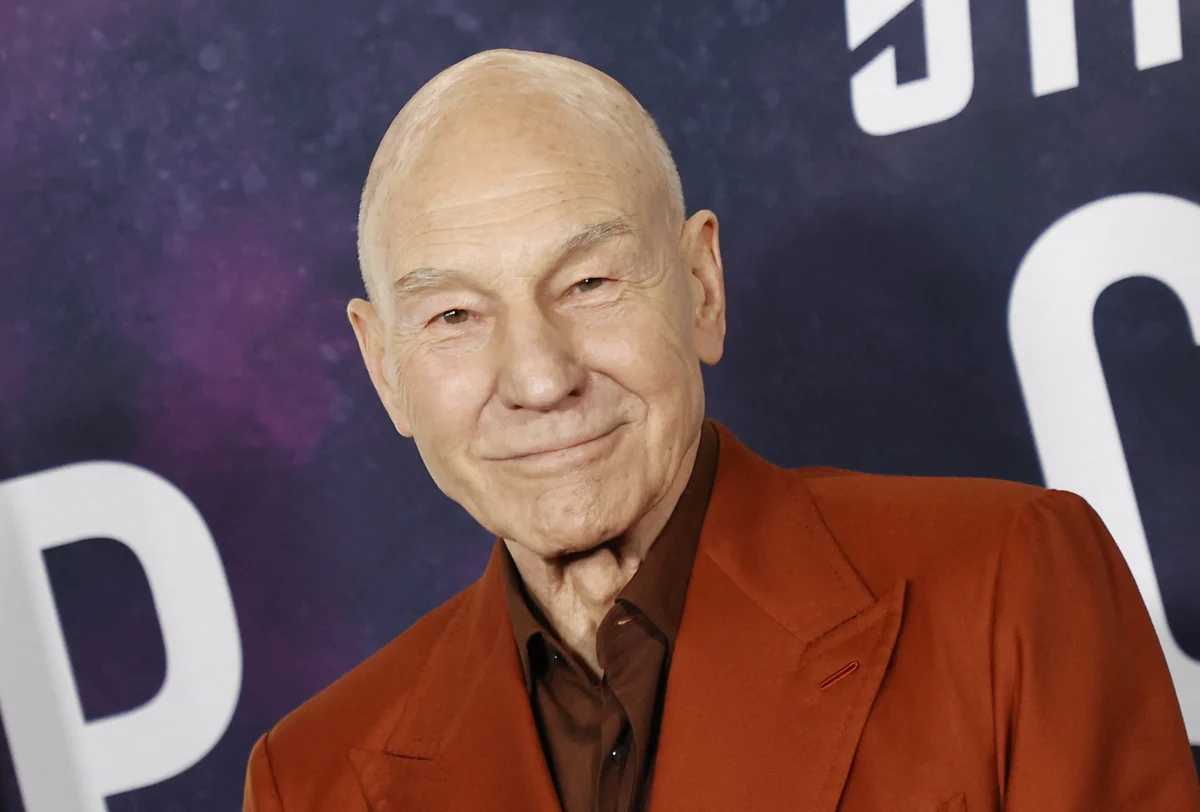
Sir Patrick Stewart, the acclaimed actor whose career spanned classical theater and iconic science fiction roles, declared his unwavering commitment to his craft, stating he would "always and forever be an actor," just weeks before his death at 86. This profound statement, made during what would be his final interview, underscored a lifelong dedication that defined his presence on stage and screen for over six decades. His passing marks the end of an era for a performer who profoundly shaped modern entertainment and inspired millions.
Stewart, celebrated for his commanding portrayals of Captain Jean-Luc Picard in "Star Trek: The Next Generation" and Professor Charles Xavier in the "X-Men" film franchise, passed away Wednesday at his home in Los Angeles. His longtime spokesperson, Kelly Bush Novak, confirmed his death, attributing it to "a brief and poignant journey with Alzheimer’s disease and Lewy body dementia." The announcement detailed that he was "held in the warm embrace of family and friends, surrounded by live music, prayer, tears, laughter and the kind of profound emotion that only he could inspire after a lifetime of devotion to us all."
A Legacy of Unwavering Dedication to Acting
The interview, conducted with TV Insider in July, was intended to commemorate the 60th anniversary of the "Star Trek" franchise, a testament to its enduring cultural significance and Stewart’s central role within it. During the conversation, Stewart reflected on his illustrious career and his continued engagement with diverse projects, demonstrating that his passion for acting remained undimmed even in his final months. His remarks offered a poignant insight into the mindset of an artist who viewed his profession not merely as a job, but as an integral part of his identity.
Stewart candidly acknowledged the challenges faced by older actors in Hollywood. "As any actor my age will tell you, there are fewer and fewer available roles as we get older," he observed. Despite this industry reality, he maintained a vibrant professional life, actively pursuing and receiving "interesting offers" that continued to challenge him creatively. This resilience and adaptability allowed him to traverse genres and mediums, maintaining relevance across generations of audiences.
Among the projects he discussed were his narration of Shakespeare’s sonnets for an upcoming audiobook, a nod to his illustrious background with the Royal Shakespeare Company. He also confirmed his reprisal of Professor Charles Xavier in "Avengers: Doomsday," which he indicated would be his final film appearance, bringing his celebrated portrayal of the telepathic mutant leader to a conclusive chapter within the Marvel Cinematic Universe. Additionally, he highlighted his voice role as a pig’s head in Riz Ahmed’s new series, "Bait," showcasing his willingness to embrace unconventional and artistically daring roles.
His declaration, "I can’t imagine ever officially ‘retiring.’ I’ll always and forever be an actor," resonated deeply, encapsulating the spirit of a performer who found purpose and joy in every role. This sentiment is particularly powerful given his age and the physical toll of his illness, underscoring a profound love for his craft that transcended personal circumstances. For Stewart, acting was not a career to be concluded, but a state of being to be maintained.
From Shakespearean Stages to Starship Bridges
Patrick Stewart’s journey to global stardom was a gradual ascent, rooted in rigorous classical training and a deep commitment to theatrical performance. Born in Mirfield, West Yorkshire, England, in 1940, Stewart’s early life was marked by hardship, but his passion for drama ignited at a young age. He honed his skills at the Bristol Old Vic Theatre School before joining the Royal Shakespeare Company (RSC) in 1966, where he spent 16 years, becoming one of its most distinguished members. His commanding stage presence and resonant voice made him a natural fit for classical roles, earning him critical acclaim in productions ranging from "Hamlet" to "Macbeth."
His transition to television and film in the 1980s brought him wider recognition, but it was his casting as Captain Jean-Luc Picard in "Star Trek: The Next Generation" in 1987 that transformed him into an international icon. Picard, a wise, empathetic, and intellectually formidable starship captain, became a moral compass for a generation of viewers. Stewart’s nuanced portrayal elevated the character beyond a typical sci-fi hero, imbuing him with a gravitas and humanity that resonated deeply. The series ran for seven seasons and spawned four feature films, cementing Picard as arguably the most significant role of Stewart’s career, a fact he readily acknowledged in his final interview.
Two decades later, Stewart found another defining role as Professor Charles Xavier in Bryan Singer’s "X-Men" (2000). As the benevolent, telepathic leader of the X-Men, Stewart brought dignity and intellectual depth to the comic book character, anchoring the burgeoning superhero genre with a performance that blended gravitas and vulnerability. He reprised the role in multiple sequels, prequels, and cameos, solidifying his status as a foundational figure in two of the most beloved and impactful franchises in pop culture history. His ability to embody such diverse, yet equally iconic, characters speaks to his extraordinary range and enduring appeal.
The Impact of a Life Devoted to Art
Stewart’s unwavering commitment to acting, even as he navigated significant health challenges, serves as a powerful testament to the identity-forming nature of artistic work. For many actors, the craft is not merely a profession but a fundamental aspect of who they are, a sentiment Stewart articulated with clarity and conviction. His refusal to contemplate retirement reflects a deeper truth about the creative impulse—it often does not diminish with age but rather evolves, seeking new avenues for expression and challenge.
The announcement of his death prompted an immediate and widespread outpouring of grief and admiration from Hollywood colleagues, industry leaders, and millions of fans worldwide. Tributes poured in from a constellation of stars who had worked alongside him or admired his work. Kevin Feige, president of Marvel Studios, lauded his contributions to the superhero genre. William Shatner, the original Captain Kirk, expressed his sorrow and respect for his fellow "Star Trek" captain. Hugh Jackman, who shared many emotional scenes with Stewart as Wolverine, posted a heartfelt message acknowledging their profound bond.
Other notable figures, including Seth MacFarlane, Minnie Driver, Rebecca Romijn, and Famke Janssen, also shared their condolences and personal memories. Their tributes consistently highlighted not only his immense talent and professionalism but also his kindness, mentorship, and the indelible mark he left on their lives and careers. These reactions underscored the broad and deep impact Stewart had, not just as an actor, but as a human being whose presence enriched the lives of those around him.
An Enduring Legacy
Stewart’s final interview served as a poignant capstone to a career marked by unparalleled versatility and a relentless pursuit of excellence. His acknowledgment of Jean-Luc Picard as "the most significant role of my career" and his gratitude for being part of the "historic franchise" of "Star Trek" underscored the profound personal connection he felt to his work. This humility, coupled with his artistic ambition, defined his public persona and endeared him to audiences.
The "brief and poignant journey" with Alzheimer’s disease and Lewy body dementia, as described by his spokesperson, adds a layer of quiet heroism to his final months. That he continued to engage with his craft and articulate his passion for acting despite these challenges speaks volumes about his character and his indomitable spirit. His final words about never retiring from acting will undoubtedly serve as a lasting motto for artists and an inspiration for anyone facing the inevitable challenges of aging and illness.
Patrick Stewart’s legacy is not just one of iconic characters and celebrated performances, but of an actor who embodied the very essence of dedication to his art. He showed that true passion transcends age, illness, and even the final curtain, leaving behind a body of work that will continue to challenge, entertain, and inspire for generations to come. His assertion that he would "always and forever be an actor" remains a powerful, timeless declaration of a life fully lived in service of his craft.