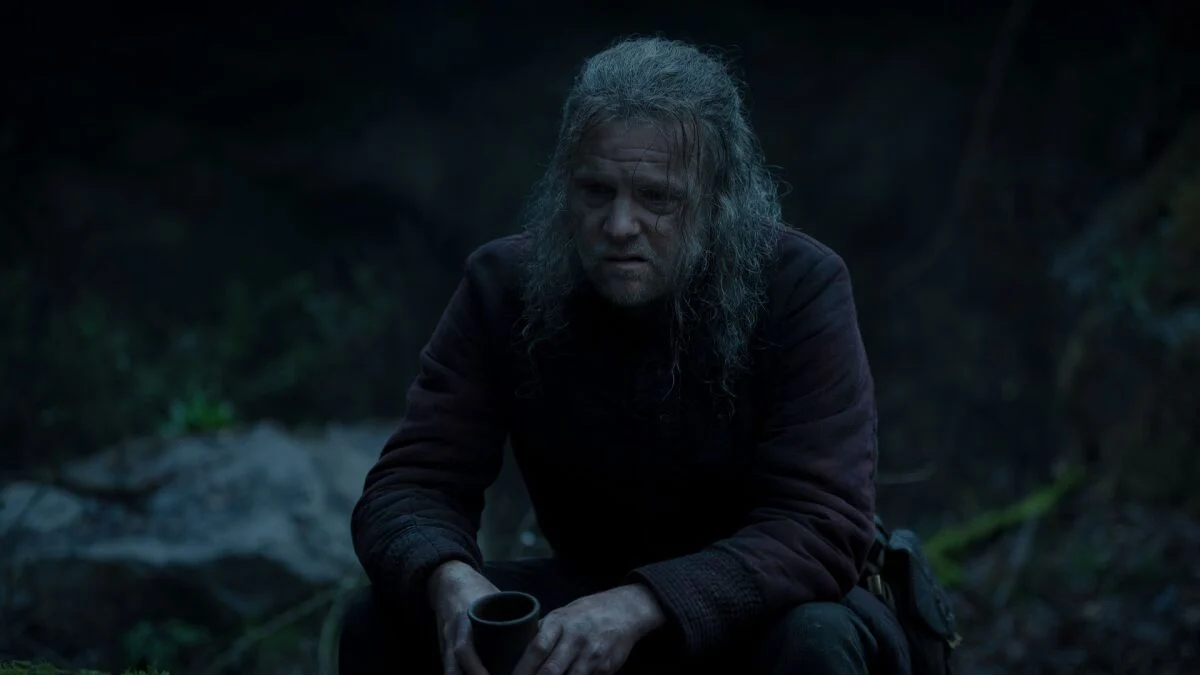
The penultimate chapter of the third season has fundamentally altered the strategic landscape of the Targaryen civil war, signaling a catastrophic shift in loyalties that could leave Queen Rhaenyra Targaryen’s cause in ruins. In a series defined by shifting allegiances and the brutal pursuit of power, the concluding moments of episode 7 suggest that the "dragonseed" experiment—once Rhaenyra’s greatest hope—has become her most dangerous liability. The episode centers on Ulf the White, a commoner turned dragonrider, whose apparent defection to the Greens represents a turning point in the war effort known as the Dance of the Dragons.
The final sequence of the episode provides a chilling look at how easily the tide of war can turn when personal ambition outweighs dynastic loyalty. Standing on a windswept hilltop, Ulf is approached by Lord Ormund, a character whose clandestine operations have been a growing shadow over the season. Their conversation strips away the veneer of loyalty to the Blacks, revealing a transactional relationship that promises to gift the Greens the aerial superiority they lost following the Sowing of the Seeds.
Analyzing the Climactic Encounter in Episode 7
The dialogue between Ulf and Lord Ormund serves as the primary evidence for this massive shift in the narrative. Ormund, portrayed as a master manipulator, preys upon Ulf’s deep-seated resentment toward the high-born Targaryens. He specifically cites an incident where Prince Daemon Targaryen allegedly struck Ulf in the streets of King’s Landing, using it as proof that the Blacks view the dragonseeds as mere disposable tools rather than legitimate members of the nobility.
Ulf’s response confirms that his primary motivation has never been the restoration of Rhaenyra to the Iron Throne, but rather the elevation of his own status. He reminds Ormund of a previous promise regarding a lordship and the castle of Honeyholt. In a move of calculated escalation, Ormund dismisses Honeyholt as a "trifle" and instead offers Ulf the title of Lord of the Tides and the seat of Driftmark. This offer is particularly significant, as Driftmark is the ancestral home of House Velaryon and the seat of Rhaenyra’s Hand, Lord Corlys Velaryon.
The scene concludes with a chilling exchange that underscores the danger Ulf now poses. When Ormund suggests that the world will no longer laugh at Ulf once he assumes his new title, Ulf replies, "No. They will burn." This line confirms that the power of a dragon, in the hands of a man with nothing to lose and everything to gain, is a volatile force that Rhaenyra can no longer control.
The Strategic Significance of Silverwing and the Dragonseeds
To understand why Ulf’s betrayal is so devastating, one must look back at the tactical necessity that led to his recruitment. During the second season, Rhaenyra and her advisors realized that while they had more dragons than the Greens, they lacked the riders to mount them. This led to the "Sowing of the Seeds," a desperate and controversial plan to find individuals of Valyrian descent among the smallfolk who could potentially bond with the unclaimed dragons on Dragonstone.
Ulf was one of the few to survive this process, successfully bonding with Silverwing, the former mount of Queen Alysanne Targaryen. Silverwing is a formidable dragon, known for her size and docile yet powerful nature. With Ulf and Silverwing on her side, Rhaenyra appeared to have secured a decisive advantage over King Aegon II and Prince Regent Aemond Targaryen. The loss of Silverwing to the Green faction does more than just even the numbers; it creates a psychological blow that could shatter the morale of the Black council.
The recruitment of the dragonseeds was always a gamble based on the assumption that these individuals would feel a sense of gratitude or duty toward the Queen who granted them power. However, as the House of the Dragon Season 3, episode 7 ending, explained, the lack of a formal education in Valyrian traditions and the absence of lifelong indoctrination into the Targaryen hierarchy made the dragonseeds susceptible to outside influence.
Ormund’s Manipulation and the Promise of Driftmark
Lord Ormund’s role in this defection cannot be overstated. Throughout the season, he has been positioned as a foil to the more direct military commanders of the Green council. While Aemond relies on the raw power of Vhagar, Ormund uses the "soft power" of bribery, flattery, and political subversion. His ability to identify Ulf’s insecurities—specifically his desire for land and a recognized name—allowed him to flip a dragonrider without a single drop of blood being spilled.
The offer of Driftmark is a masterstroke of political sabotage. By promising Ulf the seat of House Velaryon, the Greens are not only securing a dragon but are also sowing discord between Rhaenyra and her most powerful ally, Lord Corlys. If Ulf attempts to claim Driftmark, it will force Rhaenyra to choose between supporting her dragonrider or her Hand. This internal conflict is exactly what the Greens need to destabilize the Black faction from within.
Furthermore, the mention of Lord Corlys being "missing" or "kidnapped" in previous episodes adds another layer of urgency to the situation. If the Greens have indeed captured the Sea Snake and are now offering his seat to a commoner, they are effectively dismantling the foundation of Rhaenyra’s naval and financial support.
The Psychology of Ulf the White
Ulf’s character arc has been one of the most consistent explorations of class dynamics within the series. From his early appearances in the taverns of King’s Landing, Ulf was depicted as a man who boasted of his royal blood while living in squalor. When he finally gained the power he believed he was entitled to, he found that the reality of noble life involved being a soldier in a war he didn’t fully understand.
His growing dissatisfaction was evident in the episodes leading up to the finale. He felt slighted by the rigid protocols of Dragonstone and the perceived arrogance of the Targaryen princes. To Ulf, Rhaenyra is not a divinely appointed ruler, but a distant employer who demands his life in exchange for a seat at a table where he is not truly welcome. Ormund’s intervention provided Ulf with an exit strategy that aligned with his original goal: the acquisition of wealth and status.
The shift from "Ulf the White," a tavern storyteller, to a potential "Lord of the Tides" represents the ultimate fulfillment of his ambitions. However, it also highlights the danger of elevating individuals who do not share the ideological goals of the cause they serve. For Ulf, the dragon is a tool for personal advancement, not a symbol of a dynasty’s right to rule.
Historical Context and Broader Implications
In the broader context of the Dance of the Dragons, this betrayal—often referred to in the lore as the "Treachery at Tumbleton"—marks a period of extreme instability. While the show has taken its own path in depicting these events, the thematic core remains the same: the dragons are a nuclear deterrent that is only as reliable as the people who ride them.
The defection of a dragonrider is a catastrophic intelligence and military failure for Rhaenyra. It exposes the vulnerability of Dragonstone and suggests that her other dragonseeds, such as Hugh Hammer, may also be reconsidering their positions. If the Greens can flip one rider, they can theoretically flip them all, provided the price is right. This turns the war into a bidding war rather than a conflict of legitimacy.
The impact on the smallfolk and the minor lords of Westeros will also be significant. Seeing a commoner rise to the level of a Lord of the Tides through betrayal sends a message that the old social order is crumbling. It encourages further opportunism and suggests that loyalty is a commodity to be traded for the highest offer.
Next Steps for Team Black and Team Green
As the series heads toward the Season 3 finale, the immediate consequence of the House of the Dragon Season 3, episode 7 ending, explained here, will be a scramble for damage control. Rhaenyra must determine the extent of the betrayal and decide whether to strike at Ulf before he can fully integrate into the Green military structure. However, attacking a dragonrider as formidable as Ulf while he is mounted on Silverwing is a suicide mission for almost anyone except Rhaenyra herself or Daemon.
For the Greens, the acquisition of Ulf is the first major victory they have had in weeks. It compensates for the injuries sustained by King Aegon II and the stalemate currently facing Aemond and Vhagar. With Silverwing on their side, the Greens can now project power across the Blackwater in a way they couldn’t before.
The episode leaves several questions unanswered: Will the other dragonseeds follow Ulf’s lead? How will Prince Daemon react to the news that his "tools" have turned against him? And most importantly, can Rhaenyra Targaryen survive the fallout of a plan that was supposed to save her throne but may have ultimately doomed it? The board has been reset, and the pieces are moving toward a final, fiery confrontation.