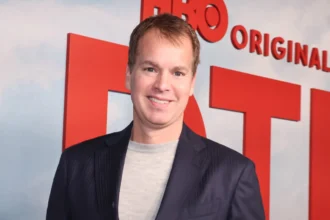
AJ Scaramucci, founder of Solari Capital and son of investor Anthony Scaramucci, has significantly escalated his investment in "alternative assets," making headlines with a record-setting $2 million acquisition of Tales of Suspense No. 39, the 1963 Marvel comic that first introduced Iron Man. This landmark purchase, exclusively reported by The Hollywood Reporter, follows his earlier $16.5 million outlay for a rare Pokémon card, positioning Scaramucci’s new venture, Treasure Trove, at the forefront of a burgeoning market that views pop culture artifacts and historical documents as legitimate investment vehicles, potentially destined to reach the $100 million mark.
Scaramucci, relatively new to the collecting sphere, entered the hobby during the COVID-19 pandemic. Unlike many traditional collectors driven by pure nostalgia or "nerd passion," he applies a calculated, unemotional investment lens to these cultural materials, likening them to established financial instruments. "I see collectibles in the same way I see my gold and Bitcoin investing," Scaramucci stated, emphasizing a paradigm shift from hobbyist pursuit to serious asset management.
The Rise of Cultural Store Value
His venture, Treasure Trove, is dedicated to curating what he terms "cultural store value" – a new class of assets distinct from traditional physical stores of value like gold or digital ones like Bitcoin. This philosophy underpins his strategy to acquire iconic items, from rare comic books to historical manuscripts, holding them for decades rather than engaging in short-term flips. Scaramucci asserts that these items possess inherent cultural significance that, when paired with rarity and authentication, translates into formidable investment potential.
The recent Tales of Suspense No. 39 acquisition cemented its place alongside Amazing Fantasy No. 15 (Spider-Man’s debut) and Fantastic Four No. 1 as one of only three Silver Age comics to achieve a 9.8 mint or near-mint grade from Certify Guarantee Company (CGC). This particular copy is the sole known example to receive such a pristine grade, contributing significantly to its record-breaking valuation. Just two years prior, the same comic sold for $840,000, underscoring the rapid appreciation in this specialized market.
From Pikachu to Iron Man: High-Stakes Acquisitions
Scaramucci’s journey into high-value collectibles began earlier this year with the stunning $16.5 million purchase of a rare Pikachu Illustrator Pokémon card. This particular card, a PSA 10 grade and a "one of one asset," is considered the pinnacle of Pokémon memorabilia. Scaramucci justifies the price by pointing to Pokémon’s staggering financial success, having generated $288 billion in lifetime sales over 30 years, surpassing franchises like Star Wars, Marvel, and Harry Potter combined.

"A mere $16.5 million for the number one collectible in the highest grossing franchise of all time, in my view, was an absolute no-brainer," Scaramucci explained. He expressed high conviction that this specific Pikachu Illustrator card will "inevitably be a $100 million card," a bold prediction that has reverberated throughout the collecting community. This assertion highlights his belief in the long-term, exponential growth of these cultural touchstones.
The subsequent $2 million Iron Man comic acquisition further illustrates his strategy. Scaramucci, who grew up with the Marvel Cinematic Universe, views these comics as foundational elements of the highest-grossing film franchise in history, which has amassed nearly $35 billion at the box office. He considers the Tales of Suspense No. 39 comic "unbelievably undervalued and under-appreciated" at $2 million, especially when compared to Action Comics No. 1 (Superman’s first appearance), which sold for $15 million in a CGC 9.0 grade.
Market Dynamics and Collector Skepticism
Scaramucci’s aggressive entry and high-profile spending have generated considerable debate within the established collecting community. Many traditional enthusiasts view him and investors like him as "speculators" who artificially inflate prices, creating a "Tulip Fever" scenario where demand and prices skyrocket based on speculative interest rather than intrinsic value or long-standing passion.
Responding to these criticisms, Scaramucci draws parallels to the fine art market, where paintings by Monet or Dali command hundreds of millions of dollars. "A comic book or a Pikachu card, I view these things as fine art," he argued. "They’re just an up and coming asset class. So I think a world where comic books could indeed sell for $50 to $100 million, I don’t think that should surprise anybody when it happens. I think it really is inevitable." This perspective frames pop culture artifacts not as mere toys or entertainment, but as culturally significant works on par with traditional masterpieces.
The investment approach for these assets involves a blend of art and science, similar to underwriting securities in venture capital. Scaramucci points to operating companies like Disney, which continuously invest in propagating and nurturing intellectual property like Marvel characters, thereby creating a sustained demand and cultural relevance for related collectibles. This corporate backing, he believes, solidifies the long-term value proposition of these items.
Building a Credible Investment Platform
To bolster Treasure Trove’s credibility and aid in sourcing high-value items, Scaramucci has assembled an impressive advisory board. This board includes prominent figures from the collectibles auction world: Ken Goldin, founder of Goldin Auctions, and Jim Halperin and Steve Ivy, co-founders of Heritage Auctions. Toy executive and seasoned collector Jermy Padawar also sits on the board, bringing additional industry expertise.

Padawar affirmed the evolving landscape of the collectibles market, stating, "Collectibles have evolved from passion assets to a serious global asset class, and Treasure Trove is building for what comes next." The auction house founders provide invaluable access to rare "grail-level pieces" and deep market insights, facilitating Treasure Trove’s acquisition strategy. Beyond acquisitions, the venture employs a media strategy that involves creating videos to document the search for, and acquisition of, these unique items, highlighting the "characters behind them."
Scaramucci envisions Treasure Trove becoming an "800-pound gorilla" in the capital markets for collectibles, aspiring to rival the financial power of institutional investors and billionaires like Jeff Bezos and Ken Griffin. While acknowledging that Treasure Trove is "not quite there yet," he reiterates that such dominance remains the aspiration for his rapidly expanding enterprise.
The Future of "Cultural Store Value"
Treasure Trove’s long-term vision extends beyond comics and cards. Scaramucci’s "hit list" for future acquisitions includes incredibly rare and historically significant items across various categories. In the natural history realm, he is "keen in the dinosaur space," targeting T-Rex, Triceratops, and Stegosaurus fossils as "the big three grails."
Perhaps even more ambitious are his plans in the manuscript space, particularly Americana. Items like the Emancipation Proclamation, the Declaration of Independence, the Bill of Rights, and the U.S. Constitution are all on his acquisition radar. These items present immense challenges in terms of scarcity and authentication but represent the ultimate expression of cultural and historical value.
Addressing concerns about the housing of these invaluable assets, Scaramucci outlined a plan to partner with museums globally. Instead of storing items unseen in private vaults, Treasure Trove aims to build exhibits and installations, allowing the public to "see and enjoy these things." This approach not only enhances the cultural impact but also legitimizes these assets as part of a shared heritage, further cementing their status as a profound "cultural store value" in the eyes of investors and the public alike. Scaramucci’s bold vision signals a significant shift in how cultural artifacts are perceived, valued, and integrated into the global financial landscape, potentially ushering in an era where a $100M Pokémon card is no longer a fantastical notion but an inevitable reality.