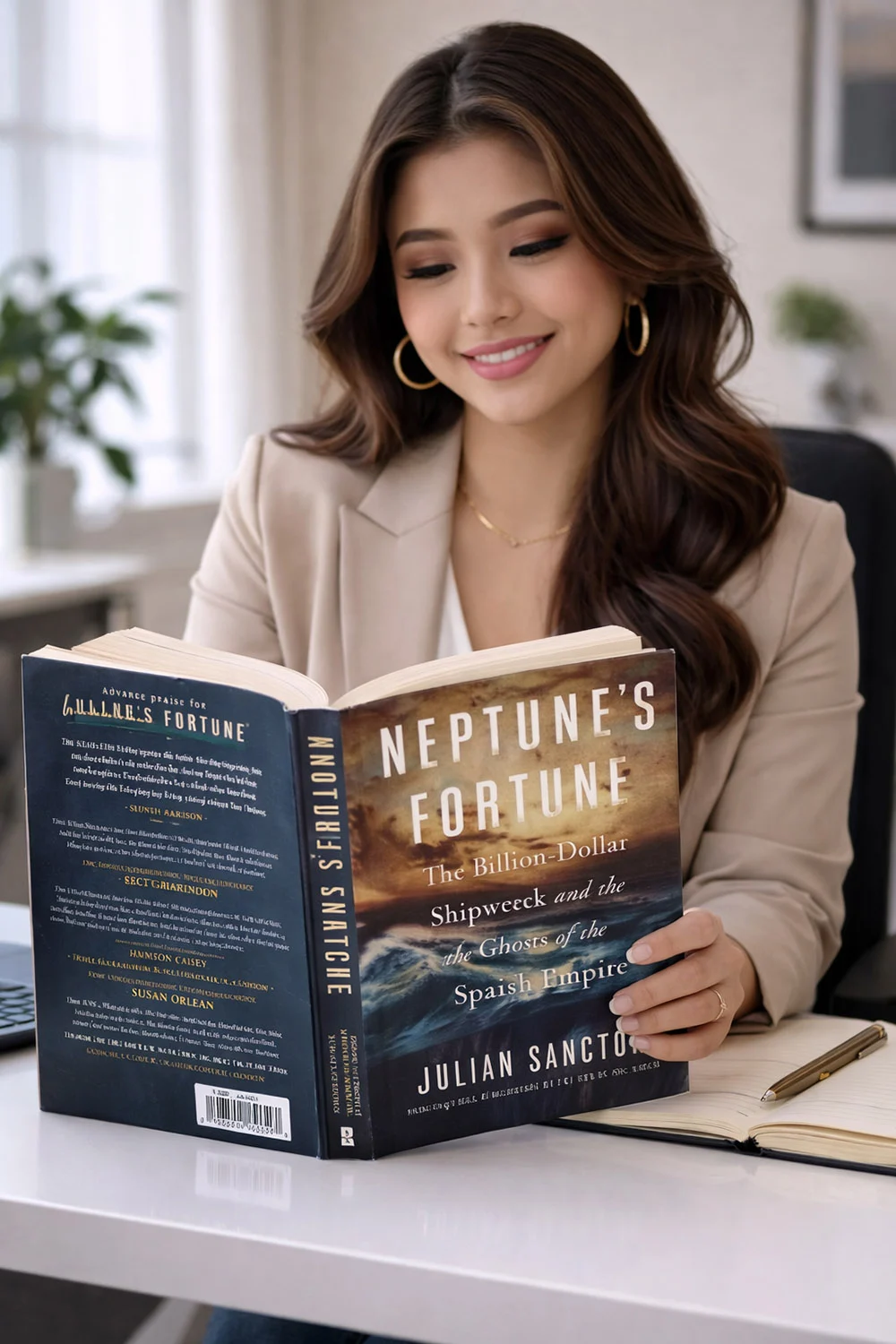
A sophisticated, AI-driven phishing scam is currently inundating authors with highly personalized offers for book promotion, exploiting their pre-publication anxieties and the evolving digital landscape. The author of a recent Hollywood Reporter exposé detailed their personal experience as a target, shedding light on the alarming scale and methods of this widespread AI scam targeting authors that leverages advanced language models to create convincing, yet fraudulent, marketing pitches.
Authors often find themselves in a uniquely vulnerable state in the weeks leading up to a book’s release. This period, described by one writer as "the calm before the calm," is characterized by a volatile mix of hope for bestseller status and dread of obscurity in a crowded market. It is precisely this emotional flux that scammers are exploiting with unprecedented efficacy.
The Digital Deluge: How AI Amplifies Deception
The author began receiving a deluge of emails during this pre-publication lull for their nonfictional nautical tale, Neptune’s Fortune. These messages, from purportedly legitimate publishing professionals with names ranging from conventional to bizarre, followed a remarkably consistent template. Each email featured four to five smoothly written paragraphs, commencing with excessively flattering descriptions of the author’s work – "a masterclass in historical adventure and human obsession," for example – before culminating in an offer to dramatically increase the book’s visibility.
These offers included promises of social media campaigns, podcast appearances, an influx of positive Goodreads reviews, or introductions to influential online book clubs. While the initial pitches omitted fees, subsequent communications would cite costs ranging from hundreds to thousands of dollars, presented as a "small price for glory." The author quickly recognized the "sickly-sweet reek of LLM sycophancy," noting the bland fluency characteristic of AI-generated text. Many pitches included links to hastily constructed "Potemkin websites" featuring AI-generated covers of non-existent books by non-existent authors, all supposedly clients of the scamming entities. Even the sender’s profile photos, typically of "comely young women," exhibited "nightmarish hallucinations" in the background, betraying their AI origin.
The scale of this operation is immense. What initially seemed like an isolated incident quickly proved to be a pervasive threat. The author learned that nearly all of their peers, including literary titans like Patrick Radden Keefe (Say Nothing) and Dan Brown (The Da Vinci Code), were experiencing the same relentless onslaught. Some authors reported receiving thousands of these emails, which, due to their polished and personalized language, often bypassed standard spam filters.
Patrick Radden Keefe confirmed the relentless nature of the attacks, stating he wakes up to "two or three of these emails" every morning. Dan Brown publicly shared one such missive on Facebook, which praised his work as "rare to see a story that balances heart, message, and craft the way yours does," before delivering the familiar pitch: "But here’s the thing: too many incredible books like yours disappear in the noise." This widespread targeting underscores how generative AI, while not yet delivering a broad economic productivity boom, has "turbocharged this kind of small-bore scam, drowning our inboxes in highly customized slop."
Exploiting Vulnerability in a Shifting Industry
Authors, with their unique blend of ego and insecurity, have historically been prime targets for scammers. A few years prior to the widespread adoption of chatbots, a sophisticated operation based in the Philippines allegedly defrauded some 800 primarily self-published authors of $44 million, promising to adapt their books into films for exorbitant, unfulfilled fees. However, the advent of free generative AI has fundamentally altered the scamming strategy, shifting from targeted "sniper attacks" to a "hail of machine gun fire."
This technological leap has driven the cost of executing such scams—including researching a mark, drafting personalized emails, and maintaining correspondence—down to "essentially zero." This means that even if the vast majority of pitches miss their target, a single successful "hit" can sustain the operation. As historian Edward Balleisen of Duke University, author of Fraud: An American History from Barnum to Madoff, explains, this AI scam targeting authors is a modern iteration of the "advanced fee scam," or "Spanish Prisoner" con, where a significant reward is dangled in exchange for a smaller upfront payment.
The book industry itself presents fertile ground for these schemes. The rise of "indie publishing" and the diminishing influence of traditional marketing channels—newspaper reviews, book tours, radio appearances—have made a book’s success increasingly reliant on the unpredictable forces of online virality. Many authors, especially those not "super invested in social media," find platforms like BookTok to be a "mysterious place," creating a profound "point of insecurity that [the scammers] are taking advantage of," notes Christie Hinrichs of Authors Unbound, an advocacy agency.
Furthermore, some authors feel underserved by traditional publishers, perceiving a "withdraw[al] of publisher support around new titles post-Covid." This perceived gap in marketing efforts makes them more susceptible to external offers, even those that seem too good to be true. The "engine of longing" for success, recognition, and prestige among authors is so potent, according to historian Elyse Graham, that it can "power an entire scam infrastructure," akin to the desires exploited in romance or get-rich-quick schemes.
Unmasking the Operators Behind the AI Scam
Driven by a desire to understand the scam’s mechanics, the author engaged with one sender, "Nilda Mulan," whose AI-generated profile photo coincidentally resembled Disney’s Mulan in a pantsuit. "Nilda" offered to feature Neptune’s Fortune in "The European Book Club" for a "modest participation fee." When pressed for verification, such as a photo of herself holding the book or a newspaper with the current date, "Nilda’s" AI-powered responses politely deflected, citing "internal policies."

Eventually, "Nilda" provided an AI-generated image of herself avidly reading the author’s book, wearing the exact same outfit and sitting in the same chair as her profile photo. However, glaring inconsistencies, such as garbled text on the book’s spine and back cover, betrayed its artificial origin—a detail "Nilda" attributed to "image quality and compression."
A subsequent interaction with another scammer, "Nicole Powell," led to a Zoom call with her purported assistant, "Penny." The human behind the AI persona was a stark contrast to the polished image. "Penny" appeared to be in her early twenties, shabbily dressed, with a missing tooth, and spoke with far less fluency than the AI. Her background revealed a filthy wall and loud voices, suggesting a difficult environment. "Penny" seemed to know nothing about the author’s book, despite "Nicole’s" assurances.
This interaction highlighted a disturbing aspect of the scam: the human operators are often themselves victims. Many cyber-scammers in developing countries are lured overseas by human trafficking rings with fake job listings, their travel documents confiscated, and then forced into fraud operations targeting individuals in wealthier nations. These recruits face unattainable sales quotas, often under threat of physical torture. While the author could not confirm "Penny’s" situation, her apparent helplessness made it plausible. The interaction also revealed how over-reliance on LLMs might be eroding the scammers’ ability to defraud without AI’s assistance.
Victoria Strauss, founder of Writers Beware, a site dedicated to exposing such swindles, has traced the operation primarily to Nigeria, based on IP addresses and geolocated social media posts. She notes that most scammers request payment via platforms like PayPal, Upwork, Fiverr, and Coachly, popular among West African freelancers. Despite the immense volume of emails, Strauss believes the Nigerian ring itself may be relatively small, with AI making the vast scale possible by enabling "endless exchanges."
Broader Implications and Industry Response
This AI scam targeting authors represents a chilling realization of AI’s potential for misuse, challenging the optimistic visions of its evangelists who promised a democratization of creativity. While OpenAI’s former CTO, Mira Murati, argued that AI could "democratize creativity on an unprecedented scale," removing barriers for those lacking opportunity or talent, the reality has also seen it removing "barriers for scammers."
The insidious nature of these scams extends beyond financial loss, impacting authors’ morale and trust. Adam Makos, a bestselling military historian whose identity was impersonated, expressed concern that such scams could be "crushing to a new author’s morale," playing with "emotions, their outlook on humanity. Their belief in the future and their belief in their own potential." He lamented the "death of truth, the death of reality" in an age where safeguards are seemingly absent.
The technology’s versatility means its scope could theoretically expand to any creative profession. Musicians have already begun to experience similar "flattery-forward" approaches, though to a lesser degree than writers. The issue has also fueled broader public opposition to generative AI, leading to a flurry of lawsuits, including a class action against OpenAI and Microsoft for copyright infringement, in which the original article’s author was initially a plaintiff.
Publishers are actively working to combat these threats, with many featuring warning pages on their websites about scams impersonating staff or targeting authors. However, keeping pace with the rapid evolution of these AI-powered schemes is a "whack-a-mole situation," according to a general counsel for a major publishing house. Law enforcement agencies, such as the FBI, often refer victims to the Internet Crime Complaint Center (IC3.gov), highlighting the global and intractable nature of the problem.
The Evolving Threat of AI-Powered Scams
The scammers also exploit the allure of celebrity, impersonating renowned authors like Margaret Atwood, Rick Riordan, and Stephen King in initial outreach to hook recipients into conversations. Elena Ferrante, the famously pseudonymous Italian author, is frequently cited, perhaps due to her elusive identity, with scammers even providing a fake Gmail address for her.
Edward Balleisen posits that scams typically follow a life cycle: as awareness spreads through press reports and public discourse, people grow wise, and the scam’s profitability diminishes. For instance, the infamous "Nigerian Prince" scam is now widely recognized. However, AI’s ability to generate an "unbelievably numerous and prolific" volume of outreach significantly lowers the threshold for a profitable "hit rate," extending the lifespan of such cons.
The pervasive nature of AI-enabled deception extends beyond authors. Even individuals considered "AI-savvy" can fall victim to new variants. The author concluded their report with a personal anecdote: they mistakenly responded to an AI-generated birthday invitation from a friend, only to find their email subsequently "flooded with AI evites from ‘friends.’" This experience served as a stark reminder that in an increasingly AI-saturated digital environment, vigilance against evolving forms of digital fraud is more critical than ever.