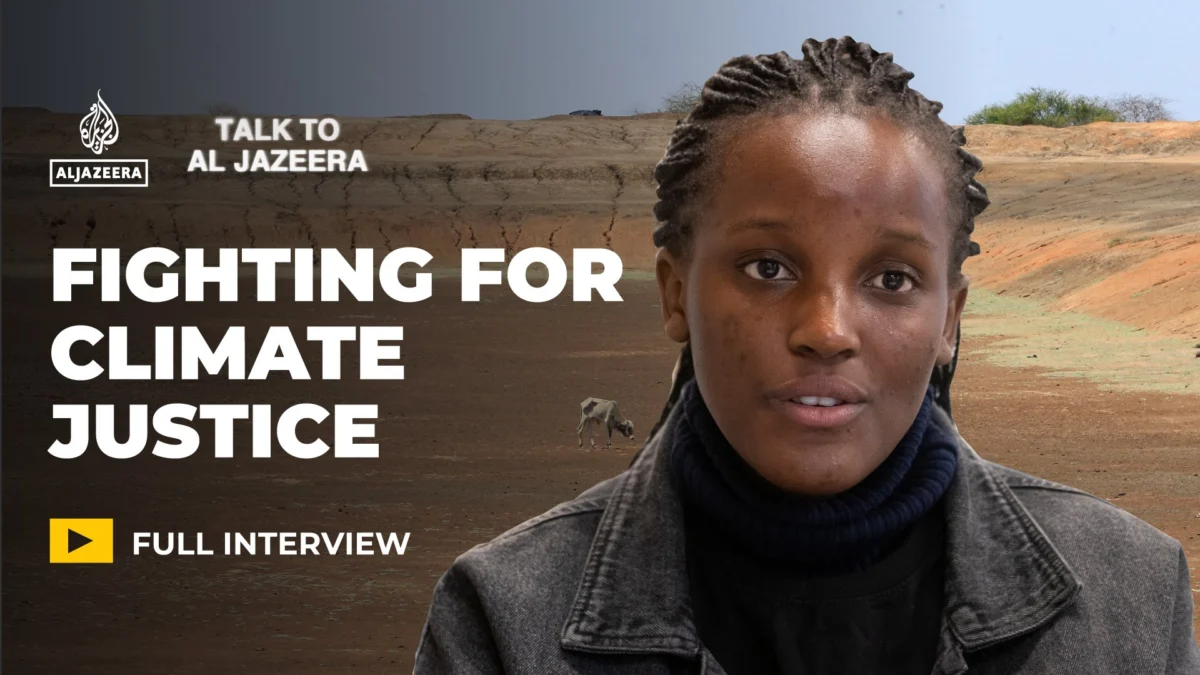
Ugandan climate activist Vanessa Nakate forcefully asserted that Africa bears no responsibility for the escalating global climate crisis, despite being disproportionately impacted by its devastating consequences. Speaking from the front lines of international climate advocacy, Nakate has transitioned from grassroots activism in her native Kampala to demanding accountability from global leaders in the highest echelons of power. Her tireless efforts have placed her at the vanguard of the global climate movement, consistently urging world leaders to accelerate action on climate change, participating in pivotal protests, and delivering impassioned speeches at international forums detailing the existential threats posed by global warming.
The Disproportionate Burden on Africa
Nakate’s central message underscores a stark global injustice: nations that have contributed the least to greenhouse gas emissions are suffering the most severe impacts of a crisis they did not create. This disparity is not merely an abstract concept for the millions of Africans facing its realities. From the encroaching deserts in the Sahel to the intensified droughts in East Africa and the rising sea levels threatening coastal communities, the continent is on the front lines of climate-induced devastation.
The consequences are multifaceted and deeply ingrained in the fabric of African societies. Agricultural sectors, which form the backbone of many African economies and provide livelihoods for a significant portion of the population, are increasingly vulnerable. Erratic rainfall patterns, prolonged droughts, and unprecedented floods decimate crops, leading to food insecurity and exacerbating existing poverty. This directly impacts millions, forcing displacement and migration as communities struggle to adapt to changing environmental conditions.
A Voice Amplified on the Global Stage
Nakate’s journey into climate activism began with a profound personal connection to the issue. Witnessing the tangible effects of climate change in her own community, she felt compelled to act. Her activism gained significant international traction following her powerful speech at the 2019 United Nations Climate Change Conference (COP25) in Madrid, where she, along with other young African climate activists, was notably excluded from a photo opportunity with then-IMF Managing Director Christine Lagarde. This incident, which Nakate eloquently highlighted, drew global attention to the marginalization of African voices in crucial climate discussions.
Since then, she has become a prominent figure, using her platform as a UNICEF Goodwill Ambassador to amplify the voices of those most affected. Her role with UNICEF allows her to engage directly with communities on the ground, providing firsthand accounts of the human cost of climate change. This direct experience fuels her unwavering conviction that the major polluters, predominantly industrialized nations, must be held accountable for their historical and ongoing contributions to the crisis.
The Slow Pace of Progress and the Call for Accountability
Despite her persistent advocacy and the growing global awareness of climate change, Nakate admits that progress has been disappointingly slow. The urgency of the crisis, she argues, is not being met with the commensurate scale and speed of action required. This sentiment is echoed by many in the climate justice movement who point to the persistent gap between climate pledges made by developed nations and the actual implementation of policies and financial commitments.
The concept of "climate justice" is central to Nakate’s activism. It demands that those most responsible for the climate crisis should bear the greatest burden of addressing it, both in terms of mitigation efforts and financial support for adaptation and loss and damage in vulnerable countries. For Nakate, this means industrialized nations must significantly increase their financial contributions to developing countries to help them build resilience and transition to cleaner energy sources.
Tackling the Neglect of African Narratives
A recurring theme in Nakate’s advocacy is the persistent marginalization of Africa in global climate discussions. She consistently highlights how the continent’s unique challenges and contributions are often overlooked or misrepresented. This neglect has tangible consequences, leading to climate solutions that are not tailored to local contexts or to the underfunding of adaptation and resilience projects that are critical for African nations.
The narrative surrounding climate change often centers on the experiences of the Global North, inadvertently sidelining the profound impacts and innovative solutions emerging from the African continent. Nakate’s work aims to rebalance this narrative, showcasing the resilience and agency of African communities and demanding that their perspectives be central to global climate policy-making.
Navigating Despair, Fueled by Hope
The sheer scale of the climate crisis and the perceived inertia of global powers can be overwhelming. Nakate openly admits to experiencing moments of despair and hopelessness when confronted with the slow pace of change and the magnitude of the challenge. However, she finds renewed motivation and encouragement in the burgeoning grassroots initiatives that are springing up across Africa and around the world.
These community-led efforts, often driven by local knowledge and ingenuity, are demonstrating tangible solutions and fostering resilience. From sustainable agriculture practices to renewable energy projects and community-based conservation efforts, these initiatives offer a powerful counter-narrative to the prevailing sense of helplessness. Nakate sees these grassroots movements as vital engines of change, proving that action is possible at every level and that collective effort can indeed make a difference.
The Global Climate Crisis: A Snapshot of African Realities
The African continent, home to over 1.4 billion people, is experiencing climate change impacts at an accelerated rate compared to the global average. Projections indicate that by 2050, the continent could face losses of up to 15% of its GDP due to climate change, a staggering figure that underscores the economic and social implications of inaction.
Key Impacts Across Africa:
- Drought and Desertification: Regions like the Sahel are experiencing increased desertification, displacing communities and impacting pastoral livelihoods. The Horn of Africa has endured prolonged and severe droughts, leading to widespread food shortages and humanitarian crises.
- Flooding and Extreme Weather: Coastal cities, such as those in Nigeria and Mozambique, are increasingly vulnerable to rising sea levels and storm surges. Inland, unpredictable and intense rainfall events are causing devastating floods, destroying infrastructure and displacing populations.
- Agricultural Vulnerability: Over 60% of Africa’s population relies on rain-fed agriculture. Changes in rainfall patterns, rising temperatures, and increased pest outbreaks directly threaten food security and agricultural economies.
- Water Scarcity: Many regions are facing increased water stress due to changing precipitation patterns and glacial melt from mountains like Kilimanjaro. This impacts both human consumption and agricultural needs.
- Health Impacts: Climate change exacerbates existing health challenges. Increased temperatures can lead to heatstroke and the spread of vector-borne diseases like malaria and dengue fever.
The Role of Developed Nations and International Finance
Nakate’s persistent call for accountability is rooted in the historical context of industrialization. Developed nations, whose economies were built on fossil fuels, are overwhelmingly responsible for the accumulation of greenhouse gases in the atmosphere. International climate negotiations have long grappled with the issue of "common but differentiated responsibilities," a principle that acknowledges this historical disparity.
Developing countries, including those in Africa, argue that developed nations have a moral and financial obligation to support their climate adaptation and mitigation efforts. This includes providing financial assistance for renewable energy projects, climate-resilient infrastructure, and compensation for loss and damage already incurred due to climate impacts. However, the promised financial commitments from developed countries have often fallen short of expectations, a point frequently raised by activists like Nakate.
The Power of Youth and Grassroots Movements
The rise of young climate activists, including Nakate, has been a defining feature of the global climate movement in recent years. Their unwavering commitment and powerful messaging have injected a sense of urgency into climate discourse. Nakate, alongside figures like Greta Thunberg and other African youth leaders, has played a crucial role in galvanizing public opinion and pressuring policymakers.
Beyond the prominent activists, a vast network of grassroots organizations across Africa is working on the ground to build resilience and implement sustainable solutions. These initiatives, though often underfunded and lacking international visibility, are crucial for adapting to the realities of climate change and fostering local solutions. They represent a powerful force for change, demonstrating the agency and innovation present within African communities.
Looking Ahead: The Imperative for Action
The path forward for Africa and the world in addressing the climate crisis is fraught with challenges, but also illuminated by the persistent advocacy of individuals like Vanessa Nakate and the resilience of communities on the front lines. Her message is a stark reminder that the fight for climate justice is a fight for equity, accountability, and the future of humanity.
The continued exclusion of African voices and the slow pace of global action risk exacerbating existing inequalities and leading to irreversible environmental damage. As the world grapples with the escalating impacts of climate change, the imperative to listen to, support, and empower those most affected, particularly the vibrant and determined voices from Africa, has never been greater. The responsibility lies not with the continent least responsible for the crisis, but with those who have the capacity and the historical obligation to act decisively.