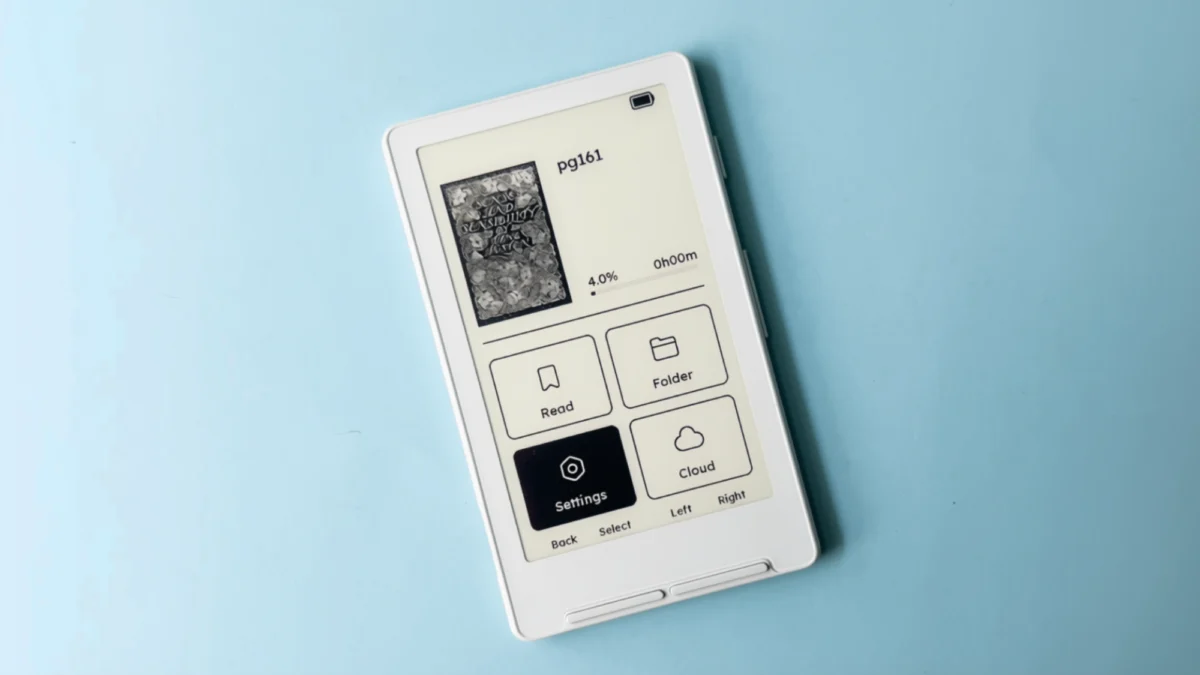
The hardware manufacturer Xteink is reportedly preparing to launch its latest ultra-portable reading device, the Xteink S4, marking a significant technological pivot for the brand by adopting the Android 11 operating system. This new model represents a departure from the company’s previous reliance on proprietary Linux-based software, a move expected to drastically expand the device’s utility through third-party application support. While the device has entered the preorder phase in the Chinese market at an aggressive price point, a confirmed release date for the United States remains unavailable, leaving American consumers to rely on older, more restricted hardware.
For years, the niche market for pocket-sized e-readers has been defined by a trade-off between portability and software flexibility. Xteink’s previous offerings, such as the X3 and X4, gained a following for their diminutive footprints and distraction-free environments but were frequently criticized for their rigid file ecosystems. These devices primarily supported DRM-free EPUB files, effectively locking out users who maintained extensive libraries on major platforms like Amazon’s Kindle or Rakuten’s Kobo. The reported shift to Android 11 in the Xteink S4 is designed to dismantle these barriers, allowing users to install standard reading applications and synchronize their progress across multiple devices via Wi-Fi.
Technical Evolution of the Xteink S4
The transition to an Android-based architecture is the headline feature of the Xteink S4, but the internal hardware has also seen targeted refinements to accommodate the more demanding operating system. According to data emerging from social media platforms like RedNote and industry reports, the S4 will feature a 4.3-inch E Ink touchscreen. This display maintains a resolution of 220 pixels per inch (ppi), a standard that balances text clarity with power efficiency for a screen of this size.
To ensure the Android 11 environment runs smoothly, Xteink has equipped the S4 with 2GB of RAM and 32GB of internal solid-state storage. While these specifications might seem modest by smartphone standards, they are substantial for an E Ink device, where the primary goal is rendering text and static images rather than high-speed video or gaming. The inclusion of 32GB of storage is particularly noteworthy for bibliophiles, as it provides ample space for thousands of eBooks, even when including large PDF files or graphic novels.
One of the most requested upgrades appearing in the S4 is the integration of a front-light system. Unlike its predecessors, which often required external light sources for nighttime reading, the S4 includes an adjustable front light with both cool and warm color temperature settings. This allows users to reduce blue light exposure in the evening, a feature that has become a staple in premium e-readers from larger manufacturers like Amazon and Barnes & Noble.

Hardware Refinements and Portable Design
Beyond the internal software shift, the Xteink S4 introduces physical changes that signal a move toward modern industry standards. The device has moved away from the proprietary pogo-pin charging system found on the X4 Pro, opting instead for a universal USB-C port. This change simplifies the user experience, allowing owners to use the same cables they utilize for their smartphones, tablets, and laptops.
The form factor remains the S4’s primary selling point. At 4.3 inches, the device is roughly the size of a modern smartphone, making it significantly more portable than the standard 6-inch or 7-inch e-readers that dominate the market. This "phone-shaped" design is part of a growing trend in the e-reader industry, catering to users who want a dedicated reading device that fits easily into a pocket or a small bag for commutes and travel.
The aesthetic of the device continues Xteink’s minimalist philosophy. Early images suggest a clean, distraction-free bezel and a lightweight chassis. By focusing on a small screen with high-efficiency E Ink technology, the S4 aims to provide weeks of battery life, though the addition of the more power-hungry Android OS and Wi-Fi connectivity will likely result in a shorter battery cycle compared to the older, more basic Linux models.
Overcoming File Compatibility and DRM Restrictions
The most significant consequence of the Android Xteink e-reader is the resolution of long-standing digital rights management (DRM) issues. In the previous Linux-based ecosystem, users were forced to strip DRM from their purchased books or rely solely on open-source, public-domain files. This technical hurdle acted as a major deterrent for the average consumer who buys books through mainstream digital storefronts.
By running Android 11, the S4 can theoretically access the Google Play Store or allow for the sideloading of APK files. This means that for the first time, an Xteink user can download the Kindle, Kobo, Libby, or Scribd apps directly onto the device. This capability transforms the S4 from a niche hobbyist tool into a versatile companion device for the broader reading public.
Furthermore, the integration of Wi-Fi allows for seamless cloud synchronization. Users who start a chapter on their Kindle Paperwhite at home can pick up exactly where they left off on their Xteink S4 while standing on a crowded subway. This interoperability is a critical factor in the modern "read anywhere" culture, where consumers expect their digital content to follow them across various hardware platforms.

Market Disruption and the $50 Price Point
The reported pricing of the Xteink S4 has sent ripples through the tech community. Currently available for preorder in China for approximately $50 USD, the device is positioned as an entry-level powerhouse. If this pricing remains consistent or even slightly higher for a potential international release, it would undercut almost every other Android-based e-reader currently on the market.
Competitors in the "tiny e-reader" space, such as the Boox Palma, often retail for over $250. While the Palma offers higher specifications—including a faster processor and a camera for document scanning—the Xteink S4 targets a different demographic. It appeals to the budget-conscious reader who wants the benefits of E Ink and Android without the premium price tag associated with high-end multifunction tablets.
This aggressive pricing strategy suggests that Xteink is looking to scale its user base rapidly. By offering a device that costs less than a few new hardcover books, the company is lowering the barrier to entry for E Ink technology. This could potentially disrupt the secondary market for used Kindles and force other manufacturers to reconsider their pricing structures for small-form-factor devices.
The Pocketable E-Reader Trend and Digital Wellness
The emergence of the Android Xteink e-reader arrives at a time of increasing interest in digital wellness and "minimalist" technology. As smartphone addiction becomes a growing concern, many consumers are seeking "dumb-ish" devices—gadgets that provide the utility of a smartphone without the constant barrage of social media notifications, emails, and algorithmic distractions.
Pocket-sized e-readers occupy a unique space in this movement. They offer the portability of a phone but utilize a screen technology that is easy on the eyes and unsuited for doom-scrolling. The E Ink display’s slow refresh rate inherently discourages the use of fast-paced apps like TikTok or Instagram, effectively forcing the user to focus on long-form reading.
By adding Android to this equation, Xteink is providing a middle ground. Users can access the specific utilities they need—such as a reading app or perhaps a simple note-taking tool—while maintaining the physical and visual boundaries that make e-readers superior to smartphones for literacy. This "focused utility" is becoming a major selling point for niche electronics in the mid-2020s.

Global Availability and the US Market Outlook
Despite the excitement surrounding the S4, the lack of a US release date remains a significant hurdle for North American enthusiasts. Historically, small Chinese tech firms have faced challenges in establishing reliable distribution networks and meeting the regulatory requirements for the US market. Currently, American consumers interested in the brand can only purchase older models, such as the X3 and X4, through third-party importers or specific Amazon listings.
The delay in a US launch may also be attributed to the complexities of localization. While Android 11 is a global platform, ensuring that the software interface is fully optimized for English-speaking users and that it meets Western standards for data privacy and app compatibility can take time. Xteink has been reached for comment regarding their international roadmap, but the company has yet to provide a definitive timeline for a Western debut.
For now, the US market for small E Ink devices remains underserved. While the Boox Palma and various HiSense E Ink phones exist, they are often priced as luxury items. The Xteink S4, with its $50 price point and open Android system, represents a "missing link" in the American market—a cheap, capable, and ultra-portable reader that could bring E Ink to a much wider audience.
Future Implications for the E-Reader Industry
The shift toward Android-based systems in budget e-readers like the Xteink S4 may signal a broader industry trend. As the cost of components for running older versions of Android continues to drop, the incentive for manufacturers to develop and maintain proprietary Linux skins diminishes. Moving to Android allows smaller companies to leverage a massive existing ecosystem of apps and developer support, reducing their own software overhead.
If the Xteink S4 proves successful in its home market, it may prompt industry giants like Amazon to reconsider their closed-ecosystem approach for smaller devices. While the Kindle remains the gold standard for many, the demand for a truly pocketable device that isn’t tied to a single storefront is clearly growing. The S4 represents a challenge to the status quo, proving that versatility and portability do not have to come at a premium price.
As the digital reading landscape continues to evolve, the distinction between a "reading device" and a "tablet" is blurring. However, the Xteink S4 holds firm to the core appeal of the e-reader: a device that prioritizes the written word above all else, now with the added freedom to choose exactly where those words come from. Whether it eventually reaches US shores or remains an elusive import, the S4 has already set a new benchmark for what a budget-friendly, pocket-sized e-reader can achieve.