Global energy markets are in turmoil, with China finding itself at the epicenter of a deepening oil crisis. Record-high crude prices are squeezing Beijing’s economic vitality, exacerbated by significant disruptions to vital export routes from the Middle East. The nation is caught in a precarious balancing act: ensuring its own energy security while simultaneously attempting to prevent a further surge in global oil prices that could trigger wider economic instability.
The current crisis stems from a confluence of geopolitical events and deliberate actions. A key oil pipeline in Saudi Arabia, a crucial artery for delivering crude to China and other Asian markets, has been forced offline. This shutdown, a direct consequence of attacks attributed to an Iran-backed group in Iraq, severely curtails a critical supply channel. Compounding this disruption is the ongoing restriction of exports through the Strait of Hormuz, a vital maritime chokepoint that Iran has effectively rendered a point of contention.
These twin disruptions to established Middle Eastern supply routes arrive at a particularly vulnerable moment for China. The ongoing U.S.-Israel conflict in the region and broader regional instability have created an environment of extreme uncertainty. Furthermore, U.S. sanctions and other international restrictions have significantly complicated China’s access to oil from both Russia and Iran, two of its traditional major suppliers. This multi-pronged assault on its energy lifelines is forcing Chinese refiners to embark on an increasingly desperate and costly search for alternative crude sources. The intense competition for available barrels is inevitably driving up prices, not only within China but across the global energy landscape.
China’s Strategic Stockpiles Tested
Prior to the current escalation, China had strategically positioned itself to absorb initial market shocks. The nation was importing an average of approximately 12 million barrels of crude oil daily, supplemented by its domestic production of around 4.4 million barrels. This robust import volume, exceeding immediate refinery needs, allowed Beijing to build substantial strategic reserves. By the end of the previous year, these stockpiles were estimated to have reached an impressive 1.4 billion barrels.
This considerable buffer played a significant role in moderating the initial impact on the global oil market. As the world’s largest crude importer, China’s decision to temporarily reduce its purchases, channeling surplus oil into reserves, effectively removed demand at a time when global supplies were already tightening. This strategic move, while serving China’s national interest, also helped to prevent a more immediate and drastic price spike on the international stage.
Trita Parsi, executive vice president of the Quincy Institute for Responsible Statecraft, highlighted the broader implications of China’s earlier approach. "It lies in their interests that this conflict the United States started does not lead to a global recession," Parsi told Al Jazeera. He emphasized that China’s reduced imports were not an act of political maneuvering against Iran or a direct appeasement of the United States, but rather a calculated pursuit of its own economic stability. The rationale, Parsi explained, was that a global economic downturn would inevitably have severe repercussions for China.
However, these substantial reserves are now showing signs of depletion. Crude imports saw a notable decline, averaging just 8.1 million barrels per day in the second quarter, a reduction of nearly 4 million barrels per day, or 32 percent, compared to the first three months of the year, according to data from the U.S. Energy Information Administration (EIA). This marked decrease was partly a function of Beijing’s earlier decision to ease restrictions on refined-fuel exports, which had the effect of dampening refinery activity earlier in the conflict.
The Renewed Scramble for Barrels
The current dynamic has shifted dramatically. With refinery activity now increasing and strategic stockpiles being drawn down, China is being compelled to re-enter the market for significant crude volumes. Energy analyst Marc Ayoub noted that independent refiners, who had previously scaled back operations, are now actively seeking imports from diverse sources. "Independent refiners have started looking again for imports from elsewhere," Ayoub stated.
This renewed demand is driven by a dual objective: increasing refinery output to meet domestic needs and rebuilding depleted inventories. "First, they want to increase production from the refineries, and second, they want to build back their inventories," Ayoub explained. Consequently, Chinese buyers are actively scouring the market for any available crude, a competitive pursuit that is further intensifying global price pressures. "So the Chinese are trying to find whatever supplies they can get from the market," he added.
Navigating Alternative Supply Corridors
In the face of Middle Eastern supply disruptions, China’s attention is increasingly turning to alternative sources, with Russia emerging as a primary focus. Russia already holds the position as China’s largest crude supplier, and a significant portion of its oil reaches Chinese ports via routes that bypass the increasingly precarious maritime chokepoints. In 2025, Russia reportedly supplied approximately 20 percent of China’s total crude imports.
The ESPO (Eastern Siberia-Pacific Ocean) blend, shipped from Russia’s Pacific coast, offers a logistical advantage, reaching Chinese ports in less than a week. Additionally, oil flows overland through existing pipeline infrastructure, further streamlining delivery. This accessibility has led to a rapid uptake of available Russian crude by Chinese refiners, with experts observing an unusually quick acquisition of September and October ESPO cargoes.
While U.S. sanctions have presented a challenge to these transactions, they have not entirely halted them. Data from Kpler indicates that China’s seaborne imports from Russia reached 1.68 million barrels per day in August, an increase from 1.4 million in July and the highest level seen since March. This is in addition to the approximately one million barrels per day of Russian crude that China receives through pipelines.
Iran, prior to the current geopolitical climate, was another significant source of discounted, albeit sanctioned, oil for China. Beijing had been importing an estimated 1.4 million barrels per day from Iran last year. However, these supplies have been severely curtailed due to the ongoing conflict and the United States’ intensified efforts to block Iranian exports.
Beyond Russia and Iran, China is exploring options in Latin America and Africa. Brazil, already a major crude supplier to China, offered 1.6 million barrels per day in March 2026. Historically, countries such as Venezuela, Angola, and the Republic of the Congo have also served as important suppliers to Chinese refiners.
Constraints on Replacement Supplies
However, replacing the volume and specific grades of crude lost from the Middle East with these alternative sources presents significant challenges. Crude oil is not a homogenous commodity; Chinese refineries are specifically configured to process different types of crude, varying in density and chemical composition. For instance, Venezuelan crude is generally much heavier than the Russian ESPO blend that Chinese refiners are actively seeking, potentially requiring adjustments to refining processes.
Distance is another critical factor. While Russian ESPO can reach China rapidly, crude imported from Brazil, West Africa, or other parts of the Americas involves longer transit times and consequently higher freight costs. Furthermore, these alternative producers have finite export capacities, meaning they cannot fully compensate for the substantial volumes lost from the Middle East. Kpler estimates suggest that even with increased supplies from Russia and Iran, these sources can only partially bridge China’s feedstock gap if disruptions to Middle Eastern supplies persist.
Saudi Arabia, despite the pipeline issues, is endeavoring to maintain its supply commitments to China. Saudi Aramco reportedly sold at least four million barrels to China in August. However, when averaged across the entire month, this equates to approximately 129,000 barrels per day, a figure significantly lower than historical levels.
China’s Vulnerability and Resilience
China’s fundamental vulnerability in the global oil market lies in the sheer magnitude of the gap between its domestic crude production and the immense volume its refineries process. In August, China produced approximately 4.34 million barrels per day, while its refineries processed a staggering 13.91 million barrels, according to Chinese data cited by Reuters. This leaves a deficit of roughly 9.6 million barrels per day that must be met through imports or by drawing down existing inventories.
Despite this significant import dependency, China possesses certain advantages that may mitigate the full impact of the crisis. The nation’s aggressive expansion of electric vehicles (EVs) has begun to reduce demand for gasoline, a key refined product derived from crude oil. Electrification efforts are also decreasing oil consumption in other sectors of the economy. Moreover, domestic crude production has seen a steady, albeit incremental, increase.
However, these mitigating factors have their limits. Critical sectors such as aviation, heavy transport, and China’s vast petrochemical industry remain heavily reliant on oil as a primary feedstock and fuel source. Therefore, as China ramps up refinery output and strives to replenish its strategic reserves, it will inevitably find itself in direct competition with other global buyers for a constrained supply of crude. This intensified competition is poised to exert further upward pressure on oil prices.
"For crude in particular, they are looking to get any supply that is available in the market out there," Ayoub commented, underscoring the urgency of China’s procurement efforts. "That will add pressure, and that will increase prices more."
Diplomatic Maneuvers Amidst the Crisis
The growing pressure on China’s oil supplies has elevated the stakes for Beijing on the diplomatic front. Chinese Foreign Minister Wang Yi met with his Iranian counterpart, Abbas Araghchi, in Beijing. During their discussions, Wang urged both Iran and the United States to return to negotiations and called for all parties to reopen the Strait of Hormuz to ensure the unimpeded flow of international energy supplies.
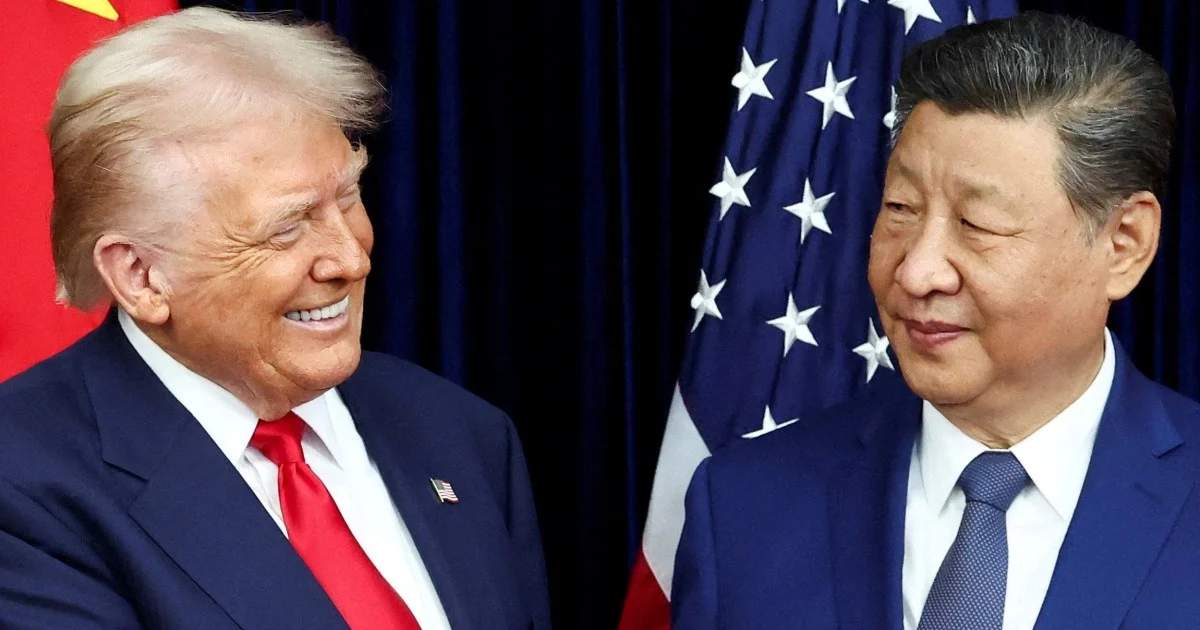
These crucial talks preceded an anticipated meeting between Chinese President Xi Jinping and U.S. President Donald Trump in Washington. U.S. Treasury Secretary Scott Bessent indicated that discussions between the leaders would include Iran and China’s financial ties with Tehran. Beijing is expected to press Washington to re-engage in negotiations, aiming to de-escalate tensions and stabilize global oil markets by ending the disruption to shipping routes. The outcome of these high-level discussions could significantly influence the trajectory of both regional stability and global energy prices.