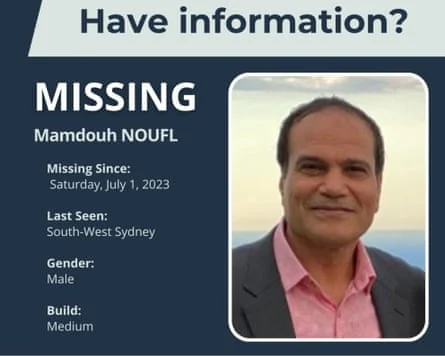
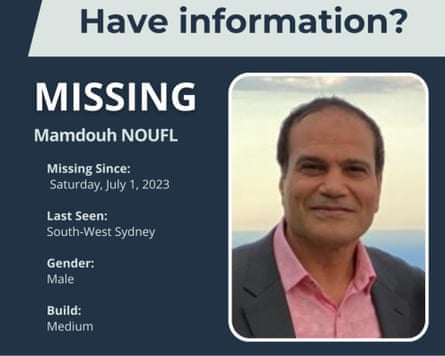
A New South Wales Supreme Court justice has sentenced a 55-year-old woman to a minimum of three years in prison for the 2023 killing and subsequent dismemberment of her husband, a case that has ignited intense debate over the intersections of domestic violence and criminal culpability. Nirmeen Noufl appeared in court on Friday to receive her sentence after pleading guilty earlier this year to the manslaughter of Mamdouh Noufl, whose remains were never recovered following a brutal disposal process that the presiding judge described as "remarkably chilling."
The sentencing marks the conclusion of a legal saga that began with a missing person’s report and ended with a harrowing admission of a life defined by systemic abuse. While the prosecution originally sought a murder conviction, the lack of physical evidence—stemming from the thoroughness of the body’s disposal—forced a plea deal to the lesser charge of manslaughter. The court ultimately found that the Sydney woman sentenced for killing and dismembering abusive husband acted in excessive self-defense during a violent domestic confrontation.
The Fatal Confrontation in Greenacre
The events leading to the death of Mamdouh Noufl, known to friends as Emad, reached a breaking point in mid-2023 at the couple’s family home in Greenacre, a suburb in Sydney’s southwest. According to court documents and agreed facts, the relationship had been characterized by decades of psychological manipulation, coercive control, and physical violence. The tension escalated significantly in the days preceding the killing when Mamdouh informed his wife that he had met another woman during a trip to Egypt and intended to marry her.
Despite his plans for a second marriage, Mamdouh reportedly refused Nirmeen’s requests for a divorce, maintaining a dynamic of control that the court characterized as "gravely abusive." On the day of his death, an argument erupted upon his return home. Nirmeen told psychiatric evaluators that her husband pinned her to the floor and began choking her. In what she described as a desperate attempt to save her own life, she managed to reach a knife and stabbed him once in the chest.
"All my life… he just treated me like shit, spat at me," Nirmeen later told a confidante, according to evidence presented during the hearing. "I had enough." The court accepted that the killing occurred while Nirmeen was being assaulted, though the subsequent actions she took to hide the crime weighed heavily on the final sentencing.
Details of the Dismemberment and Body Disposal
While the court acknowledged the mitigating circumstances of the abuse, Justice Peter Hamill focused extensively on the "brutal" and "thorough" methods used to dispose of the body. Following the stabbing, Nirmeen Noufl used a saw to dismember her husband’s remains. She then placed the body parts into multiple garbage bags and distributed them across various refuse sites throughout southwest Sydney.
The Sydney woman sentenced for killing and dismembering abusive husband also engaged in a sophisticated cover-up, lying to family members and police for months. She used her husband’s social media accounts to post updates, creating the illusion that he was still alive and traveling abroad. This deception continued until her arrest in October 2024, by which time any hope of recovering the remains had vanished.

Justice Hamill noted that the conduct following the killing was a significant factor in the sentencing. "The disposal of the body in this case was as thorough as it was brutal," the judge said during his Friday remarks. He added that the calculated nature of the dismemberment was "remarkable and chilling" and raised difficult questions regarding the defendant’s level of remorse at the time of the offense.
The Impact of Long-Term Domestic Violence and Coercive Control
Central to the defense’s argument was the "extreme violence" Nirmeen had endured since childhood, which continued throughout her marriage. The court heard testimony regarding Mamdouh’s conservative and controlling views, which restricted the movements and autonomy of both his wife and their daughters. This environment of coercive control—a legal term increasingly recognized in Australian and international courts—was cited as a primary driver of Nirmeen’s mental state.
Psychiatric reports presented to the court detailed the long-term trauma Nirmeen suffered, suggesting that her perception of the threat posed by her husband was filtered through years of victimization. Justice Hamill noted that the history of domestic violence mitigated the seriousness of the killing itself, even if it did not excuse the "ghastly" aftermath.
The judge emphasized that the relationship featured not only physical violence but a pervasive "psychological manipulation" that left the defendant feeling trapped. This context influenced the Crown’s decision to accept a plea of manslaughter by way of excessive self-defense, acknowledging that while Nirmeen believed she needed to defend herself, the level of force used—and the subsequent actions taken—exceeded what the law considers "reasonable."
Legal Challenges in a "No-Body" Prosecution
The prosecution of Nirmeen Noufl highlighted the significant hurdles faced by the justice system when a victim’s body is never found. Crown prosecutor Mark Hay admitted to the court that because Nirmeen had been so successful in disposing of the remains, the prosecution was unable to conduct an autopsy or verify the exact cause of death.
This evidentiary vacuum meant that Nirmeen’s version of events—that she stabbed him only once in the chest during a struggle—could not be scientifically challenged. Without the ability to prove a specific intent to kill or to disprove the claim of self-defense through forensic evidence, the Crown was forced to abandon the murder charge.
The "no-body" nature of the case also deeply affected the victim’s extended family. In his address, Justice Hamill acknowledged the "gap" between the loss suffered by the family and the length of the sentence, noting that the maximum possible sentence for manslaughter in these circumstances would likely still feel insufficient to those grieving Mamdouh Noufl.
Family Reactions and Public Outcry
The sentencing has split the family and the local community. During the proceedings, one of the couple’s daughters provided a statement in support of her mother. The daughter, whose identity is protected for legal reasons, told the court she would immediately relocate to Australia from abroad to assist with her mother’s psychiatric care upon her release. Her testimony painted a picture of a mother who was a victim of a "monstrous" domestic environment.
In contrast, Mamdouh’s nephew, Khaled Noufal, expressed outrage outside the Supreme Court following the announcement of the three-year non-parole period. He argued that the brutality of the dismemberment should have resulted in a much harsher penalty, regardless of the claims of domestic abuse.
"If it was an accident, if she was not meant to kill him, why did you fucking dismember his body?" Noufal asked reporters. He expressed fear for the community’s safety, suggesting that his aunt remained "dangerous" and should have faced 25 years to life in prison.
Broader Implications for Domestic Violence Law
The case of the Sydney woman sentenced for killing and dismembering abusive husband arrives at a time of heightened awareness regarding domestic violence in Australia. New South Wales recently introduced landmark legislation criminalizing coercive control, reflecting a shift in how the legal system views non-physical forms of abuse.
Legal experts suggest that this case illustrates the complexities of the "battered woman" defense, where the cumulative effect of years of abuse is taken into account during sentencing. However, the graphic nature of the dismemberment in the Noufl case creates a challenging precedent, as the court must balance the defendant’s history as a victim with the "indignity" offered to the deceased.
The sentence of six years and nine months, with a non-parole period of three years, reflects this judicial balancing act. With time already served since her arrest in late 2024, Nirmeen Noufl will be eligible for release on parole in October 2027.
As the legal proceedings conclude, the case remains a sobering reminder of the hidden violence within domestic spheres and the extreme lengths to which victims may go when they feel they have no other exit. The absence of Mamdouh Noufl’s remains continues to serve as a haunting element of a crime that has left a family divided and a community searching for answers.