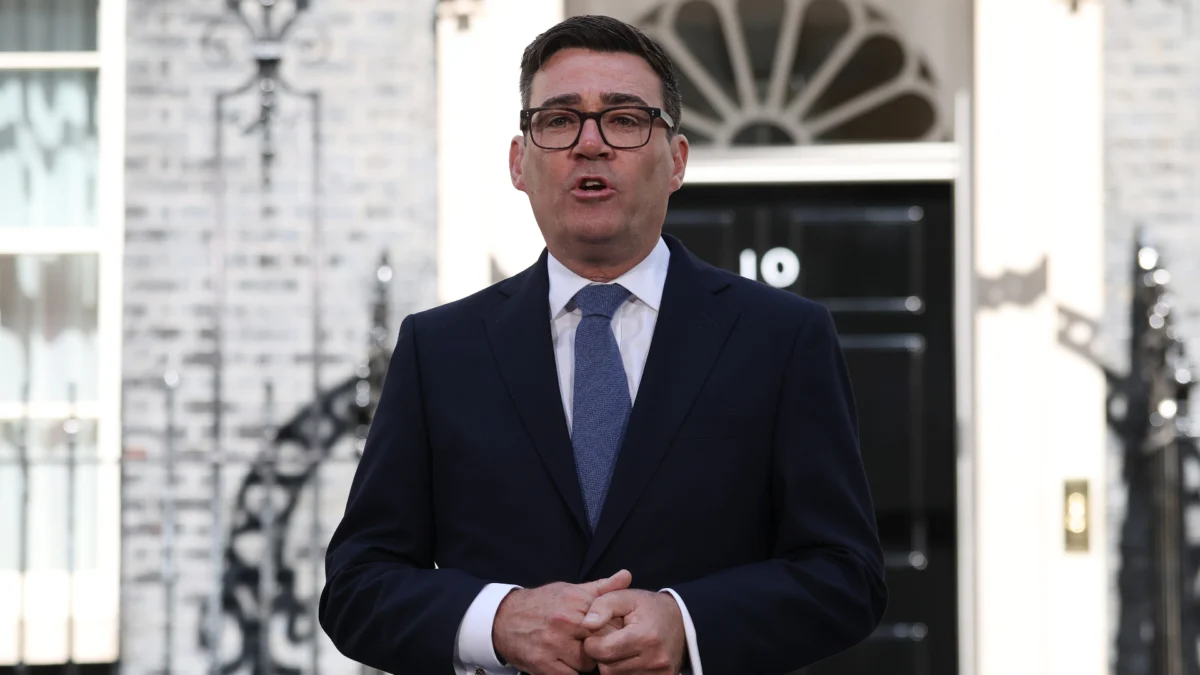
Andy Burnham has officially assumed the mantle of U.K. Prime Minister, marking a significant shift in British politics and becoming the nation’s seventh leader in a tumultuous decade. The 56-year-old former Mayor of Greater Manchester was formally appointed by King Charles III on Monday, following his election as the new leader of the Labour Party, and now faces the daunting task of forming a government amidst deep national divisions and pressing economic challenges.
A Tumultuous Decade in Downing Street
Burnham’s ascension underscores a period of unprecedented political volatility in the United Kingdom. His appointment as U.K. Prime Minister makes him the latest in a rapid succession of leaders, reflecting a decade marked by seismic events such as the Brexit referendum, the COVID-19 pandemic, and persistent economic uncertainty. This instability has seen both Conservative and Labour parties grapple with internal divisions and a shifting electorate, leading to frequent changes at the top of government. The public mood is often characterized by a weariness with political drama and a longing for stability and effective leadership.
The path to Downing Street for Andy Burnham was paved by the unexpected resignation of his predecessor, Keir Starmer. Starmer, who had led the Labour Party for several years, faced mounting pressure from within his own party. Critics alleged that he struggled to articulate a clear vision, often appearing to equivocate on contentious issues. His attempts to appeal to a broad spectrum of voters, including those who had previously supported the Conservative and Reform parties, were perceived by many Labour ministers as a failure, leading to a loss of direction and diminishing public appeal.
Starmer’s leadership came under particular scrutiny for his handling of sensitive issues that deeply divided the British public and the Labour Party’s traditional base. His stance on the conflict in Gaza, where many within Labour’s left wing felt he did not adequately condemn Israeli actions, alienated a significant portion of the party. Similarly, his cautious approach to transgender rights and immigration policies, often seen as an attempt to mimic Conservative rhetoric, failed to energize the progressive wing of the party while not necessarily winning over wavering voters from the right. Ultimately, many Labour figures concluded that Starmer lacked the decisive leadership required to challenge the resurgent far-right and unite the nation.
Andy Burnham’s Rise from Local Government to National Stage
Born in a working-class suburb of Liverpool, Andy Burnham’s political journey began early, joining the Labour Party at the age of 15. After graduating from Cambridge University, he steadily climbed the political ranks, serving in various capacities within government under former Labour Prime Ministers Tony Blair and Gordon Brown. He later held significant shadow cabinet roles under Ed Miliband and Jeremy Corbyn, gaining experience across a range of policy areas including health, culture, and treasury. Throughout this period, Burnham made multiple, though ultimately unsuccessful, bids for the Labour Party leadership, each time refining his message and building a national profile.
A pivotal chapter in Burnham’s career was his tenure as the Mayor of Greater Manchester from 2017 to 2026. This role proved instrumental in shaping his image as a "man of the people," deeply attuned to the concerns of ordinary Britons outside the Westminster bubble. During his time as mayor, Burnham cultivated an incredibly broad appeal across the North of England, championing local issues and advocating for greater regional autonomy. He spearheaded initiatives aimed at improving public transport, tackling homelessness, and fostering economic growth within the city-region, earning him significant public trust and a reputation for delivering tangible results.
One of his most impactful achievements was his instrumental role in the introduction and passage of the Hillsborough Law. This landmark legislation, designed to prevent state cover-ups following public disasters and scandals, holds deep significance in British social memory. It takes its name from the Hillsborough disaster of 1989, where 97 Liverpool football fans tragically died in a crowd crush, and the decades-long fight by victims’ families for truth and justice against institutional obfuscation. Burnham’s unwavering support for the law solidified his image as a defender of the vulnerable and a champion of accountability, resonating powerfully with communities across the country.
A Distinct Ideological Stance and Ambitious Agenda
Ideologically, Andy Burnham is widely considered to sit closer to the left wing of the Labour Party, aligning more with figures like Jeremy Corbyn than with the more centrist approaches of Keir Starmer or Tony Blair. This positioning has earned him the moniker "King of the North," a testament to his strong regional appeal and his often-vocal anti-Westminster stance. This anti-establishment ethos is expected to be a central theme of his government, with a strong focus on pushing power and resources out of London and into regional political hubs. His policy agenda is anticipated to prioritize bolstering public transport infrastructure, particularly in northern cities, and aggressively tackling pervasive issues such as homelessness and the critical shortage of social housing.
However, the new U.K. Prime Minister inherits a political landscape fraught with challenges. He will have to traverse incredibly bumpy political terrain, navigating a deeply polarized nation where far-right politicians are increasingly committed to weaponizing immigration policies and stoking the flames of division. Nigel Farage’s Reform UK party, in particular, is eyeing significant gains in the next general election, which must take place no later than August 2029. Compounding this pressure, Kemi Badenoch’s Conservative Party is increasingly adopting a more hardline stance on certain policies in an attempt to claw back voters lost to Reform, further intensifying the ideological battleground.
Immediate Challenges and a Confident Outlook
Burnham’s long-held ambition to lead the Labour Party has finally been realized, but he now faces an immediate and formidable list of tasks. One of his first and most critical duties will be appointing a competent Chancellor of the Exchequer to navigate Britain’s delicate economic situation. His government will need to find approximately £9 billion ($12 billion USD) for defense spending, a significant commitment in a constrained fiscal environment. Protecting and strengthening the National Health Service (NHS), a cherished but overstretched institution, will be another paramount concern. Furthermore, Labour’s manifesto promises include building 1.5 million new homes, an ambitious target amidst a national housing crisis, and getting over a million young people into work in a brutal and competitive job market.
Beyond these domestic priorities, Andy Burnham must walk a fine line on complex international and social issues. His administration will need to formulate coherent and compassionate policies on immigration, a topic that has fueled intense debate and political division. Reforming policing and ensuring public trust will also be key. Internationally, the ongoing conflict in Gaza presents a diplomatic and moral challenge, requiring a carefully calibrated response that balances international obligations with domestic public opinion and the diverse views within his own party.
Despite the enormity of these challenges, Prime Minister Andy Burnham projects an image of unwavering resolve. "I am ready," he declared on Friday when formally elected Labour Party leader, addressing his Members of Parliament. "What a moment… What backing you’ve given me. I have a plan. I believe in all of you, and I am confident we can do it." His confident pronouncements signal a leader prepared to confront the multifaceted crises facing the United Kingdom, hoping to usher in a new era of stability and progressive governance after a decade of political upheaval. The coming months will be crucial in determining whether the new U.K. Prime Minister can translate his northern popularity and long-held ambitions into effective national leadership.