Congressional Democrats are demanding an immediate and comprehensive briefing following revelations that Donald Trump was covertly moved from Air Force One to a secondary aircraft, effectively using nearly 100 aides, officials, and journalists as decoys against a potential Iranian assassination plot. The incident, which took place last month during a high-stakes diplomatic trip, has ignited a firestorm of criticism regarding the ethics of presidential security protocols and the perceived expendability of non-combatant staff and the press corps.
Intelligence reports allegedly surfaced during the President’s transit between Turkey and the United Kingdom, suggesting a "credible and imminent" threat from Iranian operatives intended to target the presidential aircraft. In response, security details executed a clandestine extraction, moving Trump from the primary jet into a catering truck while the plane was on the tarmac in Turkey. He was then spirited onto a separate, unmarked aircraft, while Air Force One continued its flight path toward Britain with its full complement of passengers still on board.

The controversy centers on the fact that those left on the primary aircraft—including high-level advisors and members of the White House press pool—were never informed of the specific threat to the plane. They remained on the aircraft for several hours, unaware that they were serving as a diversion to ensure the President’s safe arrival via a different route.
National Security Fallout Over Trump’s Secret Flight Swap
The decision to proceed with the flight while withholding information from those on board has been characterized by some intelligence experts as a breach of the unspoken contract between the executive branch and its staff. Steven Cash, the executive director of the non-profit Steady State and a former CIA intelligence officer, expressed profound concern over the tactical choice. Cash, who also served as a senior adviser to the Department of Homeland Security’s intelligence branch, suggested that the maneuver prioritized one life at the potential cost of many others.
"It appears that the idea was we can reduce the danger to President Trump by offering up 100 or so people to be killed by the Iranians in his place," Cash stated in a public assessment of the event. The revelation has led to questions about whether the Secret Service or White House Chief of Staff authorized the use of civilians as "human shields" in a geopolitical chess match with Tehran.

Members of the House Oversight Committee have indicated that the "charade" undermines the safety of the press corps, who are required to travel with the President to ensure transparency. If the press pool is viewed as a convenient decoy for security operations, media organizations may be forced to reevaluate the risks associated with close-proximity reporting on the presidency.
Congressional Oversight and the Ethics of Trump’s Secret Flight Swap
The legislative reaction to Trump’s secret flight swap has been swift, with Democratic leadership calling for a formal inquiry into the Department of Homeland Security’s role in the deception. Lawmakers are seeking to determine if alternative security measures, such as grounding the flight or securing all passengers, were bypassed in favor of a "high-risk decoy" strategy.
The White House has yet to provide a detailed justification for why the aides and reporters were not evacuated alongside the President. Security analysts note that while the President’s safety is the paramount concern of the Secret Service, the intentional placement of civilians in a known line of fire is a departure from standard protective operating procedures.
The incident has also strained relations with international partners. The fact that the decoy flight was permitted to enter British airspace without a full disclosure of the credible threat has raised eyebrows in London. Diplomatic sources suggest that the UK government is seeking its own clarification on why a "high-target" aircraft was directed toward its territory under false pretenses.
Legal Blow to Election Strategy Amid Trump’s Secret Flight Swap Controversy
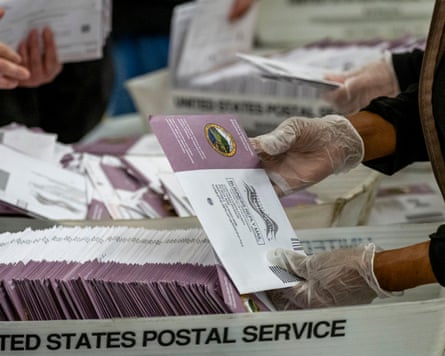
While the administration grapples with the fallout from the flight swap, it faces additional setbacks in the federal court system. A federal judge on Tuesday blocked the U.S. Postal Service from implementing significant portions of an executive order aimed at tightening mail-in voting regulations. This ruling is seen as a major obstacle to the administration’s efforts to restrict voting access ahead of the upcoming midterm elections in November.
The judge’s decision expands upon a previous injunction that had already halted the implementation of these rules in 23 states, most of which are led by Democratic governors. The court found that the proposed changes to the USPS—including the removal of high-speed sorting machines and the reduction of overtime for postal workers—could "irreparably harm" the integrity of the electoral process by delaying the delivery of ballots.
Legal experts suggest that the administration’s focus on the USPS is part of a broader strategy to challenge the legitimacy of mail-in results. However, the court’s intervention ensures that, for the time being, the postal infrastructure must remain optimized for the expected surge in mail-in participation.
David Crowley Secures Victory in Wisconsin Gubernatorial Primary
In the political arena, Milwaukee County Executive David Crowley has pulled off a stunning last-minute victory in the Wisconsin Democratic primary for governor. Crowley, who re-entered the race after a brief hiatus, defeated Francesca Hong, a Madison-based chef and former restaurant owner who had built a significant following among the party’s progressive wing.
Hong’s platform was notably distinct from her colleagues, focusing on aggressive social safety net expansions and environmental protections. Her campaign centered on providing free childcare for families earning up to 400% of the federal poverty level and implementing a one-year moratorium on the construction of new datacenters. Hong argued that the rapid expansion of data infrastructure was placing an unsustainable strain on the state’s energy grid and water resources.
Crowley’s victory is being viewed as a win for the Democratic establishment in a crucial swing state. His campaign focused on his executive experience in Milwaukee and a "pragmatic" approach to state governance. He will now move on to a general election that is expected to be one of the most expensive and closely watched contests of the 2026 cycle.
ICE to Deploy Electric Shock Gloves in Enforcement Operations
The Department of Homeland Security has also drawn criticism this week following a notice that Immigration and Customs Enforcement (ICE) plans to spend up to $20 million on specialized equipment. The agency is set to purchase thousands of "Glove" devices—Generated Low Output Voltage Emitters—which are designed to deliver painful electric shocks to individuals during enforcement actions.
Manufactured by Compliant Technologies of Lexington, Kentucky, the devices are worn like standard tactical gloves but contain electrodes capable of incapacitating a subject through "conducted electrical weapon" technology. The manufacturer markets the product as a "humane, low-optics, de-escalation solution," claiming that the stimulation typically brings individuals into compliance in less than three seconds without leaving permanent marks or scars.
Civil rights groups have denounced the acquisition, arguing that the "shock gloves" lower the threshold for the use of force and could lead to abuses in detention centers and during raids. While the technology has previously been used in some U.S. jails, its widespread deployment by federal immigration agents marks a significant escalation in the tools used for domestic enforcement.
Ethical Scrutiny of Justice Samuel Alito’s Energy Interests
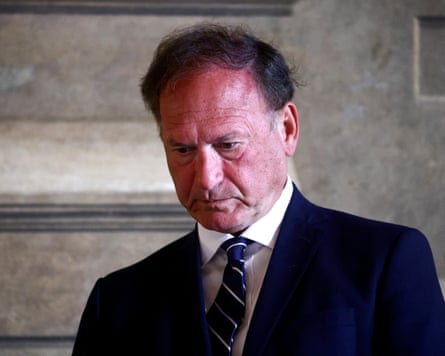
At the Supreme Court, Justice Samuel Alito is facing renewed calls for recusal from an upcoming climate accountability case involving major fossil fuel corporations. A review of financial disclosures conducted by legal analysts reveals that Alito has gained up to $2.9 million from oil and gas assets since joining the high court in 2005.
The analysis highlights a potential conflict of interest as the Court prepares to hear arguments regarding whether energy companies can be held liable in state courts for their role in the climate crisis. Critics argue that Alito’s substantial financial stake in the industry’s profitability creates a "clear appearance of impropriety."

The controversy adds to a growing debate over the lack of a binding ethics code for Supreme Court justices. While Alito has not indicated any intention to step aside, the disclosure of his energy-related wealth has intensified the public demand for greater transparency and accountability within the nation’s highest judicial body.
Global Crisis and Human Interest: From Colombia to the Danube
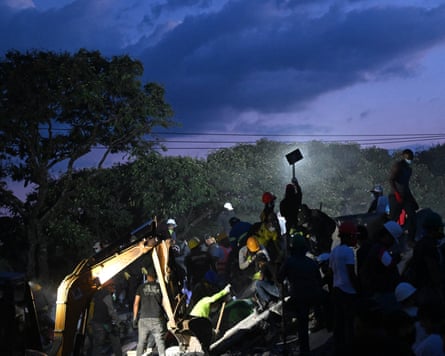
The geopolitical and domestic turmoil in the U.S. coincides with a series of international tragedies and environmental alarms. In Colombia, a devastating earthquake has claimed at least 240 lives, with more than 3,000 people still reported missing in the city of Cali. Rescue teams are working through the rubble in a race against time, as the country appeals for international aid.
In Europe, the climate crisis has reached a critical inflection point. Scientists have confirmed that Europe is the world’s fastest-warming continent, heating at twice the global average. The consequences are visible in the Serbian Danube, where record-low water levels have caused the wreckage of German warships from World War II to emerge from the riverbed. The drought has disrupted shipping and decimated agricultural yields across the region.

Amidst these large-scale events, a poignant story of migration has emerged from North Africa. Faten Ben Omar El Azizi, a 26-year-old Moroccan footballer, was among 141 people who drowned last month during a mass crossing attempt to the Spanish territory of Ceuta. In a tragic irony, her mother was informed on the day of her death that her daughter’s visa to legally enter Spain had finally been approved.
Finally, in a bizarre incident in Maumelle, Arkansas, a high school football player discovered a two-foot venomous cottonmouth snake inside his helmet following warmups. The student noticed "unusual movement" against his head before realizing a snake had coiled inside the padding. The snake was safely removed and relocated, leaving the team and the community shaken by the close call.
As the fallout from Trump’s secret flight swap continues to develop, these disparate stories highlight a period of intense volatility in politics, law, and the natural world. The coming weeks will likely see increased pressure on the administration to answer for its security choices while the nation prepares for a contentious election season.