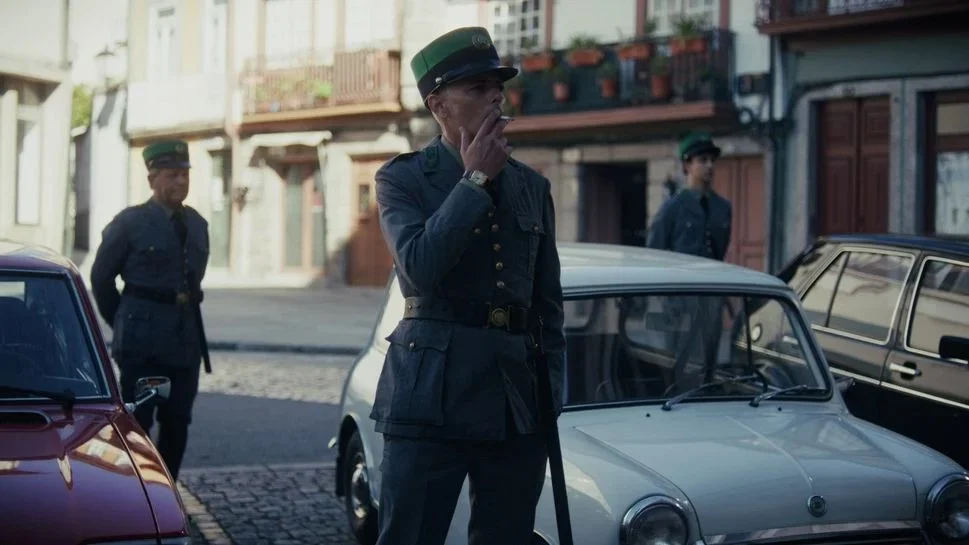
Edgar Pêra, the acclaimed Portuguese auteur, is set to premiere his latest cinematic endeavor, Asphalt Guerrilla (Guerrilha no Asfalto), at the 79th Locarno Film Festival in Switzerland. The film, a complex tapestry woven from real history, fictionalized narratives, and artificial intelligence, delves into the legacy of a radical far-left underground armed organization in post-revolutionary Portugal while simultaneously exploring the very act of filmmaking in a defiant, "guerrilla" mode. Scheduled for its world premiere in the prestigious Out of Competition program on Monday, August 10, the movie marks Pêra’s anticipated return to the renowned festival, following previous acclaimed works like Telepathic Letters and Manual of Evasion LX94.
The historical core of Asphalt Guerrilla centers on the Forças Populares 25 de Abril (FP-25), or Popular Forces 25th of April, a militant group active in Portugal between 1980 and 1987. This organization gained notoriety for its involvement in dozens of bombings, shootings, and bank robberies that destabilized the nascent Portuguese democracy following the Carnation Revolution. The film draws inspiration from the eponymous book by Manuel Ricardo de Sousa, a former member of the FP-25 whose life ended tragically when he was lynched by a mob in the aftermath of a bank robbery. Pêra’s adaptation promises a nuanced look at a tumultuous period, challenging conventional interpretations of political radicalism and its human cost.
Beyond its historical recounting, Asphalt Guerrilla operates on a profound meta-level, reflecting on the challenges and compromises inherent in independent filmmaking. The Locarno Film Festival website describes this dimension, noting that the film is "also about trying to make a film that ought to be shot in a guerrilla mode, with no compromises with the system." This self-referential approach allows Pêra to draw parallels between the political struggles depicted on screen and the artistic battles fought by filmmakers striving for authentic expression in an increasingly commercialized industry.

The film’s synopsis further teases its mind-bending narrative, characterizing it as "a fictional film rooted in reality about a utopian time in Portuguese democracy." It chronicles the journey of a quiet student in the early 1980s who becomes entangled with a radical organization, eventually meeting a violent end. As the narrative unfolds, audiences witness the often-comical, sometimes tragic struggles of these "asphalt guerrillas" confronting societal structures. Simultaneously, the film introduces a director who abandons the organization’s violent path to pursue a different form of resistance: making films in an uncompromising, guerrilla style. This dual narrative structure underscores Pêra’s intention to explore both historical events and the contemporary artistic struggle.
Edgar Pêra, known for his distinctive avant-garde style, has carved out a unique space in Portuguese cinema. He first gained recognition in the mid-1980s as a "neuro-punk" filmmaker, a term reflecting his DIY counterculture roots and strong ties to the Portuguese music scene. His work has consistently explored the intricate relationship between cinema and the human mind, challenging viewers to engage with narratives on multiple intellectual and emotional levels. Pêra describes his early interest as being "always interested in the effects of cinema on the minds of people and how the mind works," viewing "cameras as weapons" and advocating for "films, not violence."
Pêra revealed in an interview that the initial spark for Asphalt Guerrilla came from de Sousa’s book, which he read decades ago. He was particularly struck by the portrayal of the FP-25 as an "amateurish group of guerrilla men or terrorists, depending on your point of view." However, the project evolved significantly under the influence of his friend and producer, Rodrigo Areias. What began as a historical inquiry gradually transformed into a more personal reflection on Pêra’s own "guerrilla film scene." Despite his initial reluctance to create an autobiographical element, Pêra recognized the potential to steer the narrative toward contemporary relevance. "I told him that I wanted the film to be about the future, not about the past, not about the ’80s and the problems we had back then in Portugal, but about this society and the state of cinema," Pêra explained.
A defining characteristic of Asphalt Guerrilla is its deliberate blurring of the lines between fact and fiction, a technique Pêra embraces as a mirror to our current societal predicament. He deliberately crafts a narrative where discerning what is real from what is fabricated becomes a challenge, echoing the pervasive uncertainty in today’s digital information landscape. "This fusion, or blur, of fiction and reality is something that I like, but it’s also something that I must fight against," Pêra noted. This artistic choice directly confronts the audience with the dilemma of truth perception, a critical issue in an era rife with misinformation and alternative facts.

Adding another layer of contemporary relevance, Asphalt Guerrilla incorporates artificial intelligence-generated imagery, a technique Pêra also utilized in his 2024 Locarno entry, Telepathic Letters. Unlike many filmmakers who might seek to conceal AI’s presence, Pêra intentionally leaves "clues for what is AI-made." His use of AI is not merely a stylistic choice but a critical commentary on the technology itself. He views AI as a powerful tool that, while offering creative possibilities, also poses significant dangers, particularly in its capacity to fabricate news and control information flow. Pêra’s artistic fight within AI involves creating his "own prompts and create [his] own algorithm," actively resisting the passive consumption dictated by mainstream algorithms like YouTube’s. He sees his approach as a form of artistic recombination, creating original images from existing elements, a practice he asserts all artists engage in.
Pêra’s commitment to independent and authentic filmmaking has earned him a distinct reputation. He recalled a producer from his younger days who respectfully dubbed him "the Sniper," a moniker that speaks to his precision and unwavering commitment to his artistic vision. This respect from his peers stems from his refusal to compromise his artistic integrity, always striving to be true to himself. This philosophy underpins the "guerrilla" aspect of his filmmaking, fighting for artistic freedom and genuine expression against systemic pressures.
The film’s exploration of radicalism and societal decay feels particularly timely amidst current global conflicts, rising political extremism, and the widespread impact of AI. Pêra acknowledges this synchronicity, stating, "I think it’s not a coincidence. It’s a synchronicity." He posits that while current times may seem particularly dire, underlying issues of exploitation and systemic problems persist even in periods perceived as stable. Pêra views radicalism not as the root problem itself, but as a "symptom of the decay of our system." He advocates for addressing the fundamental causes of societal decline rather than merely confronting the symptoms, arguing that fighting radicalism with radicalism is a trap. Instead, he urges a focus on "what makes our planet worse."
The cast of Asphalt Guerrilla features Miguel Moreira, Maria Leite, Ivo Arroja, Albano Jerónimo, Bernardo Santo Tirso, and Luke Eberl, with Pêra himself lending his voice alongside Jerónimo. The screenplay was co-written by Pêra and Rodrigo Areias, with Jorge Quintela serving as cinematographer and João Mora as editor. This collaborative effort brings Pêra’s complex vision to life, promising an intellectually stimulating and visually compelling cinematic experience.

Looking ahead, Edgar Pêra is already developing another project that continues his examination of contemporary anxieties. Titled The Spiral of Fear, this upcoming film will reportedly tackle "big tech and what media says about the masters and all that," indicating a continued focus on the pervasive influence of digital power structures and information control. With Asphalt Guerrilla, Pêra not only revisits a pivotal moment in Portuguese history but also offers a potent, multi-layered critique of our present, inviting audiences to critically engage with the narratives that shape their understanding of reality.