Google’s annual hardware showcase, Made by Google, centered its 2026 presentation on the deepening integration of artificial intelligence across its mobile and wearable ecosystem. During the event, comedian and host Trevor Noah framed the current state of Google’s AI assistant, Gemini, by comparing its rapid societal adoption and functional utility to that of GLP-1 medications. The comparison served as a focal point for a keynote that unveiled the Pixel 11 smartphone series and the Pixel Watch 5, both of which rely heavily on "Gemini Intelligence" to automate daily tasks and provide proactive user support.
The event opened with significant data regarding the growth of the Gemini platform. Google executives confirmed that the AI assistant has surpassed one billion monthly active users, marking it as the fastest-growing product in the company’s history. Notably, the expansion is not limited to the Android ecosystem; more than 100 million users are accessing Gemini via iOS devices. Current usage statistics indicate a shift in how consumers interact with AI, with over half of Gemini users opting for voice interaction rather than text input, and the platform generating approximately 150 million images every day.
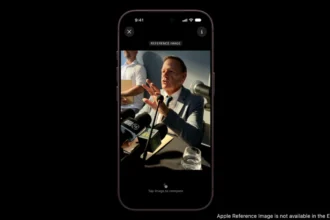
At Made by Google, Trevor Noah explains how Gemini is just like GLP-1s in utility
During a talk-show style segment of the keynote, Trevor Noah addressed the transition of AI from a novelty to a practical necessity. He noted that earlier versions of Google’s AI felt more like a "cool promise" rather than a tool for daily life. In describing the evolution of the software, Noah drew a parallel to the rise of GLP-1 weight-loss and diabetes drugs, which have seen a massive surge in public use due to their ability to simplify complex physiological processes.
Noah joked that Gemini functions similarly by "taking things off of your plate," referring to the cognitive load of managing schedules, communications, and information retrieval. The analogy highlights Google’s strategic shift away from showcasing AI as a creative plaything toward positioning it as a functional "utility" that automates the mundane aspects of digital life. This narrative aligns with Google’s broader objective to embed Gemini Intelligence into the core operating system of its hardware, rather than treating it as a standalone application.
Gemini Intelligence and the Pixel 11 Hardware Integration
The Pixel 11 and Pixel 11 Pro serve as the primary vehicles for this new era of Gemini Intelligence. Google has moved beyond basic chatbot functionality to implement "native" AI features that operate across the phone’s entire interface. One of the most significant upgrades introduced is the expansion of live translation. While previous models offered translation for phone calls, the Pixel 11 now provides enhanced live translation for podcasts, YouTube videos, and various third-party applications, effectively removing language barriers in real-time media consumption.
Accessibility was another major theme of the Pixel 11 announcement. Google debuted an ASL-to-text feature, which utilizes the device’s camera and on-device machine learning to translate American Sign Language into written text in real-time. This advancement represents a significant step in AI-driven inclusivity, allowing for seamless communication between signers and non-signers without the need for an intermediary human interpreter.
The Rambler Feature and Proactive Assistance
Among the new software capabilities introduced for the Pixel 11 is "Rambler," a speech-to-text enhancement designed to refine human communication. Rambler automatically filters out filler words—such as "um," "uh," and "like"—while cleaning up sentence structures. According to Google, the feature is capable of "reading" a user’s intent, allowing it to produce a streamlined and professional transcript even if the original speech was fragmented or disorganized. This tool is aimed at professionals and students who rely on voice notes for documentation and drafting.
The company also unveiled "Proactive Assistance," a total reimagining of the existing Magic Cue feature. Proactive Assistance acts as a contextual layer over the phone’s messaging and browsing activities. For instance, if a user receives a text message recommending a specific restaurant, the AI automatically generates an informational window containing the restaurant’s menu, reviews, and navigation directions. This system is designed to anticipate user needs by analyzing the content on the screen and providing relevant resources before the user manually searches for them.

Wearable Technology and the Google Health Guardian
The integration of Gemini Intelligence extends to the newly announced Pixel Watch 5. Google is positioning its latest wearable not just as a fitness tracker, but as a comprehensive health monitor powered by the "Google Health Guardian" suite. This includes the AI-powered Google Health Coach, which analyzes biometric data to provide personalized wellness recommendations. Users can interact with Gemini directly from their wrists via the "At a Glance" complication, allowing for quick queries and task management without needing to reach for a phone.
The Pixel Watch 5 also incorporates one-tap Proactive Assistance queues, bringing the same contextual intelligence found on the Pixel 11 to the wearable interface. Google’s stated goal for these integrations is to allow Gemini to handle "rote tasks," such as responding to routine messages or organizing calendar invites, thereby reducing the amount of time users spend looking at screens. However, this ecosystem approach reinforces the necessity of owning the latest hardware to access the full suite of automated features.
Industry Context and the Competitive AI Landscape
The advancements shared at the Made by Google event come at a time of intense competition in the silicon and software sectors. Apple recently entered the fray with "Apple Intelligence," and OpenAI continues to expand the capabilities of ChatGPT. Google’s emphasis on "utility" and the GLP-1 analogy suggests a move to ground AI in practical, everyday reliability to distinguish itself from competitors who may still be focused on generative creativity.
Market analysts suggest that Google’s ability to attract 100 million iOS users to the Gemini app is a significant tactical victory. By establishing a presence on rival hardware, Google ensures that its AI remains the primary data-gathering tool for a diverse user base, which in turn feeds the machine learning models required to improve features like Rambler and Proactive Assistance. The success of the Pixel 11 will likely depend on whether consumers perceive these AI features as essential tools or as non-critical add-ons.
Privacy, Data, and the Cost of Automation
As Gemini Intelligence becomes more "proactive," questions regarding user privacy and data security remain at the forefront of the technological discourse. Features like Proactive Assistance require the AI to constantly monitor on-screen content and message data to provide relevant suggestions. Google has stated that much of this processing occurs on-device via its proprietary Tensor chips, but the integration of cloud-based AI for more complex tasks necessitates a constant flow of data between the device and Google’s servers.
The "GLP-1" comparison also touches on a deeper cultural shift regarding the outsourcing of mental labor. Just as medical treatments can automate physical health outcomes, Google’s AI is designed to automate cognitive organization. While this offers clear benefits in terms of efficiency, critics often point to the potential for a "deskilling" of the user base, where individuals become increasingly reliant on AI to manage basic social and professional interactions.
Future Outlook for the Gemini Ecosystem
The Made by Google 2026 event underscores a pivotal moment in the company’s history. By moving Gemini from a standalone experiment to the core of its hardware identity, Google is betting that the future of the smartphone is not defined by its screen or camera, but by the intelligence of its assistant. The rapid growth to one billion users suggests that the public is ready for this shift, provided the technology remains as "useful" as the utilities Trevor Noah described.
As the Pixel 11 and Pixel Watch 5 head to market, the tech industry will be watching closely to see if "Gemini Intelligence" can maintain its growth trajectory. The emphasis on real-world applications—from ASL translation to proactive scheduling—indicates that Google is no longer content with AI being a "cool promise." Instead, the company is striving to make it an invisible, indispensable part of the modern human experience, mirroring the mass adoption of other transformative modern technologies.