The Australian political landscape was jolted on Thursday by a series of high-stakes developments, ranging from a controversial proposal to deregulate the national housing code to the high-profile release of a military whistleblower. Shadow Housing Minister Andrew Bragg sparked immediate backlash after suggesting that low-income earners must accept "substandard" housing as a necessary trade-off for affordability, while former army lawyer David McBride was granted parole after serving more than two years for leaking classified documents related to the Afghanistan war. These events, occurring alongside a multi-billion dollar industrial bailout and a major corporate pay controversy at Telstra, have intensified the national debate over social equity, national security, and economic resilience.

Deregulation and the Housing Affordability Crisis
The controversy surrounding Andrew Bragg began when the shadow minister announced a radical plan to strip the 2,000-page national housing code down to just 80 pages. The proposal aims to remove the vast majority of building standards, retaining only those strictly related to health, fire safety, and essential structural integrity. Bragg argued that the current regulatory framework is a primary driver of the "national malaise" regarding housing costs, suggesting that the complexity of the code prevents the rapid construction of new homes.
During a pointed interview on RN Breakfast, host Sally Sara asked Bragg directly if his policy implied that low-income Australians should simply accept living in substandard housing. Bragg responded, "Yes, definitely," framing the issue through the lens of Maslow’s hierarchy of needs. He argued that having a roof over one’s head is more critical than the quality of that shelter, given the severity of the current affordability crisis.

The Australian Council of Social Service (ACOSS) immediately condemned the proposal, warning that removing standards would lock the most vulnerable citizens into homes with "skyrocketing" power bills. Critics argue that standards regarding insulation and energy efficiency are not luxuries but essential components of making a home inhabitable in a changing climate. Bragg dismissed these concerns, taking aim at ACOSS for their advocacy on superannuation and suggesting they were out of touch with the average Australian.
The Release of David McBride and Whistleblower Protections
In a significant development for the Australian legal and defense sectors, David McBride is set to be released from a Canberra prison this morning. McBride, a former army lawyer, served a 27-month non-parole period out of a maximum sentence of five years and eight months. His conviction stemmed from the theft and subsequent leaking of secret defense documents—known as the "Afghan Files"—to the Australian Broadcasting Corporation (ABC), which detailed alleged war crimes by Australian special forces.
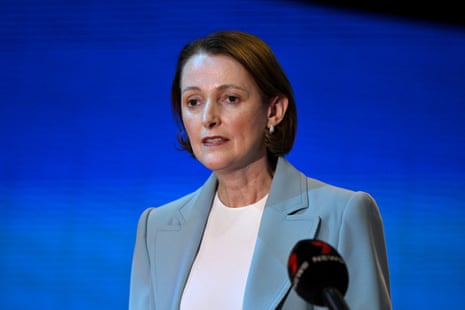
Attorney General Michelle Rowland approved the parole request this morning, a decision confirmed by a government spokesperson. The McBride case has been a lightning rod for criticism regarding Australia’s whistleblower protection laws. McBride originally pleaded guilty to three charges after the court upheld a government intervention to withhold evidence that officials argued could jeopardize national security.
Human rights advocates and legal experts have long argued that McBride’s prosecution was a blow to transparency and public interest journalism. His release marks the end of his incarceration but leaves behind a legacy of debate regarding the "duty to obey" versus the "duty to report" within the Australian Defence Force and the broader public service.

Corporate Compensation Amid Network Failures
Telstra, Australia’s largest telecommunications provider, also found itself in the political crosshairs on Thursday following the release of its annual financial results. The company revealed that Chief Executive Vicki Brady received a $700,000 pay rise, bringing her total compensation to $6.8 million for the fiscal year ending in June. This increase came despite the board docking 20% of her bonus following a massive nationwide network outage last month.
The outage, which Telstra attributed to a missing software update on a critical time-keeping system, caused widespread disruption to businesses and emergency services. While Brady’s bonus was reduced by approximately $607,000, her base pay and other incentives ensured a significant year-on-year increase. The company also docked the bonuses of other senior executives, totaling $1.3 million in withheld payments.

Telstra’s profits rose to $2.4 billion, a result bolstered by significant price hikes for mobile plans and a reduction in the workforce by more than 1,200 employees. The juxtaposition of executive pay rises, job cuts, and rising consumer costs has drawn sharp criticism from political leaders who argue that the company is prioritizing shareholder returns and executive wealth over network reliability and consumer affordability.
The $2.5 Billion Tomago Smelter Bailout
Prime Minister Anthony Albanese traveled to the Hunter region of New South Wales to announce a $2.5 billion joint commonwealth and state bailout for the Tomago aluminium smelter. The facility, Australia’s largest of its kind, was at risk of closure as its current electricity supply contract approached its end. The bailout ensures the smelter will remain operational until at least 2039.

The Prime Minister framed the intervention as a matter of "national interest" and "sovereign capability." He argued that Australia cannot afford to be at the end of global supply chains and must remain a country that "makes things." The bailout is tied to a transition toward renewable energy, with the government providing the capital necessary to move the facility away from high-cost coal power toward wind and solar energy backed by storage.
Opposition leaders, including Shadow Defence Minister James Paterson, criticized the move as a "taxpayer-funded band-aid" for what they describe as Labor’s failed energy policies. Paterson argued that the necessity of the bailout proves that electricity prices have become "completely unaffordable" for industrial users, creating a "sclerotic economy" that cannot compete globally without government intervention.

Public Safety and Social Unrest
In Victoria, Premier Ben Carroll announced a significant expansion of police and Protective Service Officer (PSO) patrols in shopping strips and malls. The move, dubbed an expansion of "Operation Pulse," comes in the wake of the tragic death of Van Viet Truong, a grocery store owner who was killed while attempting to assist a fellow retail worker during a shoplifting incident.
The Victorian government plans to recruit an additional 150 PSOs to increase the police presence in local communities and "crime hotspots." Premier Carroll stated that every Victorian deserves to feel safe where they work and shop. However, the Premier also faced questions regarding a national wave of student protests targeting One Nation leader Pauline Hanson.

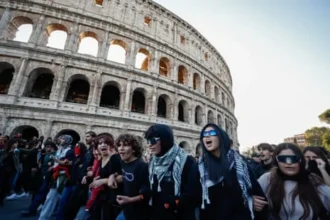
Thousands of students are expected to walk out of classrooms across major cities to protest Hanson’s recent comments calling for a "monocultural Australia" and her appearance on a podcast hosted by a British far-right activist. While Premier Carroll acknowledged the students’ anger, he urged them to stay in school, arguing that the best way to change the world is through education. One Nation representatives dismissed the protests as being orchestrated by "socialist" groups and argued that students should focus on their academics.
Biosecurity and International Diplomacy
The Tasmanian government confirmed its first case of H5 bird flu after a dead brown skua was discovered on the state’s coast. Minister for Primary Industries Gavin Pearce stated that while the detection is a serious concern, there is currently no evidence of an outbreak in commercial poultry. The state has begun implementing protection plans for at-risk species, including the critically endangered orange-bellied parrot.

On the international stage, Australia joined a coalition of more than 30 nations to condemn Iran’s use of the death penalty against protesters. In a joint statement, the group—which includes the U.S., UK, France, and Canada—accused the Islamic Republic of using capital punishment to "silence dissent" and "intimidate communities." United Nations data suggests that at least 56 people have been executed in Iran on national security charges since March, many linked to recent civil unrest.
Conclusion and Legislative Outlook
As the parliamentary session continues, the focus will remain on the News Bargaining Incentive (NBI) bill, which reached a bipartisan agreement between Labor and the Coalition today. The legislation is designed to force tech giants like Facebook and TikTok to compensate Australian news publishers for their content. The amended bill will require tech companies to secure a minimum of eight deals with publishers, ensuring a more diverse range of media outlets receive funding.
The events of this Thursday underscore the complex intersection of economic policy, social justice, and national security in Australia. From the polarizing housing proposals of Andrew Bragg to the industrial interventions in the Hunter Valley, the government and opposition remain locked in a fundamental struggle over the future direction of the nation’s economy and its social contract with its citizens. The release of David McBride further highlights the ongoing tension between state secrecy and the public’s right to know, a theme that is likely to resonate through the upcoming electoral cycle.