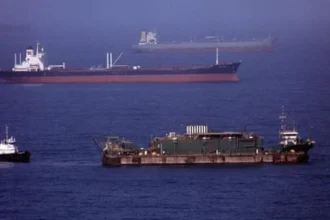
Australia is navigating a period of significant domestic and international friction as diplomatic tensions with Beijing escalate over South China Sea sovereignty while a massive labor strike by more than 35,000 educators paralyzes the Victorian public school system. Foreign Affairs Minister Penny Wong, currently attending the ASEAN foreign ministers’ meeting in Manila, has signaled that Australia may increase joint maritime patrols with the United States and Japan following recent Chinese military activities. Beijing has responded with sharp criticism, accusing Canberra of meddling in regional affairs where it has no standing.
The dual developments highlight a challenging week for the administration of Prime Minister Anthony Albanese. While Wong attempts to balance regional security with a delicate "stabilization" of the Australia-China relationship, the Victorian state government faces a revolt from its teaching workforce over stagnant wages and deteriorating classroom conditions. Both issues reflect broader anxieties within the country regarding regional stability and the sustainability of essential public services amidst a cost-of-living crisis.
China hits back at Penny Wong’s comments regarding regional stability
The Chinese Foreign Ministry issued a stern rebuke on Wednesday following comments made by Penny Wong regarding the "destabilizing" nature of China’s recent military maneuvers. Wong’s remarks were prompted by Beijing’s recent test-firing of nuclear-capable missiles into the Pacific Ocean, a move that has put neighbors on high alert. Speaking to reporters in the Philippines, Wong emphasized that the maritime zone is critical to the stability of the Indo-Pacific and that regional players must decide how to respond to increasing "aggression."
Chinese Foreign Ministry spokesperson Lin Jian dismissed Wong’s concerns during a regular briefing in Beijing, stating that Australia is not a party to the disputes in the South China Sea. "Relevant countries are not parties in the South China Sea and are in no position to interfere in the maritime issues between countries concerned," Lin said. He further suggested that the "same few countries" are quick to point fingers at China whenever incidents occur at sea, questioning whether their intent is to maintain peace or sow further discord.
The verbal exchange follows a meeting between Wong and her Chinese counterpart, Wang Yi, on Tuesday evening. During that meeting, Wong reportedly stressed the importance of "transparency and reassurance of intent." Despite the diplomatic friction, Wong is expected to deliver a speech later today asserting that Australia will not be "bullied" by Beijing’s military buildup. This rhetoric signals a hardening of the Australian stance as it seeks to reassure Pacific partners of its commitment to a rules-based order.
Victorian teachers due to begin strike over pay and workload
On the domestic front, the Victorian education system is facing its most significant disruption in years as tens of thousands of teachers, principals, and support staff walk off the job. More than 35,000 members of the Australian Education Union (AEU) are expected to converge on Melbourne’s Central Business District today. The strike follows the union’s rejection of a state government pay offer that promised a 28.3% increase over the next four years.

While the proposed pay rise is substantial on paper, union leadership argues that it fails to address the "excessive workload" that has led to a mass exodus from the profession. AEU Victorian branch president Justin Mullaly stated that teachers are currently "carrying the weight" of systemic underfunding. The union is demanding not only better compensation but also concrete measures to reduce class sizes and provide more administrative support to educators.
The strike has forced thousands of families across Victoria to make last-minute childcare arrangements as classes are cancelled or consolidated. While the state government has kept school gates open, the lack of staff has rendered regular instruction impossible in many districts. Former deputy principal and education expert Melinda Davis noted that the dispute is about more than just a paycheck; it is a response to a decade of funding cuts that have left school infrastructure in disrepair and staff morale at an all-time low.
Federal Education Minister weighs in on Victorian teachers strike
Federal Education Minister Jason Clare addressed the ongoing industrial action during an appearance on ABC News Breakfast. Clare expressed his hope for a swift resolution, acknowledging that teachers perform "the most important job in the world." However, he stopped short of intervening in the state-level negotiations, instead highlighting the severity of the national teacher shortage.
Clare noted that the 28.3% offer currently on the table in Victoria is technically larger than the recent deal struck in New South Wales, which was previously lauded as a landmark agreement. "We know that when you pay people more, more people want to do the job," Clare said. He emphasized that the federal government is focused on long-term solutions to the workforce crisis, but the immediate pressure remains on state leaders to find a middle ground with the AEU.
The disparity in teacher pay across Australia remains a focal point of the protest. Graduate teachers in Victoria currently earn approximately $13,000 less than their counterparts in the Northern Territory, who are the highest-paid in the nation. This "pay gap" has made it difficult for Victoria to retain young talent, exacerbating the staffing shortages that the union says are pushing current teachers to the breaking point.
Geopolitical implications of joint patrols in the South China Sea
As the domestic labor dispute unfolds, the strategic situation in the South China Sea continues to dominate the headlines in Manila. Penny Wong’s suggestion of increased joint patrols with the U.S. and Japan marks a significant step in Australia’s regional defense policy. These "Freedom of Navigation" operations are intended to challenge Beijing’s expansive territorial claims, which were invalidated by an international tribunal in 2016—a ruling China has consistently ignored.
The timing of these discussions is particularly sensitive given the recent violent confrontations between Chinese Coast Guard vessels and Philippine resupply missions. Australia has increasingly aligned itself with the Philippines, providing maritime surveillance equipment and conducting joint exercises. By considering more regular patrols, Canberra is signaling that it views the security of the South China Sea as a direct national interest, rather than a distant territorial squabble.
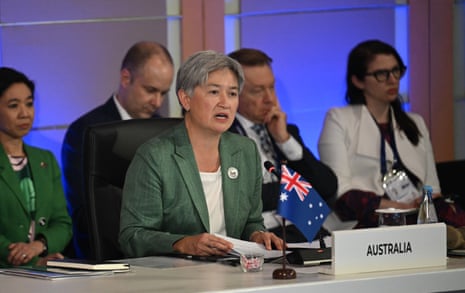
Beijing’s response—urging Australia to "stop stirring up tension"—reflects its long-standing policy of viewing the South China Sea as its "near abroad." The Chinese government maintains that its missile tests are "routine training activities" and that it provided advance notice to relevant countries, including Australia. However, the lack of transparency regarding the capabilities of these missiles continues to fuel suspicion among Western allies.
Commonwealth Games honors provide a moment of national unity
Amidst the diplomatic and industrial turmoil, Australia found a reason for celebration with the announcement of its flag bearers for the upcoming Commonwealth Games in Glasgow. Pole vault world champion Nina Kennedy and para-swimmer Tim Hodge have been selected to lead the Australian contingent during the opening ceremony at the Glasgow Hydro arena.
Kennedy, who recently set a new Australian record at the Monaco Diamond League, will carry the national flag. Hodge has been named the Games baton bearer, a new honor introduced for this cycle. In a departure from tradition, all 74 participating countries and territories were given their own batons to decorate. These batons each contain one word from a message by King Charles III, which will be read in its entirety during the ceremony.
The selection of Kennedy and Hodge highlights the strength of Australian athletics on the world stage. Kennedy’s recent recovery from a hamstring injury to achieve a 4.95m vault has made her a favorite for gold in Glasgow. These sporting achievements offer a brief reprieve from the heavy political discourse, though the logistical challenges of the Games—which were moved to Glasgow after Victoria withdrew as host due to cost concerns—remain a reminder of the fiscal pressures facing the country.
Strategic outlook for the Albanese government
The convergence of the China hits back at Penny Wong’s comments and the Victorian teachers strike creates a complex narrative for the federal government. On one hand, Australia is asserting itself as a primary security partner in the Indo-Pacific, willing to risk Beijing’s ire to protect trade routes and regional sovereignty. On the other, the nation is grappling with internal fissures as the public sector demands a greater share of the national budget to combat the effects of inflation and years of austerity.
The next few days will be critical for Minister Wong as she navigates the ASEAN summit and delivers her high-stakes speech on Chinese military expansion. Simultaneously, the Victorian government must decide whether to return to the bargaining table with a better offer or risk further strikes that could alienate the voting public. As the Australian team prepares to march in Glasgow, the nation remains at a crossroads, balancing its global ambitions with the urgent needs of its citizens at home.