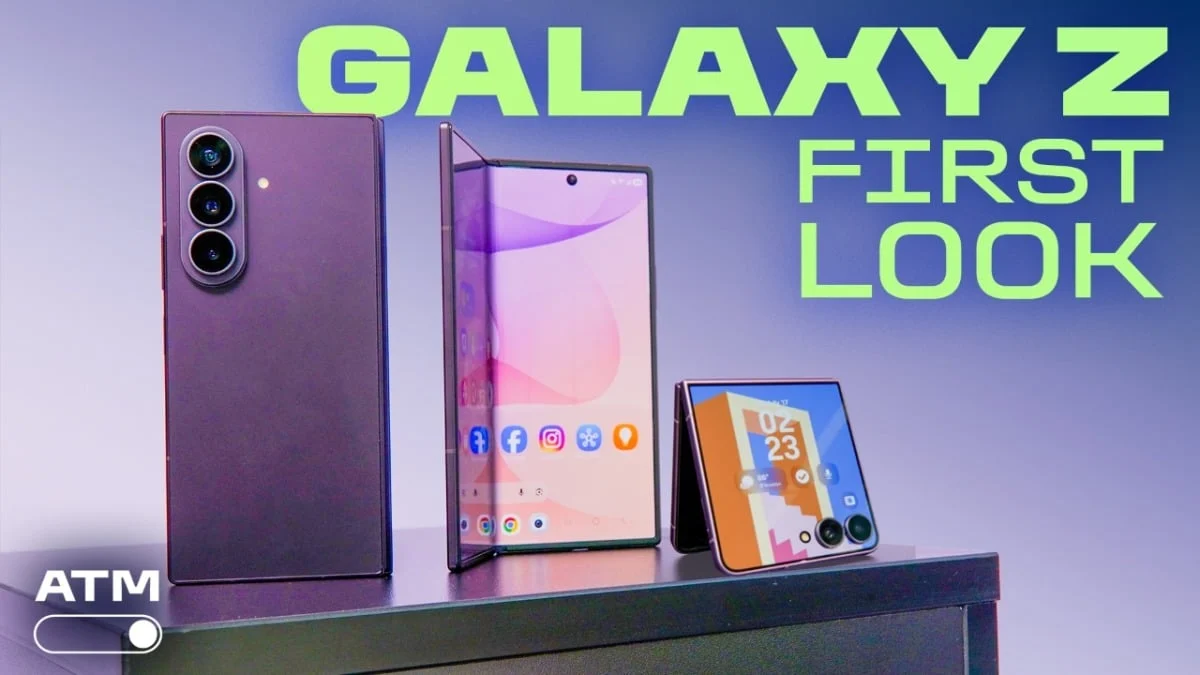
Samsung Electronics has officially unveiled its latest lineup of foldable mobile devices, marking a significant strategic shift with the introduction of the Samsung Galaxy Z Fold 8 Ultra & Z Flip 8 during its annual Unpacked event. The announcement represents the first time the South Korean conglomerate has applied the "Ultra" designation to its flagship foldable series, signaling a push to consolidate its dominance in a market increasingly crowded by international competitors. As the company seeks to maintain its leadership position, these new models introduce substantial hardware refinements, integrated artificial intelligence capabilities, and a re-engineered hinge mechanism designed to address long-standing durability concerns.
The introduction of the Samsung Galaxy Z Fold 8 Ultra & Z Flip 8 comes at a critical juncture for the global smartphone industry, which has seen a stabilization in traditional slab-style phone sales and a concentrated focus on premium, high-margin devices. Industry analysts note that the "Ultra" branding on the Fold 8 indicates a move to cater to power users who demand professional-grade camera systems and maximum productivity tools within a single portable chassis. This strategy mirrors the success of the Galaxy S Ultra series, which has become the company’s primary volume driver in the high-end segment.
During the hands-on demonstration, the Samsung Galaxy Z Fold 8 Ultra showcased a noticeably thinner profile compared to its predecessors, achieved through a new carbon-fiber-reinforced hinge. This structural update not only reduces the overall weight of the device but also minimizes the "screen crease" that has historically been a point of contention for foldable enthusiasts. The Ultra model features a 7.9-inch internal Dynamic AMOLED 2X display with a peak brightness of 3,000 nits, ensuring visibility in direct sunlight and providing a canvas for the newly optimized multitasking software.
Engineering a Thinner Future with the Samsung Galaxy Z Fold 8 Ultra & Z Flip 8
The engineering team at Samsung has prioritized a "zero-gap" design for the Samsung Galaxy Z Fold 8 Ultra & Z Flip 8, ensuring that both devices fold completely flat to prevent debris from entering the internal display area. For the Fold 8 Ultra, this transition is accompanied by the inclusion of an integrated S Pen slot, a feature long requested by the user base. Previously, the S Pen required a separate carrying case, which added bulk to the device; the new internal silo represents a significant feat of internal spatial management without compromising battery capacity.
The Z Flip 8, meanwhile, focuses on the "compact-first" philosophy, featuring a wraparound cover display that now encompasses the entire front panel, including the camera cutouts. This 4.1-inch external screen allows users to execute complex tasks, such as responding to emails with a full QWERTY keyboard or navigating via GPS, without ever unfolding the primary 6.7-inch display. This functional expansion is intended to reduce "digital fatigue" by allowing users to interact with their notifications in a more constrained, intentional manner.
Internal hardware for both the Samsung Galaxy Z Fold 8 Ultra & Z Flip 8 is powered by a custom-tuned Snapdragon 8 Gen 5 "For Galaxy" processor, manufactured on a 2-nanometer process. This chipset is specifically optimized for sustained performance during intensive AI processing and high-end mobile gaming. Thermal management has also been upgraded, with the Fold 8 Ultra utilizing a vapor chamber that is 40% larger than the one found in the previous generation, addressing the heat dissipation challenges inherent in thin, foldable designs.
Hardware Breakthroughs and the Ultra Distinction
The "Ultra" moniker for the Fold 8 is most evident in its photographic capabilities, which now align with the company’s top-tier S-series flagships. The Samsung Galaxy Z Fold 8 Ultra & Z Flip 8 launch event highlighted a 200-megapixel primary sensor on the Fold 8 Ultra, supported by a periscope telephoto lens capable of 10x optical zoom. This marks a departure from previous foldables, which often compromised on camera hardware to maintain a slim form factor. By incorporating these high-performance sensors, Samsung is positioning the Fold 8 Ultra as a viable replacement for both a tablet and a professional-grade camera.
For the Z Flip 8, the camera upgrades are more focused on social media integration and "Flex Mode" versatility. The dual-camera setup on the rear now utilizes larger pixels to improve low-light performance, a common pain point for the Flip series. The device’s software has been updated to automatically recognize the angle of the hinge, adjusting the camera interface to facilitate hands-free video recording and photography, a feature that has gained significant traction among content creators and the younger demographic.
Battery life remains a pivotal factor for foldable adoption, and the Samsung Galaxy Z Fold 8 Ultra & Z Flip 8 address this through a combination of larger physical cells and more efficient display technology. The Fold 8 Ultra employs a dual-cell 5,200mAh battery, while the Flip 8 moves to a 4,000mAh capacity. Both devices support 65W wired fast charging, a notable increase from the 25W and 45W standards held by the company for several years. This shift is seen as a direct response to Chinese manufacturers who have pushed the boundaries of charging speeds in the foldable segment.
Software Integration and the Role of Advanced Galaxy AI
Beyond physical hardware, the Samsung Galaxy Z Fold 8 Ultra & Z Flip 8 serve as the primary vehicles for the latest iteration of Galaxy AI. Samsung has transitioned from cloud-based AI processing to a more secure, on-device model for its core productivity features. The Fold 8 Ultra introduces "Live Translate 2.0," which can provide real-time audio and text translation during multi-person meetings, utilizing the foldable’s unique dual-screen form factor to show translations to all participants simultaneously.
The Z Flip 8 utilizes AI to enhance its "Interpreter Mode," allowing two people standing across from each other to see translated text on the cover screen and main screen respectively. Furthermore, the devices feature a new AI-driven battery management system that learns user patterns over a two-week period to hibernate unused background applications more aggressively. This software layer is integrated into One UI 7, which has been redesigned to offer a more desktop-like experience on the Fold’s large internal display, including an improved taskbar and window-snapping capabilities.
Security remains a cornerstone of the Galaxy ecosystem, and the Samsung Galaxy Z Fold 8 Ultra & Z Flip 8 incorporate the Knox Matrix security suite. This system provides end-to-end encryption for data synced across multiple Samsung devices and introduces a "Private Sharing" mode that uses blockchain technology to allow users to set expiration dates on shared files and prevent recipients from taking screenshots.
Market Competition and the Foldable Landscape
The release of the Samsung Galaxy Z Fold 8 Ultra & Z Flip 8 occurs as the foldable market enters a more mature phase. While Samsung initially enjoyed a near-monopoly on the form factor in Western markets, the entry of Google, OnePlus, and various Chinese OEMs into the international arena has forced a faster pace of innovation. Analysts from International Data Corporation (IDC) suggest that Samsung’s introduction of an "Ultra" model is a defensive move to protect its premium market share from competitors who have recently released thinner and lighter foldables.
Market data indicates that while the foldable segment represents only a small fraction of total smartphone shipments, it accounts for a disproportionate share of industry profits. By diversifying the lineup into the Z Fold 8 Ultra and the Z Flip 8, Samsung is attempting to capture both the "prosumer" market and the fashion-conscious "lifestyle" market. This bifurcation allows the company to maintain high price points for the Ultra model while potentially making the Flip series more accessible through aggressive carrier subsidies and trade-in programs.
The competitive pressure has also led to improvements in the supply chain. Samsung Display, the subsidiary responsible for the foldable panels, has reportedly increased the durability of its Ultra Thin Glass (UTG) by 30%. This enhancement is crucial for the Samsung Galaxy Z Fold 8 Ultra & Z Flip 8, as it allows for a more tactile feel that closely mimics traditional glass while remaining flexible enough for thousands of fold cycles.
Economic Implications and Consumer Accessibility
The pricing strategy for the Samsung Galaxy Z Fold 8 Ultra & Z Flip 8 reflects the current inflationary environment and the increased cost of high-end components. The Fold 8 Ultra is positioned at a premium price point, starting at $1,999, while the Z Flip 8 remains closer to the $1,000 psychological threshold. These prices represent a significant investment for consumers, prompting Samsung to expand its "Samsung Finance+" and long-term lease options in major markets like the United States and the United Kingdom.
The economic impact of these devices extends to the broader mobile ecosystem. The demand for specialized components, such as the 2nm processors and high-density batteries found in the Samsung Galaxy Z Fold 8 Ultra & Z Flip 8, provides a boost to the semiconductor and materials science sectors. Furthermore, the push for foldable adoption is encouraging app developers to optimize their software for variable aspect ratios, a move that benefits the entire Android ecosystem by reducing fragmentation in how apps behave on different screen sizes.
Public reception to the new models will likely depend on the perceived value of the "Ultra" upgrades. Early feedback from tech reviewers suggests that the integrated S Pen and the vastly improved camera system are the most compelling reasons for existing Fold users to upgrade. For the Flip 8, the larger cover screen is seen as the primary driver for mainstream adoption, as it transforms the device from a novelty into a highly functional tool that does not require constant unfolding.
Environmental Sustainability and Manufacturing Standards
In alignment with global sustainability goals, the Samsung Galaxy Z Fold 8 Ultra & Z Flip 8 incorporate a higher percentage of recycled materials than any previous Samsung mobile device. The internal components utilize recycled cobalt in the batteries and 100% recycled rare earth elements in the speakers. The aluminum frame is composed of 30% recycled scrap, and the packaging is made from 100% recycled paper.
Samsung has also extended its software support lifecycle for the Samsung Galaxy Z Fold 8 Ultra & Z Flip 8, promising seven years of security updates and seven generations of Android OS upgrades. This move is designed to increase the longevity of the devices, countering the criticism that foldable phones are "disposable" due to their mechanical complexity. By ensuring the software remains current for nearly a decade, Samsung is appealing to environmentally conscious consumers and those who view their smartphone as a long-term investment.
Manufacturing for the new series has been streamlined at Samsung’s facilities in Vietnam and India, with a focus on precision robotics to assemble the complex hinge mechanisms. The company has implemented a new quality-control protocol that includes a "stress test" involving 300,000 folds in varying temperature and humidity conditions. This rigorous testing is intended to bolster consumer confidence in the reliability of the Samsung Galaxy Z Fold 8 Ultra & Z Flip 8.
Future Outlook for the Foldable Category
The launch of the Samsung Galaxy Z Fold 8 Ultra & Z Flip 8 signals that the foldable form factor has moved beyond the experimental stage and into the mainstream premium segment. As Samsung continues to refine the hardware and software experience, the distinction between a smartphone, a tablet, and a workstation continues to blur. The "Ultra" designation, in particular, sets a new benchmark for what is possible in a folding device, challenging the industry to match its combination of portability and power.
Looking ahead, the success of the Samsung Galaxy Z Fold 8 Ultra & Z Flip 8 will be measured not just by sales figures, but by their ability to influence the design language of future mobile technology. As more consumers become accustomed to the benefits of foldable displays, the industry expects a shift toward even more diverse form factors, including rollable and tri-fold devices. For now, the Fold 8 Ultra and Flip 8 represent the pinnacle of Samsung’s mobile engineering, reflecting a decade of research and development in flexible display technology.
The global rollout of the Samsung Galaxy Z Fold 8 Ultra & Z Flip 8 is scheduled to begin in late August, with pre-orders opening immediately following the Unpacked event. With a focus on durability, AI integration, and professional-grade hardware, Samsung is betting that its eighth generation of foldables will solidify the category’s place in the future of personal computing. As the devices reach the hands of consumers worldwide, the impact on mobile productivity and digital consumption patterns will become increasingly clear.