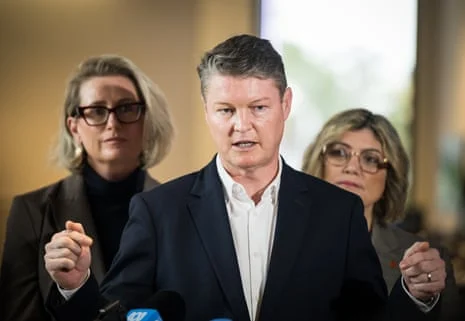
The Australian federal parliament descended into a heated legislative clash Tuesday as Opposition Leader Angus Taylor launched a procedural assault on the Labor government’s property tax policies, labeling them a "wicked tax on widows." The confrontation occurred just hours before the Reserve Bank of Australia (RBA) was scheduled to announce its latest interest rates decision, a move expected to dictate the nation’s economic temperature for the remainder of the year.
Taylor moved to suspend standing orders in the House of Representatives to force an immediate debate on what the Coalition has termed the "widow tax." Under current budget legislation, grandfathered exemptions for negative gearing and capital gains tax (CGT) are revoked if a property title is transferred following a divorce or the death of a partner. The opposition argues this "reset" prevents grieving spouses from maintaining the financial structures they relied upon during their partnership.

During his address to the House, Taylor criticized the government’s delay in rectifying the issue, noting that Treasurer Jim Chalmers had previously promised a fix. "What type of government sees dollar signs when looking at someone who’s gone through a traumatic breakup?" Taylor asked the chamber. Despite the rhetorical pressure, the Labor majority successfully voted down the motion, maintaining that a two-week consultation period is necessary before introducing corrective legislation in late September or October.
The Looming RBA Interest Rates Decision
While the political theater unfolded in Canberra, the financial sector remained fixated on the Reserve Bank of Australia’s headquarters. Economists and market analysts widely expect the RBA interest rates decision to result in a "hold," maintaining the cash rate at 4.35%. This would mark the second consecutive meeting without a rate hike, providing a tentative reprieve for mortgage holders.
Inflation currently sits at 3.8%, exceeding the RBA’s target range of 2% to 3%. However, recent data indicating a slight uptick in unemployment and cooling consumer spending has provided the central bank with enough evidence to pause further tightening. Governor Michele Bullock is expected to provide a statement at 3:30 p.m. local time, which will be scrutinized for "hawkish" or "dovish" signals regarding a potential rate cut in 2027 or a final hike before the end of 2026.

Financial markets currently price in a nearly 50% chance of one more rate increase this year if inflation does not continue its downward trajectory. The RBA’s quarterly Statement on Monetary Policy, also due for release, will update growth and inflation forecasts that will underpin the bank’s strategy through the Christmas period.
Corporate Turmoil and the KPMG Audit Scandal
The integrity of Australia’s professional services sector faced renewed scrutiny as two more senior executives resigned from KPMG. General Counsel Louise Capon and Human Resources Chief Dorothy Hisgrove stepped down ahead of a scheduled parliamentary inquiry into the firm’s audit leak scandal. Their departures bring the total number of high-profile resignations at the firm to nine.
The scandal involves the alleged leaking of confidential client information, a controversy that mirrors the tax leak crisis that recently engulfed rival firm PwC. While neither Capon nor Hisgrove has been accused of direct wrongdoing, both held pivotal roles in the firm’s internal response to a whistleblower who initially raised the alarm.

Parliamentary committees have intensified their oversight of the "Big Four" accounting firms, seeking to implement stricter regulations on how these entities handle government contracts and internal ethics. The firm’s new leadership is expected to face a rigorous "grilling" this Friday as lawmakers seek to determine the extent of the cultural failings within the organization.
Gambling Reform Negotiations and Independent Pushback
Negotiations between the Albanese government and the Coalition over a major gambling reform package are reportedly nearing a conclusion, though a final deal remains elusive. The proposed legislation seeks to curb the saturation of online gambling advertisements, particularly during sports broadcasts. Current proposals include a cap of three advertisements per hour on broadcast television between 6:00 a.m. and 8:30 p.m.
However, Independent MP Kate Chaney and other advocates for stricter reform have expressed disappointment with the current trajectory of the talks. Chaney, who served on the landmark inquiry into gambling harm, accused the government of "listening to the money and the power" rather than the evidence of social harm. She noted that previous partial bans merely saw gambling companies shift their advertising spend to later time slots and digital platforms.

The Greens have also raised concerns regarding the lack of restrictions on social media and streaming services. While Prime Minister Anthony Albanese indicated that a deal with the Coalition could be reached within days, the legislation is not expected to reach the Senate until after a committee reports its findings this Friday.
Australia-Vietnam Strategic Partnership Strengthens
On the diplomatic front, Prime Minister Albanese welcomed Vietnamese President Tô Lâm to Canberra to announce a significant expansion of the Australia-Vietnam strategic partnership. The two nations have agreed to deepen cooperation in several critical sectors, including defense, maritime security, and the digital economy.
A key outcome of the bilateral talks includes Vietnam opening its markets to Australian kangaroo and deer meat, providing a boost to the Australian agricultural sector. The joint statement also contained a veiled critique of global trade instability, expressing concern over "policies and practices that disrupt global supply chains." Analysts interpreted these remarks as a reference to the trade tensions between the United States and China, as well as the potential for renewed tariffs under future international administrations.
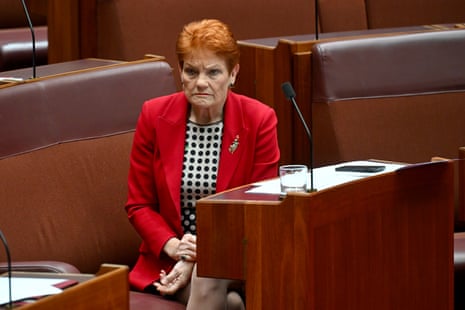
The strengthening of ties with Vietnam is part of Australia’s broader "Southeast Asia Economic Strategy to 2040," which aims to diversify trade partners and reduce economic reliance on any single market.
Gig Economy Investigation and Public Health Initiatives
The Fair Work Ombudsman (FWO) confirmed it has launched an investigation into the hospitality gig-work app "Supp" following allegations of worker misclassification. The app, which connects hospitality venues with ad-hoc workers like baristas and servers, classifies its users as "independent contractors."
Four workers recently reported that this classification resulted in the loss of essential entitlements, including superannuation and minimum wage protections. The FWO investigation follows recent legislative changes to the Fair Work Act intended to provide "employee-like" protections to gig workers. Supp has maintained that it supports clear standards for digital platforms and is cooperating with regulators.

Simultaneously, Agriculture Minister Julie Collins announced a national vaccine rollout to combat the H5 bird flu. While the government admitted it cannot stop the spread of the virus among wild bird populations, it has secured 1,500 vials of vaccine to protect priority native species and birds in captivity. Officials warned the public to expect "mass mortalities" of birds across the country as the virus continues to move through various jurisdictions.
Real Estate Market Volatility and Housing Forecasts
New economic data from ANZ has sent a chill through the property sector, with the bank forecasting a significant decline in house prices for Sydney and Melbourne. Economists predict that Sydney prices could fall by as much as 14.5% from their early 2026 peaks, while Melbourne is bracing for a 12.8% drop.
The slowdown is attributed to the cumulative impact of high interest rates and recent changes to investment tax laws. Westpac’s Chief Financial Officer Nathan Goonan noted that owner-occupier loans have plummeted by 18%, while investor loans have dropped 26%. Goonan suggested that the RBA’s interest rate trajectory is likely a more significant factor in the market cooling than the government’s budget reforms.
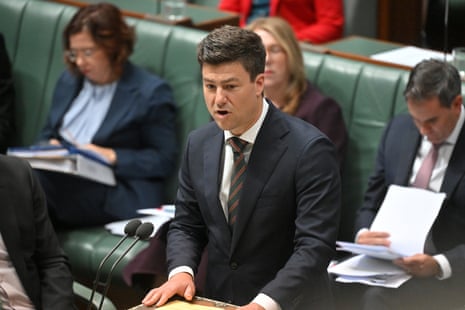
Despite the projected downturn, ANZ suggested that the market might stabilize by late 2027, provided the RBA begins a cycle of interest rate cuts. For now, the combination of high borrowing costs and increased supply is shifting the leverage back toward buyers in Australia’s most expensive markets.
Legislative Delays in Victoria
In state politics, Victorian Premier Ben Carroll announced a significant delay to the state’s "Right to Work from Home" legislation. The bill, which would have been a national first by legislating a right for employees to work remotely two days a week, will now not take effect until July 2027, well after the next state election.
The decision was made following intense pressure from the business community and the Victorian Chamber of Commerce and Industry. Critics argued the laws would be "destructive" to the Melbourne CBD economy and place an undue burden on employers. Carroll stated the delay is intended to "reset the relationship" with the business sector while maintaining his personal support for flexible work arrangements.

The move highlights the ongoing tension between post-pandemic labor expectations and the economic necessity of vibrant urban centers, a debate that continues to resonate across all levels of Australian government.