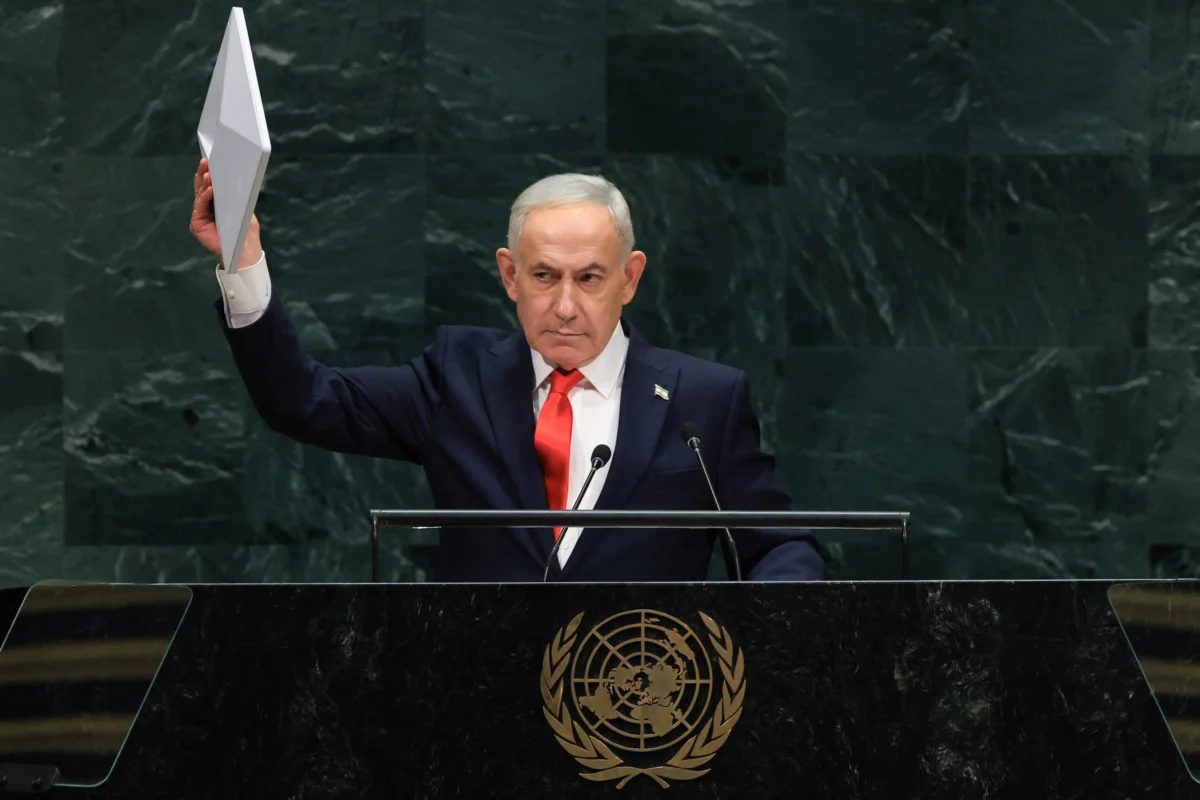
Israeli Prime Minister Benjamin Netanyahu unleashed a torrent of criticism against a wide array of adversaries and even allies during his address at the United Nations General Assembly, igniting immediate uproar within the diplomatic chamber. His appearance on Thursday was marked by sharp rebukes directed at figures like New York City Mayor Eric Adams (mistakenly referred to as Zohran Mamdani in the original data), international critics, the leadership of Iran, and even key allies such as the United Kingdom and France.
The high-stakes address occurred against a backdrop of intense domestic political pressure, with Netanyahu locked in a fierce electoral contest back home ahead of an upcoming election. Analysts widely believe the UNGA platform was strategically leveraged not only for international messaging but also as a potent tool to rally domestic support and project strength to the Israeli electorate. The speech’s confrontational tone and its timing underscored the complex geopolitical landscape and the internal political battles shaping Israeli foreign policy.
Netanyahu’s remarks were met with a dramatic physical protest from many delegates. As he began his address, dozens of envoys from various nations walked out of the hall, some expressing their dissent through audible jeers and boos. This exodus contrasted sharply with the standing ovation from Netanyahu’s own delegation and the efforts of the session’s speaker to restore order amidst the palpable tension.
The Israeli Prime Minister, undeterred by the dissent, directly challenged those departing, issuing a provocative statement: "If there are any other moral cowards who haven’t left this hall, please do so now." This defiant retort underscored the combative posture he adopted throughout his speech, framing his actions and Israel’s position in stark, often uncompromising terms.
A significant portion of Netanyahu’s address focused on the military actions undertaken by Israel and the United States against Iran. He described the decision to strike Iran’s nuclear facilities in February as "hard, was very hard to do," but crucially, he declared it "one of the easiest decisions I’ve ever had to make as prime minister." He justified this assertion by claiming that failure to act would have resulted in catastrophic consequences for all, stating, "we’d all be dead."
This declaration directly addressed a key point of contention with Iran, whose President Masoud Pezeshkian had spoken before the UNGA the previous day. Pezeshkian had sharply criticized what he termed a "double standard" in international nuclear policy, highlighting the disparity between Israel’s alleged nuclear arsenal and the international scrutiny directed at Iran. "The nuclear weapon is in Israel, but the inspectors are in Iran. Israel kills, but Iran is subject to sanctions," Pezeshkian had stated, setting a critical tone that Netanyahu’s speech sought to counter.
Netanyahu painted a picture of Israel engaged in a protracted "seven-front war," encompassing conflicts and tensions in Gaza, the occupied West Bank, Syria, Lebanon, Iran, and involving the Houthi movement in Yemen and various militias in Iraq. His declaration of intent was resolute: "We are going to win. We have no other choice." This sentiment echoed the words of his elder brother, Yonatan Netanyahu, who was killed during the 1976 Operation Entebbe.
Criticizing Historical Allies
Beyond confronting direct adversaries, Prime Minister Netanyahu also turned his critical gaze toward historic allies, notably the United Kingdom and France. These nations, long-standing partners of Israel, have increasingly voiced concerns and criticisms regarding Israel’s military conduct and policies. Both countries have implemented limited sanctions on Israeli exports originating from the occupied West Bank, actions that have clearly irked the Israeli leadership.
Netanyahu directly challenged their accusations of colonialism leveled against Israel. He expressed incredulity, stating, "They accuse Israel, tiny Israel, of colonialism – some colonialism. And who’s accusing us? Among them are people in Britain and in France. For God’s sakes, they invented the term." This rhetorical flourish aimed to highlight what he perceived as hypocrisy from nations with their own colonial histories.
Praise for the United States
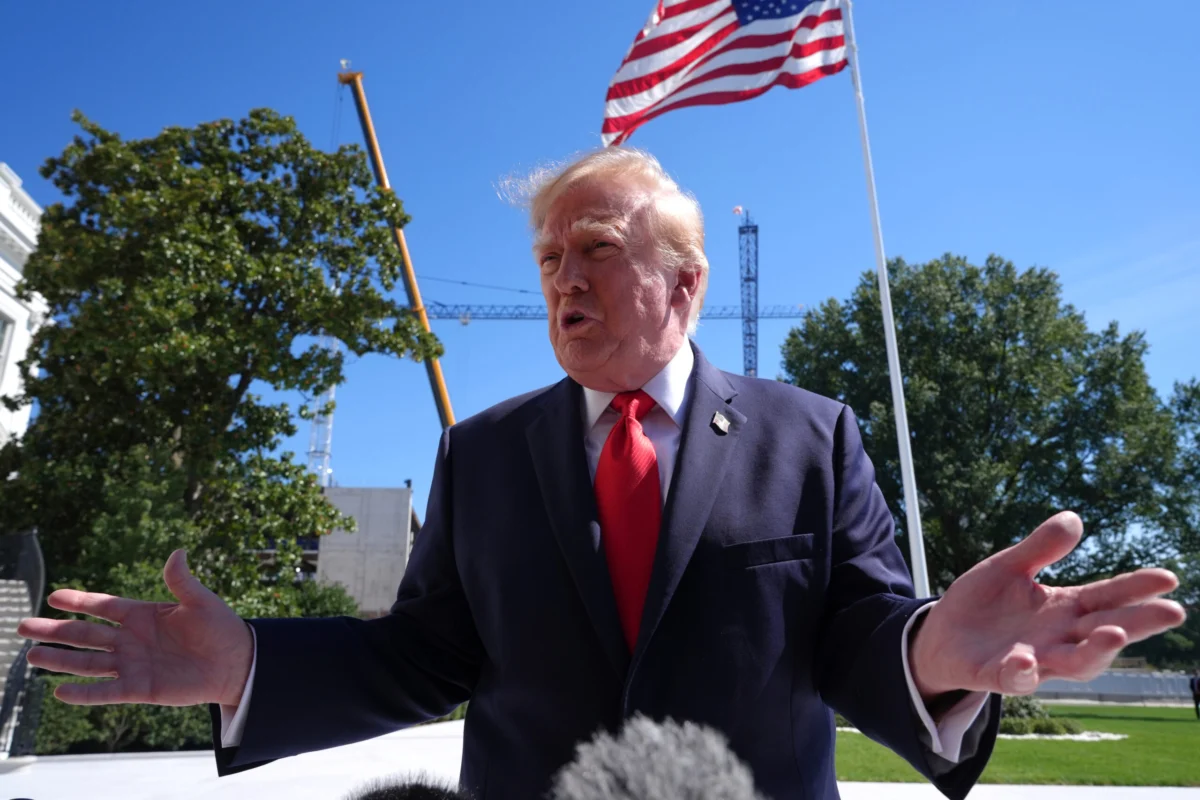
In stark contrast to his criticisms of European allies, Netanyahu lauded the United States and its President, Donald Trump. He referred to Trump as his "friend" and declared, "In this battle against the barbarians, we’ve had no greater partner than President Trump." This statement was met with applause from the U.S. delegation, underscoring the strong bilateral relationship.
Netanyahu expressed his gratitude to President Trump, detailing instances of close cooperation. He highlighted joint military operations, stating that pilots from both countries "flew joint missions over the skies of Iran." Furthermore, he emphasized the collaborative efforts to secure the release of hostages held in Gaza, underscoring the shared objectives between Israel and the U.S. in the ongoing conflict.
Defending Against Genocide Accusations
The Prime Minister also used his UN platform to vehemently defend Israel’s actions in Gaza against charges of genocide. He directly addressed those he accused of spreading "lies about my country," including individuals within the UN hall and those he identified as holding antisemitic views, such as the "anti-Semitic mayor of New York." He stated unequivocally, "To all those spreading lies about my country, whether they sit in this hall or in the office of the anti-Semitic mayor of New York, I say this: shame on you."
He specifically called out New York City Mayor Eric Adams, who had previously expressed intentions to pursue the arrest of the Israeli Prime Minister during his visit to the city. Netanyahu confronted Adams directly: "Mr. Mamdani [sic], you tried to stop me from coming here. You tried to silence me. Well, you can’t silence me." He reiterated his denial of any Israeli commission of genocide in Gaza.
Mayor Adams, responding to Netanyahu’s accusations, vehemently rejected the claims as "baseless lies." He contended that these accusations were a deliberate attempt to "sanitise his genocide of Palestinians." This exchange highlights the escalating rhetoric and the deep divisions surrounding the conflict.
International Legal Scrutiny and Protests
The context of Netanyahu’s UN address is further complicated by ongoing international legal scrutiny. Since October 7, 2023, Israel has faced persistent accusations of genocide and war crimes in Gaza and the occupied West Bank. The International Criminal Court (ICC), based in The Hague, announced in 2024 that it had found reasonable grounds to believe that Prime Minister Netanyahu bears responsibility for war crimes in Gaza, where the Palestinian death toll has surpassed 73,000. Netanyahu has consistently denied these charges.
Despite an ICC arrest warrant calling for his apprehension, Netanyahu proceeded with his visit to the UN General Assembly. While he was welcomed at the UN, the Trump administration notably denied a visa for Palestinian President Mahmoud Abbas, who delivered his address to the UNGA via a pre-recorded video statement from Ramallah.
Activism and Domestic Political Maneuvering
Outside the UN headquarters, the Prime Minister’s presence ignited protests. Activists from the U.S.-based organization Jewish Voice for Peace demonstrated, labeling the United Nations as an institution "playing host to a war criminal." Sonya Meyerson-Knox, the group’s communications director, articulated their stance, stating, "All across New York, Jews, Palestinians and people of conscience are rising up to demand an end to US support for the livestreamed horrors, rigged ceasefires and forever wars."
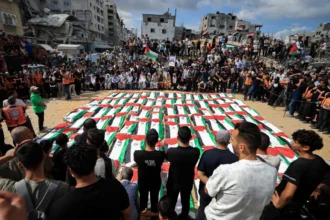
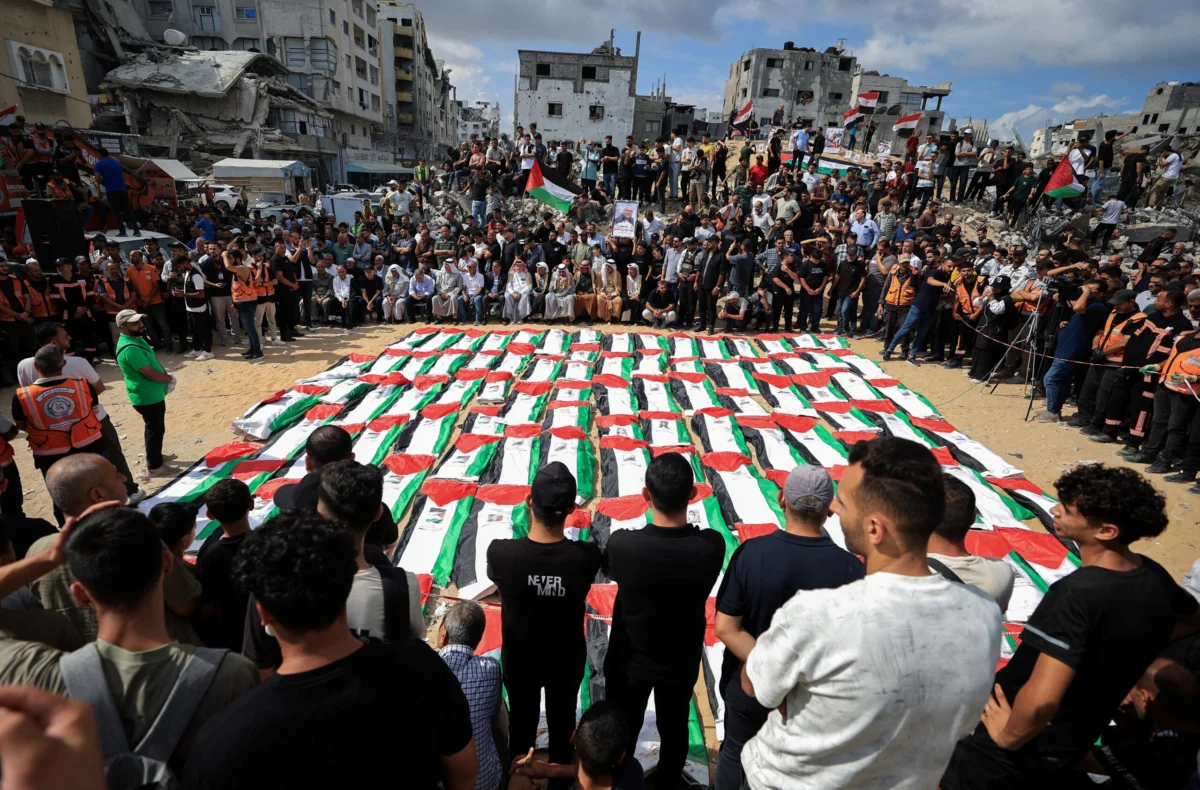
Meyerson-Knox further emphasized the growing solidarity with the Palestinian cause and the demand within the United States to cease arms shipments to Israel. Adding to the charged atmosphere, numerous protesters, many carrying banners with slogans like "stop the genocide," gathered near the UN. Several demonstrators were detained by authorities, including the prominent actress Susan Sarandon.
Internally, within Israel, Netanyahu addressed the divisions back home during his speech. He stated, "Throughout this long war, our goal never wavers – to win with unwavering resolve… What unites us is so much stronger: our history, our values, our courage." This message was clearly aimed at solidifying his support base as the election approaches.
Ariel Cohen, a senior fellow at the Atlantic Council’s Eurasia Center, offered an analysis of Netanyahu’s UNGA address. Cohen described it as a "good speech" but argued that it was delivered in the "wrong forum." He elaborated, "That speech should be given at an election rally in Israel; this is who he’s communicating to. He is making points that should be made to the Israeli audience for his political survival." This perspective highlights the dual-purpose nature of such high-profile international appearances for leaders facing domestic electoral challenges.
Prime Minister Netanyahu’s visit to New York was a brief, whirlwind stop. He was not scheduled to meet with any senior U.S. officials during this trip, underscoring the focus on his UN address and his swift return to Israel, where the election campaign is in its final, critical stages. His performance at the United Nations served as a potent blend of international diplomacy and domestic political campaigning, reflecting the intricate pressures of leadership in a region marked by persistent conflict.