The forceful statement from Iran’s top security official on Saturday follows closely on the heels of anticipated new U.S. sanctions, poised to further cripple the already strained Iranian economy. The escalating tensions raise critical questions about Iran’s capacity and willingness to leverage its regional influence and military capabilities in response to perceived economic aggression.
Iran’s Ultimatum and Potential Retaliation Strategies
Mohsen Rezaei, the secretary of Iran’s Supreme National Security Council, explicitly addressed the international community, including Iran’s neighbors, urging them to abstain from participating in what he termed the U.S.’s "economic war." During an interview with state broadcaster IRIB on Saturday, Rezaei declared, "Any country that takes part in imposing economic restrictions on us will be regarded as an enemy." He further amplified this warning with the promise of "seismic" retaliation.
Adding a specific threat to regional stability, Rezaei cautioned Iran’s neighbors that their participation in what he called "Trump’s economic warfare" would result in "not even a drop of oil" leaving the Persian Gulf region. This veiled threat explicitly targets maritime trade routes, including alternative export pathways that bypass the Strait of Hormuz, a critical chokepoint through which approximately one-fifth of global oil and gas exports flow during peacetime.
Escalating Tensions and U.S. Sanctions Campaign
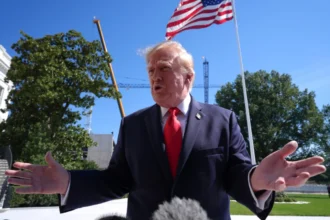
The current diplomatic standoff and Iran’s retaliatory threats are unfolding against a backdrop of sustained pressure from the United States. U.S. President Donald Trump announced his administration’s intention to launch "the most crushing economic operation" yet against Iran, promising "tremendous economic consequences" for any nation providing Iran with "any type of lifeline."
U.S. Treasury Secretary Scott Bessent reinforced these threats, articulating a stark choice: "You’re either with us or against us." He specifically appealed to China, a major purchaser of Iranian oil, for cooperation in the sanctions regime. This unified front from Washington aims to isolate Iran economically and politically, aiming to force concessions or instability within the country.
Iran’s President Masoud Pezeshkian has characterized the situation as a "full-scale economic, military and security war" with the United States. He pushed back against what he described as false U.S. predictions that Iran would collapse under American pressure, asserting that Iran has demonstrated remarkable "resistance, solidarity and cohesion."
Iran’s Strategic Doctrine: Deterrence and Disruption
Rezaei outlined a three-stage strategy for Iran’s response, beginning with diplomatic overtures to countries cooperating with the U.S. The initial phase involves direct negotiations and appeals for these nations to "step aside and distance themselves from the United States." However, Rezaei warned of forceful action if these diplomatic efforts fail: "But if they do not act, we will strike. We will target that country’s interests."
The targeting of alternative export routes, beyond the Strait of Hormuz, likely refers to strategic maritime passages such as the Bab al-Mandeb Strait, a gateway to the Red Sea. Saudi Arabia, for instance, has utilized this route for its oil exports when access to Hormuz was disrupted. Iran has previously used its control over the Strait of Hormuz as leverage in negotiations, and the U.S. has responded with a naval blockade of Iranian ports, significantly impacting Tehran’s international trade.
Experts suggest that Iran is actively seeking to establish a deterrent at an earlier stage of any potential conflict. Hamidreza Azizi, a researcher on Iran at the Clingendael Institute, noted on X (formerly Twitter) that Iran’s strategy appears to be evolving towards an "offensive doctrine" characterized by preemption and disproportionate retaliation. Preemption aims to neutralize perceived threats before they materialize, while disproportionate retaliation seeks to impose severe costs on any aggressor. Azizi characterized Iran’s warning to Gulf states as an "ultimatum," indicating that Iran’s military-security apparatus is increasingly preparing for further escalation.
The Dilemma for Iran’s Neighbors
The geopolitical landscape places Iran’s neighboring Gulf countries in a precarious position. As allies of the United States, they are also economically intertwined with the region and reliant on maritime trade routes that Iran can influence. The extent to which these nations will comply with U.S. demands to further economically pressure Iran remains uncertain.
Iran’s past attacks on Gulf nations have already impacted their economies, particularly those heavily dependent on the Strait of Hormuz for their oil and gas exports. While these countries have condemned Iranian aggression, regional analysts suggest that states closely aligned with Washington recognize the necessity of maintaining a functional political relationship with Iran, given their geographical proximity.
The United Arab Emirates, for example, restored diplomatic ties with Iran in 2022 but recently imposed a trade embargo following accusations of a missile attack, which Iran denies. Saudi Arabia and Iran, under a China-brokered agreement, normalized relations in 2023, signaling a preference for engagement over perpetual confrontation. However, Iranian actions have tested this delicate balance.
Professor Simon Mabon of Lancaster University highlighted the inescapable reality for Gulf states: "Ultimately, Gulf countries can’t change geography. They have to live and work alongside Iran." He added that these nations generally do not desire the instability that could result from the collapse of the Islamic Republic, and that calls for harder strikes are often aimed at weakening hardline elements within Iran, rather than precipitating regime change.
Trita Parsi, executive vice president of the Quincy Institute for Responsible Statecraft, noted that while confidence in diplomacy to end the current crisis is low, no nation in the region can afford another protracted war. This pragmatic concern, coupled with depleted global oil inventories, makes a prolonged confrontation between the U.S. and Iran economically unattractive, potentially preventing an uncontrolled escalation.
A History of Sanctions Against Iran
Iran has been subjected to international sanctions for decades, dating back to the 1979 Islamic Revolution. The United States initiated its sanctions regime in response to the revolution and the subsequent hostage crisis at the U.S. embassy in Tehran. These initial measures included halting oil imports and freezing Iranian assets.
In 1995, President Bill Clinton issued executive orders banning U.S. companies from investing in Iran’s oil and gas sector and trading with the country. Subsequent legislation further tightened these restrictions, targeting foreign firms with significant investments in Iran’s energy sector. The United Nations Security Council also imposed sanctions in 2006, primarily aimed at curbing Iran’s nuclear program, restricting trade in nuclear-related materials and freezing assets of involved entities.
These sanctions evolved and intensified over the years, with the European Union following suit. The landmark Joint Comprehensive Plan of Action (JCPOA), signed in 2015 by Iran and several world powers, temporarily lifted sanctions in exchange for curbs on Iran’s nuclear program. However, in 2018, the Trump administration withdrew the U.S. from the JCPOA, reimposing sanctions as part of a "maximum pressure" campaign.
Further sanctions were imposed on Iran’s petrochemicals, metals, and senior officials. The designation of Iran’s Islamic Revolutionary Guard Corps (IRGC) as a "Foreign Terrorist Organization" in 2019 marked a significant escalation. The assassination of Qassem Soleimani, a prominent IRGC commander, in 2020 also led to additional U.S. sanctions. The Biden administration has largely maintained the existing sanctions regime. In September of the previous year, UN sanctions were reimposed due to Iran’s nuclear activities.