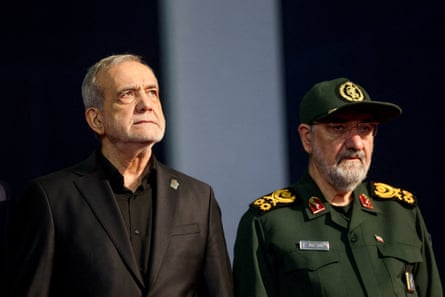
Iranian President Masoud Pezeshkian acknowledged on Sunday that his nation is currently grappling with "many problems" as the United States accelerates its campaign to isolate the Islamic Republic’s economy through what Washington describes as the most aggressive sanctions regime ever implemented. Pezeshkian, addressing a national audience via state television, characterized the current geopolitical environment as a state of total confrontation, asserting that the administration of Donald Trump has forced Iran into a "full-scale economic, military and security war." The president’s admission comes at a time of heightened domestic tension and regional instability, signaling a rare moment of official transparency regarding the efficacy of international pressure on the Iranian state.
The rhetoric from the presidential office reflects a deepening concern over the cumulative impact of American policy, which Pezeshkian framed as an existential struggle for the Iranian people. "I understand we have many problems in society right now," the president stated during his televised address, emphasizing that the government is attempting to mitigate the fallout of these crises as much as possible. His remarks specifically highlighted the volatility of the national currency, the skyrocketing cost of living, and the pervasive issue of unemployment, all of which have contributed to a sense of pervasive uncertainty regarding the future.
Domestic Turmoil and the Recognition of National Hardship
The admission that the country faces many problems as US ramps up sanctions is a stark departure from the usually defiant tone of the Iranian leadership. Pezeshkian noted that his administration is "striving with all our hearts" to combat inflation and resolve livelihood issues, framing the struggle as a fight to ensure that Iranian citizens can live with "dignity and pride." However, the reality on the ground remains grim for millions of Iranians who have seen their purchasing power evaporate over the last several years. The Iranian Rial has suffered from extreme exchange-rate swings, making basic necessities, including food and medicine, increasingly difficult to afford for the average family.
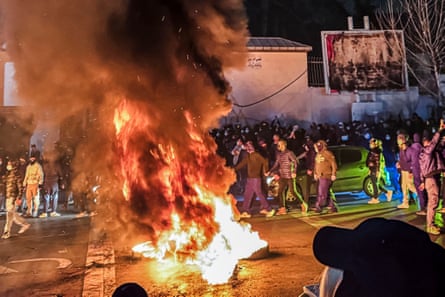
This economic distress has historically served as a catalyst for civil unrest. In late December of last year, a protest movement that began as a localized demonstration against the rising price of eggs and fuel quickly morphed into a nationwide uprising. These mass demonstrations, which initially targeted economic grievances, eventually evolved into a broader rejection of the political establishment. The Iranian government’s response to these protests was swift and severe. Authorities reported that more than 3,000 people died during the resulting unrest, though Tehran blamed the violence on foreign actors, specifically accusing the United States and Israel of orchestrating the chaos.

International observers and human rights organizations have provided a different account of the internal crisis. Foreign-based non-governmental organizations have alleged that the Iranian security apparatus launched an indiscriminate crackdown on civilians, leading to a death toll that may exceed official state figures. The discrepancy between the state’s narrative and the reports from international monitors underscores the deep fissures within Iranian society as the population remains caught between the pressure of international sanctions and the internal restrictions of their own government.
Escalation of US Economic Strategy and the Strait of Hormuz
The timing of Pezeshkian’s speech is significant, occurring just twenty-four hours before US Treasury Secretary Scott Bessent is expected to unveil a new tier of punitive measures. Bessent has described the upcoming package as "the toughest sanctions in history," designed to close remaining loopholes in the global financial system that allow Iran to generate revenue. This initiative is part of a broader American strategy known as "Operation Economic Fury," which seeks to dismantle the financial infrastructure that supports Iran’s regional influence and its military capabilities.
In response to the looming sanctions, the Iranian Foreign Ministry has decried the American approach as a violation of global norms. Ministry spokesperson Esmaeil Baghaei stated on Saturday that the imposition of secondary sanctions represents an "assertion of extraterritorial sovereignty" over independent members of the United Nations. Baghaei argued that these measures find no foundation in international law and are being used as a tool of coercion to bypass the sovereignty of other nations that wish to trade with Tehran.
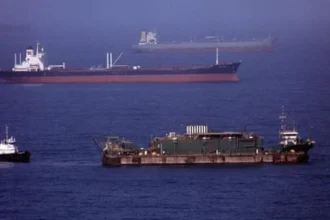
The confrontation has also taken on a territorial dimension. In recent days, Donald Trump has repeatedly made the controversial claim that the Strait of Hormuz—a vital global waterway through which twenty percent of the world’s oil flows—should be considered a "new US territory." Trump has utilized social media to share graphics depicting the Gulf and the Strait under American control, arguing that the ongoing naval blockade effectively grants the United States sovereignty over the area. "We control it with the blockade, and I like the idea of declaring it a territory," Trump told reporters, adding that he views the waterway as American property "right now."
Security Threats and the Hardline Pivot in Tehran
As the president says country faces ‘many problems’ as US ramps up sanctions, the Iranian security apparatus has signaled that it is prepared to retaliate. Mohsen Rezaei, the recently appointed leader of Iran’s Supreme National Security Council, issued a stern warning to neighboring countries on Saturday. Rezaei, a hardline figure who commanded the Islamic Revolutionary Guard Corps (IRGC) during the Iran-Iraq War, stated that any neighbor assisting the United States in its "economic war" would be viewed as an enemy.
Rezaei’s appointment is seen by analysts as a strategic move to harden Tehran’s stance against Washington. In his first extensive public interview since taking the post, Rezaei threatened to target oil-shipping routes and US commercial interests throughout the region. He claimed that while Iran has so far limited its responses to military targets, it possesses the capability to strike American oil and economic companies located in and around the Middle East. "So far, we have only targeted military bases," Rezaei said, "but if they want to impose economic sanctions on us… we will strike them."
The collapse of a June ceasefire agreement has further complicated the security landscape. The agreement, which was intended to stabilize the region after the outbreak of conflict on February 28, failed to hold, leaving the Strait of Hormuz as a primary flashpoint. While the United States maintains a naval blockade, Iran still exercises significant influence over the waterway, and Rezaei indicated that Tehran is currently in discussions with Oman regarding the management of the strait, including the potential imposition of transit fees on international shipping.
Regional Realignment and Global Diplomatic Friction
The intensifying pressure on Tehran is forcing regional players to choose sides, often with significant economic consequences. The United Arab Emirates, formerly one of Iran’s most important trading partners, announced last week that it was suspending all trade and financial transactions with Tehran until further notice. This move represents a major blow to the Iranian economy, as the UAE had long served as a vital hub for Iranian businesses to bypass international restrictions.
While Washington has successfully pressured some allies to join its isolation campaign, other global powers remain resistant. China, a key strategic partner for Iran, has been vocal in its criticism of the US strategy. Beijing has argued that unilateral sanctions and naval blockades will not resolve the underlying conflicts in the Middle East and instead risk exacerbating regional instability. The friction between Washington and Beijing over Iran policy continues to be a major point of contention in broader US-China relations.
In Europe, the response has focused on risk mitigation and the development of alternative infrastructure. French President Emmanuel Macron and Saudi Crown Prince Mohammed bin Salman are scheduled to meet in Paris to discuss plans that would reduce the world’s reliance on the Strait of Hormuz. According to officials in the French presidency, the two leaders are exploring the expansion of pipelines through Saudi Arabia and the development of new rail links and Omani ports situated outside the Gulf. A joint task force on energy and logistics is expected to meet at the ministerial level to identify strategic projects that could bypass the volatile waterway entirely.
Strategic Shifts in Global Energy Logistics
The move to create alternative trade routes reflects a growing consensus among global leaders that the Strait of Hormuz may no longer be a reliable conduit for energy. The Saudi-French initiative aims to secure financing for massive infrastructure projects that would link the Middle East directly to Europe via land and sea routes that avoid the Iranian coastline. These projects are not only seen as a security necessity but also as a way for French companies to secure a foothold in the shifting energy landscape of the Middle East.
As the president says country faces ‘many problems’ as US ramps up sanctions, the Iranian government finds itself increasingly boxed in by both its adversaries and the changing strategic priorities of its neighbors. The "Operation Economic Fury" led by the US Treasury continues to drain the Iranian state of its foreign reserves, while the threat of internal unrest remains a constant shadow over the administration. The upcoming announcement of new sanctions by Secretary Bessent is expected to target Iran’s remaining shadows of international trade, further tightening the noose around an economy already in distress.
The current situation represents one of the most significant challenges to the Islamic Republic since its inception. With the president openly acknowledging the depth of the crisis and hardline security officials threatening regional war, the path toward de-escalation remains unclear. The international community continues to watch the Strait of Hormuz with apprehension, as the rhetoric from both Washington and Tehran suggests that the "economic war" could easily transition into a much broader and more dangerous conflict.