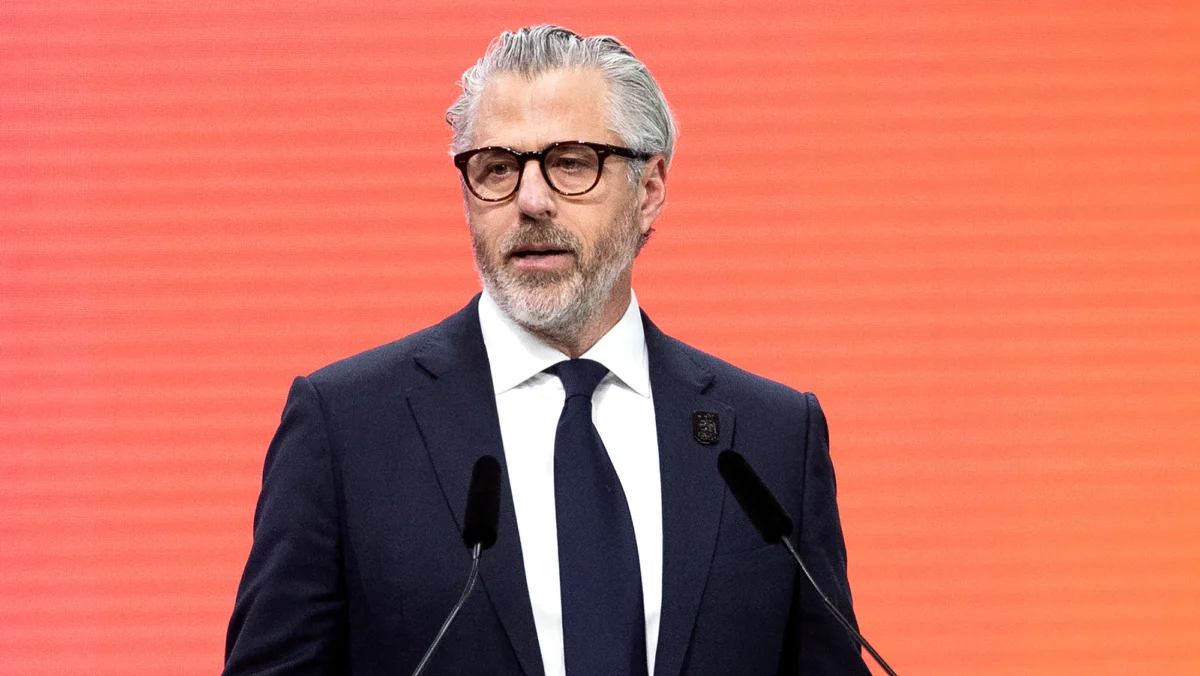
Casey Wasserman, a prominent figure in the sports and entertainment representation industry, is reportedly in advanced discussions to divest his remaining stake in his namesake firm, now rebranded as The Team. The anticipated buyer is Providence Equity Partners, a private equity firm that already holds a significant ownership position in the Westwood-based agency. This development suggests that what began as a broad auction process, initiated under considerable pressure, is now likely to conclude with an internal consolidation of ownership, keeping the strategic direction of the company consistent with recent years.
The Genesis of a Sale and Corporate Restructuring
The potential sale marks a pivotal moment for Wasserman and the company he founded, emerging after months of intense scrutiny and operational challenges. The firm, initially known as Wasserman Media Group before its recent rebranding, found itself at the center of a public relations storm following the late January revelation of Casey Wasserman’s inclusion in Department of Justice documents related to convicted sex trafficker Jeffrey Epstein and his accomplice Ghislaine Maxwell. These disclosures ignited a fierce backlash from the public and, critically, from the talent represented by the agency.
The immediate aftermath saw a notable exodus of artists, with more than 20 individuals, including musicians Laufey, Chappell Roan, Best Coast, and John Summit, publicly announcing their departure from the firm. Social media platforms became a conduit for widespread calls for talent to sever ties with the mogul. This artist rebellion, coupled with a deluge of negative headlines, exerted immense pressure on Wasserman and the company’s existing investors.
Providence Equity’s Strategic Consolidation
Providence Equity Partners, a private equity powerhouse with a history of investments in media, communications, education, and information services, had already established a deep financial interest in Wasserman’s enterprise. The firm initially acquired a major stake in November 2022, injecting capital intended to fuel aggressive growth initiatives. This investment quickly bore fruit with the significant acquisition of Brillstein Entertainment Partners less than a year later, expanding Wasserman’s footprint in production and management.
When the Epstein scandal erupted, Providence quickly moved to stabilize the situation. On February 14, amidst the height of the controversy, the firm issued a public statement reaffirming its commitment to the company’s growth, its expansion across sports, music, and entertainment, and its support for the talent it represented. Crucially, the statement explicitly backed company president Mike Watts, signaling a clear succession path and a desire to maintain operational stability independent of the founder’s direct involvement. This move by Providence underscored their determination to protect their substantial investment and steer the company through its reputational crisis.
The initial auction process, overseen by investment bank Moelis & Co., attracted interest from several high-profile suitors, including United Talent Agency (UTA) and WIN, the upstart shingle led by industry veteran Patrick Whitesell. However, recent reports indicate that these external bids may be bypassed in favor of a direct transaction between Wasserman and Providence. This outcome suggests that Providence, deeply embedded in the company’s strategic planning and financial structure, saw a compelling advantage in acquiring Wasserman’s stake rather than allowing an outside entity to take control. For Providence, consolidating ownership could streamline decision-making, ensure continuity of their investment strategy, and potentially mitigate further public relations risks associated with a new, external ownership group.
The Broader Landscape of Talent Representation and Private Equity
The potential acquisition by Providence highlights a growing trend within the talent representation industry: the increasing involvement of private equity firms. These financial entities are drawn to the stable, recurring revenue streams and scalable business models offered by major agencies, particularly those with strong sports and music divisions. As professional athletes command ever-larger shares of the entertainment economy, and as the music industry continues to evolve with new revenue models, talent representation has become a highly sought-after sector for institutional investors.
Wasserman’s firm, prior to its rebranding as The Team, had established itself as a formidable player, especially in the sports representation arena. An S&P Global report from June of the previous year detailed that Wasserman’s sports division generated $266 million in revenue in 2024, accounting for 29 percent of the company’s total revenue. This figure positioned it as the second-largest sports division in Hollywood, trailing only Creative Artists Agency (CAA), which reported $578 million in sports revenue for the same period. The firm’s diversification also includes a notable music agency group, built upon its 2021 acquisition of Paradigm’s music division, alongside its production-management arm Brillstein, and various marketing services units.
The previous ownership structure of Wasserman’s firm also illustrated the complexities of investment in this sector. Earlier investors, RedBird Capital and Madrone Capital Partners, had to divest their stakes due to potential conflicts of interest. These firms had acquired ownership stakes in professional sports teams—specifically, the football club AC Milan and the NFL’s Denver Broncos—which precluded them from simultaneously holding an ownership position in a sports talent representation firm under league rules designed to prevent conflicts. Providence’s current move to consolidate ownership avoids such conflicts, as their primary business is investment, not direct ownership of sports franchises.
Reputation Management and Leadership Scrutiny
The saga surrounding Casey Wasserman extends beyond the boardroom, touching upon critical issues of corporate governance, public accountability, and reputation management for high-profile individuals. The Department of Justice documents revealed that Wasserman and Ghislaine Maxwell exchanged a series of "flirtatious emails" in 2003. While the emails themselves did not mention anything criminal, the association was compounded by the fact that Wasserman, alongside figures like Bill Clinton, Chris Tucker, and Kevin Spacey, had flown on Epstein’s private jet in 2002 for what was described as an AIDS research trip to Africa.
Wasserman publicly addressed the revelations on January 31, issuing an apology that stated, "I deeply regret my correspondence with Ghislaine Maxwell which took place over two decades ago, long before her horrific crimes came to light. I never had a personal or business relationship with Jeffrey Epstein." Despite this apology and the firm’s rebranding in March to "The Team" (moving away from its former "Team Wass" moniker to distance itself from its founder), the controversy continued to cast a long shadow.
The most significant public fallout outside of his business ventures has been the sustained pressure on Wasserman to step down from his highly visible role as chair of LA28, the organizing committee for the Los Angeles 2028 Olympic and Paralympic Games. City officials, including Los Angeles Mayor Karen Bass, publicly called for Wasserman to resign from the committee in light of the Maxwell emails. However, the LA28 board ultimately deferred to its own internal process. In February, the board announced it had hired an outside law firm to investigate Wasserman’s correspondence with Maxwell. The investigation concluded that his "relationship with Epstein and Maxwell did not go beyond what has already been publicly documented," a finding that the LA28 board cited in its decision to continue backing Wasserman in his leadership role. This stance, however, has not fully quelled public and political concerns regarding the optics of his continued leadership for such a globally prominent event.
The Path Forward for The Team
Should the sale to Providence Equity Partners finalize, it would mark a significant transition for The Team, moving from a founder-led enterprise to one under the direct control of a private equity firm. This shift would likely empower existing management, particularly President Mike Watts, to continue implementing the company’s growth strategies under Providence’s oversight. For the talent represented by The Team, the move could signal a period of stability, with the financial backing of a major institutional investor providing resources for continued expansion and service enhancement.
Casey Wasserman’s exit plan, orchestrated under the weight of severe reputational damage, underscores the increasing scrutiny faced by powerful figures in the entertainment industry and the swift consequences of public scandals. The consolidation of ownership by Providence Equity Partners represents a strategic move to safeguard a substantial investment and navigate a leading talent agency through a challenging period, while simultaneously solidifying the private equity firm’s growing influence within the dynamic landscape of sports and entertainment representation. The future of The Team will be closely watched as it seeks to redefine its identity and operational focus without its founder at the helm.