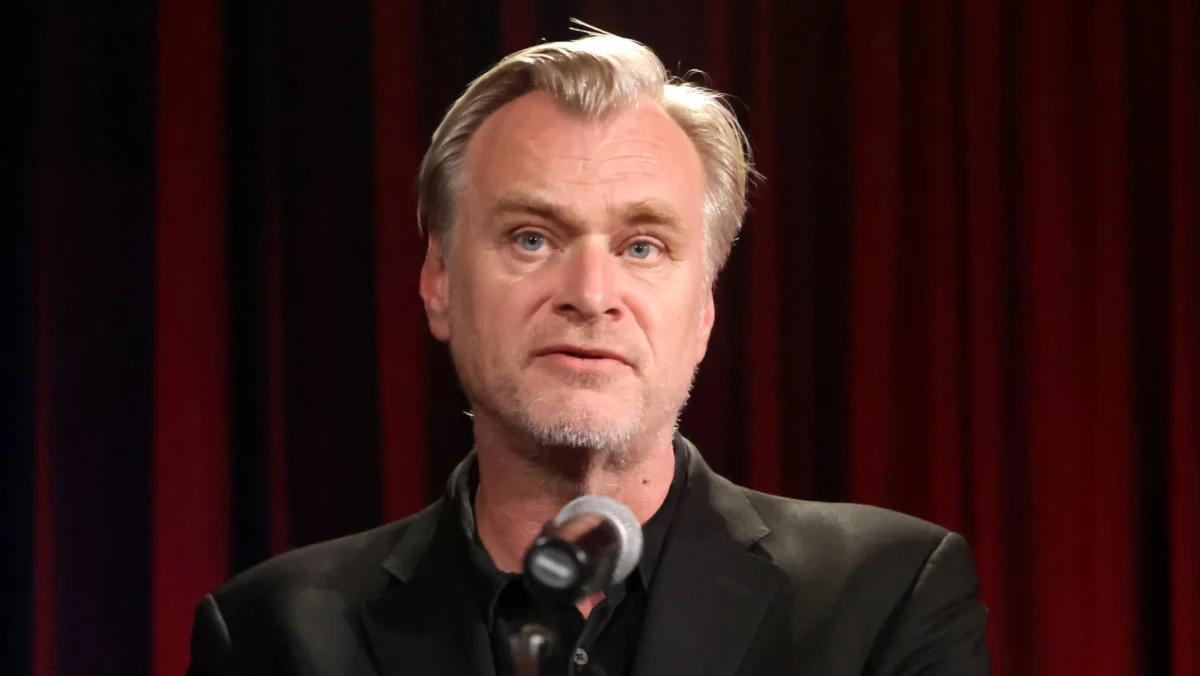
Acclaimed filmmaker Christopher Nolan, known for his cerebral thrillers and epic dramas, recently revealed a surprising aversion to a specific genre: the romantic comedy. Despite a filmography spanning science fiction, historical epics, mysteries, and superhero sagas, Nolan confessed he would be "terrified" to helm a romantic comedy, citing the inherent difficulty of eliciting laughter from an audience. This candid admission came during a promotional tour for his latest cinematic endeavor, The Odyssey, which premiered utilizing groundbreaking 70mm IMAX cameras.
Christopher Nolan’s Genre Mastery
Nolan has established himself as one of contemporary cinema’s most ambitious and influential directors, consistently pushing boundaries in narrative complexity and technical innovation. His extensive body of work includes critically lauded and commercially successful titles such as the mind-bending sci-fi thrillers Inception, Interstellar, and Tenet. He has meticulously crafted historical dramas like the World War II epic Dunkirk and the Oscar-winning biographical thriller Oppenheimer. His earlier career saw him explore intricate mysteries with films like Memento and The Prestige, alongside redefining the superhero genre with his Dark Knight trilogy, starring Christian Bale as Batman. This diverse portfolio has cemented his reputation for delivering meticulously constructed, thought-provoking cinematic experiences, often characterized by non-linear storytelling, practical effects, and a grand visual scale.
The revelation regarding his trepidation towards romantic comedies emerged during his inaugural appearance on NBC’s The Tonight Show Starring Jimmy Fallon on Thursday. Nolan was discussing the formidable technical challenges and innovative lengths undertaken to film his adaptation of Homer’s ancient Greek epic, The Odyssey, entirely on 70mm IMAX cameras—a cinematic first for a feature film. Host Jimmy Fallon playfully interjected, asking the director if he ever considered a more "easy" follow-up project, specifically proposing, "How about a Christopher Nolan rom-com?"
The Rom-Com Challenge: A Director’s Perspective
Nolan’s response was immediate and unequivocal. He stated, "I think doing a rom-com would be incredibly difficult." He acknowledged his personal enjoyment of such films, expressing admiration for the craft involved. "I love watching those movies. But, no, I think people who direct comedy, people who do comedy, I think that’s one of the hardest things in the world to make people laugh that way." His reasoning highlighted the unique and unforgiving nature of comedic performance and direction, particularly the direct and undeniable feedback loop from an audience.
"Particularly the risk they take," Nolan elaborated. He contrasted the experience of showing his typical dramatic or complex films, where if parts don’t resonate, a director might rationalize it as the audience "not getting it." However, in comedy, he asserted, "There’s no hiding behind that when you do comedy." The success or failure of a joke, a comedic beat, or an entire sequence is immediately apparent through audience laughter—or lack thereof. This direct, unfiltered judgment, he implied, presents a vulnerability that is absent in genres where emotional or intellectual engagement can manifest in more varied, less overt ways. The absence of laughter in a comedy is a stark, unambiguous signal of failure, leaving little room for directorial interpretation or defense.
The Art of Making Audiences Laugh
Directing comedy requires a distinct set of skills often divergent from those employed in dramatic or action-oriented filmmaking. It demands an acute understanding of timing, rhythm, and the nuances of human behavior that trigger amusement. A comedic director must meticulously craft scenes to build tension for a punchline, orchestrate physical comedy, and guide actors in delivering performances that feel authentic yet exaggerated enough to be humorous. Unlike the suspense or emotional resonance of a thriller or drama, which can be subjective and deeply personal, comedy often aims for a collective, audible response. This makes the comedic director’s role particularly exposed, as the success of their work is often measured in real-time by the audience’s spontaneous vocal reactions. The intricate balance of script, performance, and directorial vision must align perfectly to achieve genuine comedic impact, a task Nolan clearly views with immense respect and a healthy dose of apprehension.
Beyond Romantic Comedies: Nolan’s Fascination with Horror
While romantic comedies are clearly outside his comfort zone, Nolan’s interest extends to other genres he has yet to fully explore. In a separate interview with The Hollywood Reporter, the director was asked if the presence of several horror-like sequences within The Odyssey had ignited an appetite for directing a full-fledged horror film. His response indicated a definite openness to the genre. "It very much whets my appetite for more," Nolan confirmed.
However, his approach to horror, much like his approach to any genre, is deeply rooted in conceptual rigor. "But I’ve always believed that horror as a genre has to be approached very carefully from a conceptual point of view. In other words, you have to have an amazing idea," he explained. Nolan cited the 1976 psychological thriller Obsession, directed by Brian De Palma and co-written by Paul Schrader, as an example of a film driven by a powerful central concept. "When you go see a film like Obsession, that’s an amazing idea. That movie works like a motherfucker. It’s not about the technical side. It’s not about what technical itches I would have to scratch. It’s about story. So I’m always looking."
This emphasis on a compelling narrative concept aligns perfectly with Nolan’s established filmmaking philosophy. His films are renowned for their intricate plots, philosophical underpinnings, and exploration of complex human psychology, all elements that could be powerfully translated into the horror genre. A Nolan-helmed horror film would likely delve beyond simple jump scares, instead focusing on existential dread, psychological terror, or a high-concept premise that unravels gradually, much like the slow-burn tension in many of his thrillers. The idea of "story" being paramount underscores his dedication to substantive filmmaking, regardless of genre.
Industry Perspectives on Genre Versatility
Nolan’s comments resonate within the broader film industry, where directors are often pigeonholed by their early successes. While some filmmakers like Steven Spielberg have seamlessly transitioned between genres—from sci-fi blockbusters to historical dramas and war films—others find themselves typecast. The ability to master diverse genres is often seen as a mark of a truly versatile and exceptional director. However, the unique demands of comedy, particularly romantic comedy, often require a sensibility that differs significantly from the dramatic weight and intricate plotting that characterize Nolan’s work.
Romantic comedies, though often perceived as "light," require precision in comedic timing, character chemistry, and emotional sincerity to succeed. The genre relies heavily on relatability, charm, and the subtle interplay between characters, elements that, while present in Nolan’s films, are typically in service of larger, more abstract themes rather than intimate interpersonal dynamics. Directors who successfully navigate this genre often possess a keen eye for human foibles and a deft touch with dialogue that can make mundane situations hilarious or emotionally resonant. Nolan’s stated "terrified" feeling reflects a genuine respect for this specific craft, acknowledging that his formidable skills in large-scale spectacle and intellectual narratives might not directly translate.
The Legacy of a Visionary Filmmaker
Christopher Nolan’s public statements about his creative preferences and fears further define his legacy as a filmmaker. His willingness to admit apprehension about a genre perceived by some as "easy" speaks to his deep commitment to quality and his understanding of the specific challenges each type of storytelling presents. It reinforces his image as a director who is not afraid to tackle monumental projects but also recognizes his own boundaries and respects the expertise required for different narrative forms. This transparency about his creative process, coupled with his continuous pursuit of cinematic innovation, keeps audiences and critics engaged in his artistic journey.
The Odyssey and Future Endeavors
Currently, The Odyssey is playing in theaters, starring a stellar ensemble cast including Matt Damon, Tom Holland, and Anne Hathaway. The film’s ambitious scale and technical achievements, particularly its use of 70mm IMAX, exemplify Nolan’s ongoing dedication to pushing the boundaries of the cinematic experience. His comments about horror suggest that while a romantic comedy may never appear on his slate, audiences might one day witness his unique vision applied to the genre of fright, provided he finds the "amazing idea" to anchor it.
Christopher Nolan remains a director whose choices are closely watched and highly anticipated. His candid admission about being "terrified" of directing a romantic comedy offers a rare glimpse into the mind of a filmmaker who, despite his immense success and technical prowess, remains humble before the diverse and challenging art of storytelling. His continued search for conceptually rich narratives, whether in the realm of historical drama, sci-fi, or potentially horror, ensures his filmography will remain one of the most compelling and innovative in contemporary cinema.