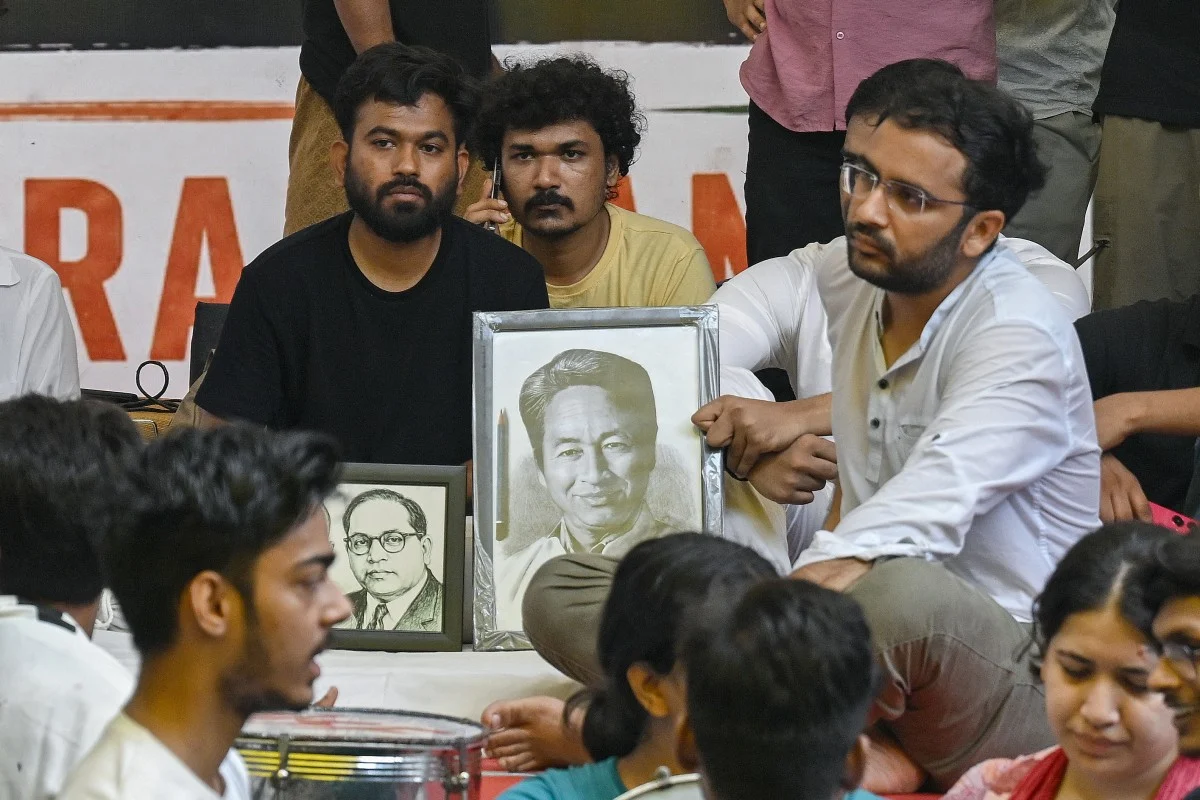
The escalating protest by India’s youth-led Cockroach Janta Party has reached a critical juncture with the forced hospitalization of prominent activist Sonam Wangchuk on the 21st day of his hunger strike, igniting further outrage and solidarity actions. The incident, which occurred amidst a broader campaign by the party, has amplified their demands and drawn increased attention to their cause.
Wangchuk’s Health Declines, Hospitalization Sparks Outrage
Sonam Wangchuk, a renowned education reformist and environmental activist, was admitted to a medical facility against his will on July 18, 2026, after his health deteriorated significantly during his prolonged hunger strike. The 21-day fast was part of a larger demonstration organized by the Cockroach Janta Party, a relatively new but increasingly vocal political group primarily comprised of young individuals advocating for various social and environmental issues.
The forced hospitalization has been met with widespread condemnation from supporters and other civil society groups, who view it as an authoritarian tactic to suppress dissent. Wangchuk’s commitment to his cause, despite severe health risks, has galvanized many, with the Cockroach Janta Party and its allies vowing to intensify their campaign in response to this development.
The Genesis of the Cockroach Janta Party and its Movement
The Cockroach Janta Party, founded by Abhijeet Dipke, emerged with a distinctive name and a bold agenda aimed at challenging established political norms and addressing what they perceive as systemic neglect of critical issues. The party’s name, though unusual, is intended to symbolize resilience and the ability to survive and thrive in adverse conditions, mirroring the challenges faced by ordinary citizens and the environment.
Their current protest, which led to Wangchuk’s hunger strike, is focused on a confluence of environmental degradation and educational disparities, issues that resonate deeply with India’s burgeoning youth population. The party argues that current government policies are failing to adequately protect natural resources and are not providing equitable access to quality education, hindering the nation’s future progress.
Solidarity Fast and Ink Attack Add Fuel to the Fire
In a show of unwavering solidarity with Sonam Wangchuk and the broader protest objectives, Cockroach Janta Party founder Abhijeet Dipke commenced his own hunger strike. However, his protest was abruptly interrupted when he was allegedly doused with ink shortly after beginning his fast. This incident, occurring on the same day Wangchuk was hospitalized, has been widely interpreted as a deliberate attempt to intimidate and silence key figures within the movement.
The ink attack further inflamed tensions, with the Cockroach Janta Party decrying it as a cowardly act of aggression. This dual escalation – Wangchuk’s forced hospitalization and Dipke’s ink attack – has transformed a localized protest into a national talking point, raising questions about the government’s response to peaceful demonstrations and the safety of activists.
Wangchuk’s Activism: A Legacy of Challenging the Status Quo
Sonam Wangchuk is no stranger to activism and has a long-standing reputation for his innovative approaches to education and his passionate advocacy for environmental protection, particularly in the Ladakh region. His "Students’ Educational and Cultural Movement of Ladakh" (SECMOL) has revolutionized education in the high-altitude desert, emphasizing practical skills and environmental sustainability.
His involvement in the current protest underscores the gravity of the issues at hand. Wangchuk has consistently used his platform to highlight the fragility of Himalayan ecosystems and the urgent need for sustainable development practices. His hunger strike was a stark reminder of his dedication to these causes and his willingness to make personal sacrifices for the greater good.
The Broader Context: Environmental Concerns and Youth Discontent
The Cockroach Janta Party’s movement taps into a growing undercurrent of discontent among India’s youth, who are increasingly aware of and concerned about environmental challenges and the perceived lack of effective governance. Issues such as climate change impacts, pollution, and the depletion of natural resources are no longer abstract concepts but lived realities for many young Indians.
Furthermore, concerns about educational access and quality continue to be a major point of contention. The party argues that the current system perpetuates inequalities and fails to equip young people with the skills needed for a rapidly evolving global economy. The Cockroach Janta Party positions itself as a voice for this disillusioned segment of the population, offering a platform for their grievances and aspirations.
Government Response and Public Scrutiny
The forced hospitalization of Wangchuk and the ink attack on Dipke have placed the government under intense scrutiny. Critics are questioning the methods employed to manage the protest and demanding greater transparency and accountability. The ruling administration has yet to issue a comprehensive statement addressing the specific circumstances surrounding Wangchuk’s hospitalization or the ink incident.
However, official sources have indicated that Wangchuk was moved to the hospital due to concerns for his health and safety, citing medical protocols. This explanation has been met with skepticism by many, who believe it is a pretext to remove him from the protest site and disrupt the movement. The government faces a delicate balancing act: addressing the concerns of a growing protest movement while maintaining public order.
The Role of Social Media and Citizen Journalism
In the age of digital connectivity, social media platforms have become crucial arenas for disseminating information and mobilizing support for various causes. The Cockroach Janta Party has effectively leveraged these channels to share updates on the protest, garner public attention, and organize solidarity actions.
Images and videos related to Wangchuk’s hospitalization and Dipke’s ink attack have gone viral, fueling public debate and amplifying the reach of the protest beyond traditional media. Citizen journalists and social media users have played a significant role in documenting events and sharing perspectives, often challenging official narratives. This decentralized information flow has made it more challenging for authorities to control the narrative surrounding the protest.
Legal and Ethical Dimensions of Forced Hospitalization
The forced hospitalization of an individual, even on grounds of deteriorating health, raises significant legal and ethical questions, particularly when it involves a hunger striker. Civil liberties advocates are scrutinizing the actions taken and emphasizing the right to protest peacefully and the right to bodily autonomy.
Legal experts are debating the extent of the government’s authority to intervene in such situations, especially when the individual is engaged in a non-violent form of protest. The Cockroach Janta Party and its supporters are likely to explore legal avenues to challenge the hospitalization and advocate for the rights of protesters.
Future Trajectory and Potential Outcomes
The intensification of the Cockroach Party protest following these events suggests a protracted struggle ahead. The party is likely to continue its campaign, potentially broadening its demands and seeking wider alliances with other civil society organizations and political groups that share their concerns.
The government’s approach in the coming days will be critical in shaping the outcome. A more conciliatory and dialogue-oriented approach could de-escalate tensions, while a continued hardline stance might further galvanize opposition and draw international attention to the situation in India. The health of Sonam Wangchuk remains a primary concern, and his recovery and potential future involvement will undoubtedly influence the dynamics of the protest.
The Cockroach Janta Party’s movement, though still in its nascent stages, has demonstrated its capacity to mobilize significant support and attract media attention. The events of July 18, 2026, have undoubtedly propelled their cause into the national spotlight, setting the stage for a critical period of political and social engagement in India. The resilience symbolized by their chosen name will be tested as they navigate the complexities of their campaign and the reactions from both the public and the authorities.