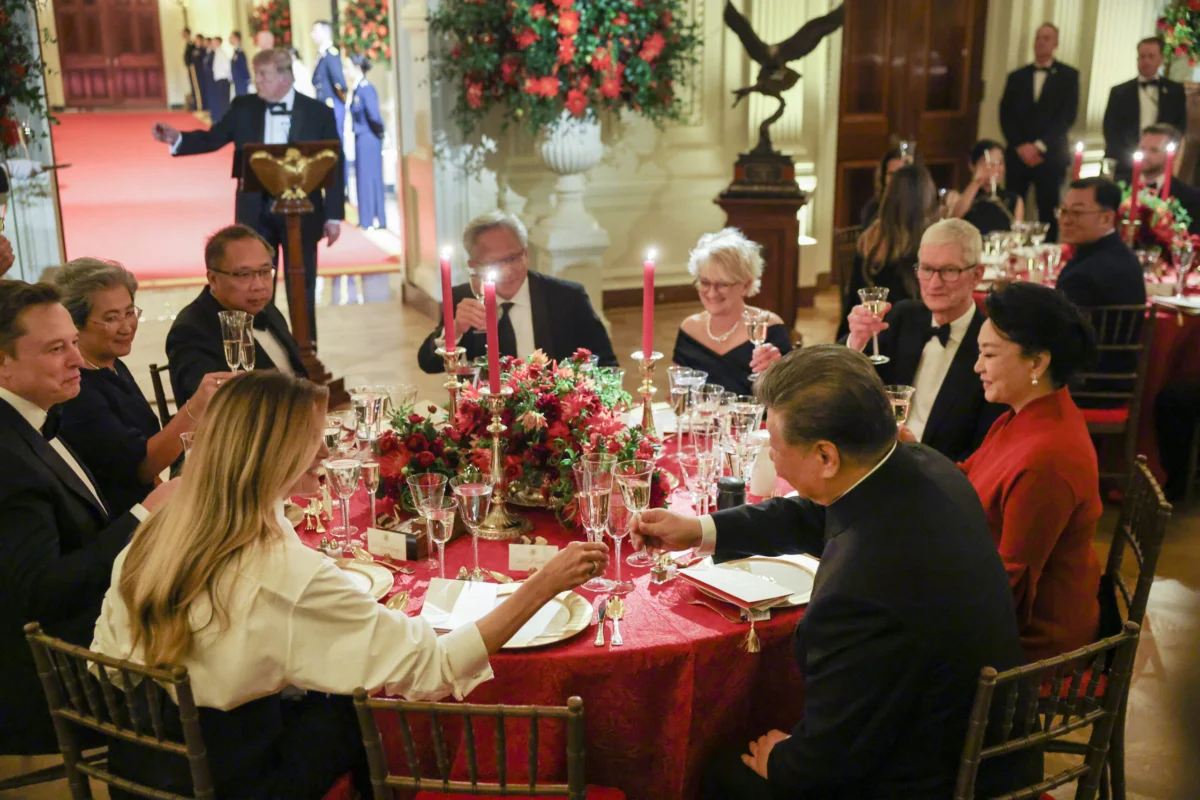
A formidable assembly of tech and media titans, alongside a notable contingent of Fox News hosts, converged on the White House Thursday evening for a state dinner held in honor of China’s President Xi Jinping. Hosted by President Donald Trump and First Lady Melania Trump, the event underscored the intricate web of global diplomacy, economic power, and media influence at play in contemporary international relations, particularly concerning the critical U.S.-China relationship.
Diplomacy and Power at the White House State Dinner
White House state dinners are among the most prestigious diplomatic events hosted by a U.S. president, typically signaling strong bilateral ties or an effort to cultivate them. The choice to honor China’s President Xi Jinping with such an event, even amidst ongoing trade tensions and geopolitical competition between Washington and Beijing, highlighted the multifaceted nature of the relationship. These dinners serve not only as social occasions but as significant platforms for private discussions and public signaling, bringing together political leaders with influential figures from business, culture, and technology.
The guest list, publicly released by the White House, offered a striking snapshot of the power brokers currently shaping global commerce and communication. It was heavily populated by corporate executives, particularly from the burgeoning technology sector, underscoring the increasing centrality of innovation and digital platforms in international affairs. Their presence at such a high-level diplomatic gathering indicated the Trump administration’s recognition of their economic might and their strategic importance in the U.S.-China dynamic.
Key Figures from Tech and Media
Among the most prominent attendees was David Ellison, CEO of Paramount Skydance. His invitation came just days after his company successfully finalized a settlement to clear its complex takeover of Warner Bros. Discovery (WBD). This acquisition, a monumental transaction in the media landscape, includes CNN, a news organization that found itself in a controversial position regarding the dinner. Despite a federal judge having recently reinstated CNN reporters’ press passes to the White House complex, they were reportedly denied access to cover the state dinner itself, highlighting ongoing tensions between the administration and certain media outlets.
Ellison’s presence was particularly noteworthy given earlier reports circulating that week. These reports suggested that he might seek investment from Elon Musk, the chief of Tesla and SpaceX, as part of the WBD takeover financing. Musk, a frequent figure in tech news and a notable presence at the dinner, was seated at the head table alongside President Trump and President Xi, symbolizing the confluence of technological innovation and state-level diplomacy. This seating arrangement underscored the perceived importance of tech leadership in the current global economic and political order.
The Ascendancy of Technology Giants
The dominance of tech giants at the state dinner was unmistakable. Beyond Musk, the head table also included Jensen Huang, CEO of Nvidia, a company at the forefront of artificial intelligence and semiconductor technology, and Tim Cook, CEO of Apple, one of the world’s most valuable companies and a global leader in consumer electronics and software. Their presence at such a central position underscored the profound influence of their respective companies on global markets, technological advancement, and even U.S.-China economic ties, given the extensive supply chains and consumer bases involved.
Further emphasizing the tech sector’s pervasive influence, the guest list read like a who’s who of Silicon Valley’s most impactful leaders. Attendees included Sam Altman, CEO of OpenAI, a company driving advancements in artificial intelligence that are reshaping industries worldwide; Mark Zuckerberg, CEO of Meta Platforms, which oversees Facebook, Instagram, and WhatsApp, platforms central to global communication; and Jeff Bezos, founder of Amazon, an e-commerce and cloud computing behemoth.
The representation extended to other foundational tech companies. Google co-founder Sergey Brin and CEO Sundar Pichai were present, representing the search engine and advertising giant. Microsoft CEO Satya Nadella, whose company is a major player in cloud computing, enterprise software, and gaming, also attended. Jeff Yass, a prominent investor in TikTok, the globally popular short-form video app, was also among the guests, signaling the growing importance of digital entertainment and social media platforms, often at the center of U.S.-China tech competition. The list also included OpenAI President Greg Brockman, further solidifying the AI industry’s strong representation.
Beyond Tech: Media, Finance, and Global Influence
While tech executives formed a significant block, the dinner also welcomed leaders from other critical sectors. Bernard Arnault, CEO of LVMH Moët Hennessy Louis Vuitton, represented the luxury goods conglomerate, highlighting the global reach of diverse industries and the importance of international trade beyond technology. His presence underscored the multifaceted nature of economic diplomacy and the varied interests at play in U.S.-China relations.
The media landscape was also well-represented, not just by David Ellison, but by a distinct Fox News contingent. Jesse Watters and Laura Ingraham, two of the network’s prominent hosts, were in attendance, along with veteran anchor Bret Baier. Their presence at a Trump White House event was consistent with the often-observed close relationship between the administration and the conservative news channel. This blending of political commentary and diplomatic engagement frequently sparks discussions about journalistic independence and the role of media figures in political circles.
The guest list further expanded to include influential podcast hosts, reflecting the evolving media environment. Katie Miller, wife of White House aide Stephen Miller, and David Sacks, a tech investor and co-host of the popular "All-In" podcast, were among them. Their inclusion demonstrated the expanding definition of media influence and the growing crossover between traditional political circles and new digital platforms. Additionally, Cheryl Hines, an actress, attended with her husband, Robert F. Kennedy Jr., adding a touch of celebrity and a nod to a prominent American political family.
Broader Implications and Context
The gathering of such diverse and powerful figures at the White House State Dinner for China’s President carried significant broader implications. On one hand, it represented a strategic effort to engage China at the highest levels of diplomacy, leveraging economic ties even as geopolitical rivalries intensified. The presence of so many tech leaders was particularly telling, as the U.S. and China are locked in a fierce competition for technological supremacy, spanning artificial intelligence, semiconductors, and telecommunications. The dinner offered a potential, albeit private, forum for these titans to interact with both U.S. and Chinese leadership.
For the media industry, David Ellison’s post-WBD acquisition presence underscored the ongoing consolidation of power within a few massive conglomerates. This trend raises questions about media diversity, market competition, and the influence wielded by a handful of executives over information dissemination and cultural narratives. The exclusion of CNN reporters, despite legal rulings, also served as a stark reminder of the administration’s often adversarial relationship with certain news organizations and the broader challenges to press freedom.
The dinner, therefore, was more than a mere social function; it was a carefully curated tableau reflecting the complex dynamics of global power in the 21st century. It showcased the inextricable links between national security, economic prosperity, technological innovation, and media influence. The convergence of these distinct yet interconnected spheres at the highest echelons of U.S. diplomacy underscored the intricate challenges and opportunities inherent in navigating an increasingly interdependent and competitive world. The event concluded, but the conversations, relationships, and underlying geopolitical currents it represented continue to shape the global landscape.