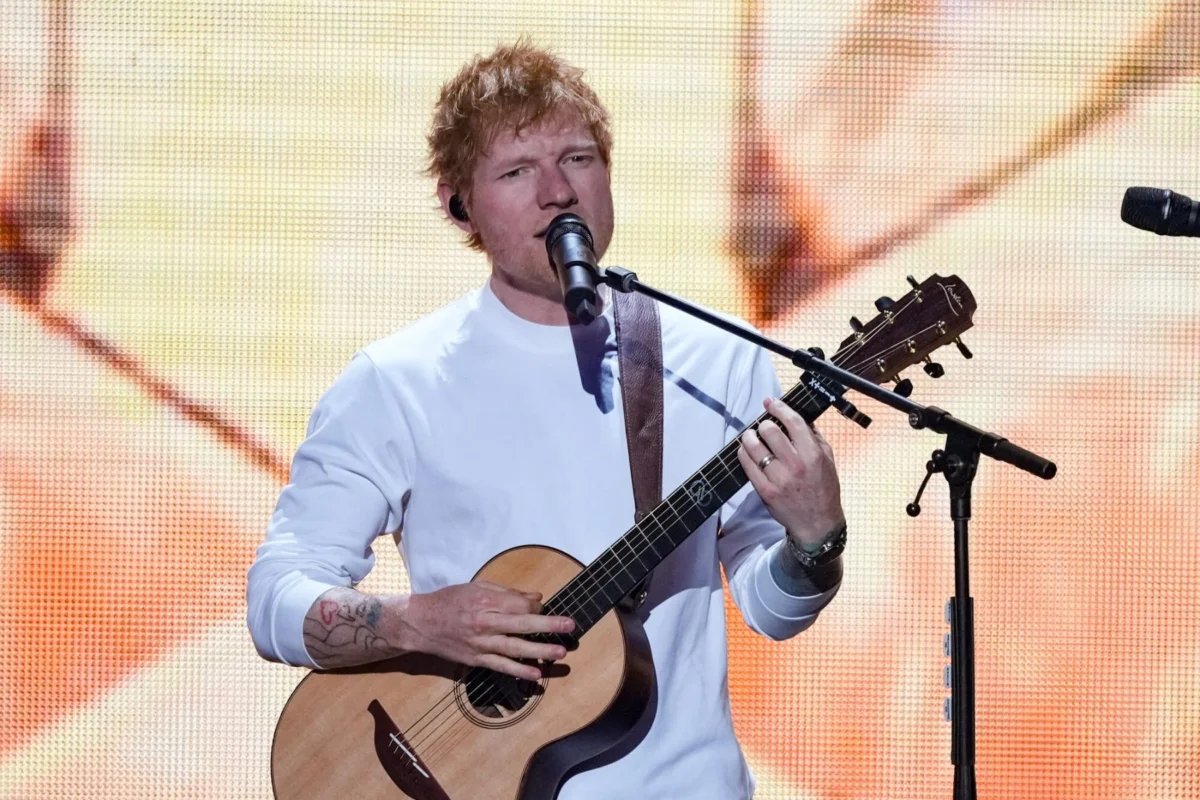
Ed Sheeran directly addressed the recent tour controversy at his first concert following the withdrawal of his openers and backing band, declaring the Philadelphia show "the best show of my life" despite the challenging circumstances. The global superstar, known for his typically apolitical stance, found himself at the center of a significant public relations storm after a series of events led to a reshuffle of his tour personnel. Sheeran made it clear that his preference is to avoid being perceived as an "activist musician," yet he felt compelled to speak to his audience in person about the sensitive issues that led to the tour’s disruptions.
The controversy ignited when opener Macklemore was reportedly removed from the tour due to pressure from a group of venue owners, spearheaded by Robert Kraft, who took issue with Macklemore’s public statements supporting Palestine. This decision rippled through Sheeran’s tour, prompting the remaining openers and Sheeran’s own backing band, the Irish group Beoga, to withdraw in solidarity with Macklemore and in protest of the perceived suppression of free expression. The situation escalated into a major news story, casting a shadow over the usually uncontroversial artist.
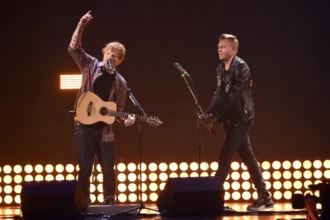
Prior to commencing his performance at Philadelphia’s Lincoln Financial Field on Saturday night, Sheeran took the stage to offer a heartfelt and seemingly unscripted address to the tens of thousands of fans gathered. This in-person statement followed an earlier, heavily scrutinized online post he had made regarding the unfolding events. His opening remarks acknowledged the difficulty of the situation, expressing remorse for any mistakes made and for having to navigate such complex and divisive issues.
"I’m used to my music being criticized, and I’m always happy to take that because I’m lucky a lot of you like my stuff, and to be honest, I’m surprised," Sheeran began, his voice resonating through the stadium. "I’m not surprised that other people don’t. It’s normal. But this week, the criticism was about something much more important, and I’ve had to take and make difficult decisions, and I am making mistakes, and I’m so, so sorry."
Sheeran then offered a detailed, though carefully worded, perspective on the ongoing conflict in the Middle East. He spoke of the "horrific" events at the Nova music festival in Israel on October 7th, acknowledging it compounded "centuries of Jewish pain." Simultaneously, he described the situation in Gaza as "catastrophic, unjustifiable, and disproportionate," stating his heartbreak over the immense devastation and loss of civilian lives, particularly children. He also highlighted the "systemic injustice we’re seeing unfold in the West Bank" as something that "cannot be overlooked."
The singer-songwriter emphasized his commitment to understanding and contributing positively. "I am already speaking to people across the spectrum to work out how to make a contribution that helps victims of these terrible times, and listening and learning because I do not know enough," he stated. He concluded this initial address by expressing profound gratitude for the audience’s presence, framing the concert as a sanctuary for unity. "This concert is still a place where everyone is welcome, and everyone here can stand beside people that have opposing views. Everyone here can stand by people that they don’t agree with on everything, and they can all agree on singing these songs. And these songs are about love, hope and unity."
The nearly sold-out crowd at Lincoln Financial Field responded positively to Sheeran’s words, with little visible indication of the controversy outside the venue. Any protests that may have occurred earlier in the day had dissipated by the time the majority of attendees arrived. While reports had suggested heightened security measures, these were not overtly apparent, and the atmosphere among concertgoers seemed largely unaffected, with many appearing unaware or unconcerned about any underlying tension.
Sheeran’s "Mathematics Tour," often referred to as his "Loop Tour" due to his signature use of a loop pedal, typically features him performing largely solo. The recent departures of his openers and the integral backing band Beoga, who cited solidarity with Macklemore and empathy for Palestinians as their reasons for leaving, amplified Sheeran’s solo presence on stage. This disruption also led to a modification of his performance structure.

During a segment of the show where Sheeran would typically transition to a separate "B stage" setup, he explained that this element had been canceled for safety reasons. He expressed concern about "what might happen if [he] stood in the middle" of the crowd, suggesting an awareness of potential security risks or disruptions. This decision underscored the ripple effects of the controversy, impacting even the logistical planning of his performance.
Without directly naming the departed Irish band, Sheeran introduced a new set of backing musicians for the evening. This ensemble was led by violinist Alicia Enstrom, a musician who has previously collaborated with Sheeran. This adjustment allowed for the continuation of segments of the show that would have otherwise required a fuller band, including the performance of his hit song "Galway Girl," which features prominent Irish influences. It remained unclear whether this last-minute group would continue to accompany Sheeran for subsequent dates on the tour.
Following his initial address, the concert largely proceeded with a sense of normalcy, though Sheeran occasionally injected subtle, wry references to the week’s events. Before introducing his song "Old Phone," he humorously remarked that, until that week, his public appearances in the news were typically limited to court proceedings. Earlier, he had also playfully inquired if the crowd had enjoyed the openers, with such comments delivered in a manner that might have passed unnoticed by younger audience members or those not fully privy to the surrounding circumstances.
As the concert neared its climax, Sheeran took a moment to sit on the edge of the stage for a more extended and perhaps less rehearsed reflection. This second address, clearly more personal than his initial teleprompted statement, revealed the profound personal impact of the week’s events. "The last week of my life has been one of the worst weeks of my life, and today has been one of the weirdest days of my life. Tonight has been honestly the best show of my life," Sheeran declared, his voice tinged with emotion.
He confessed to moments of doubt about continuing the tour and even his career as an artist. "I really didn’t know whether this tour would carry on, I really didn’t know whether I’d get on stage again, whether I even wanted to be an artist at all. But, you know, in these situations, you really find out who your friends are. And it’s been a weird week. I just feel like everything happened very quickly. And the whole time I have so many people telling me to cancel this tour, and I have so many people falling out of my life that I’ve known for years and years and years, people just kind of backing away."
Sheeran attributed the unwavering support of his audience as a key factor in his decision to proceed with the tour. "I saw ticket sales for this gig, and I didn’t see cancellations, I saw people buying tickets," he explained. "I’m there, and everyone’s telling me to cancel, and I’m feeling all of my friends and family and people I know abandon me. And I look at the end of the week, and I see 50,000 people who haven’t abandoned me. People will say what they want, but I’m doing this for you. I love you. I love this. I love the unison we have here. I love the feeling this concert brings. I love bringing people together of all races, all religions, all political ideas."
His concluding remarks circled back to his initial message of unity and a poignant apology for the necessity of taking a public stance. He emphasized the concert’s role in fostering understanding and connection, even among those with differing viewpoints. "A lot of people here have differing opinions, and we’ve had a great night. And you are standing next to people and dancing with people who you may disagree with. And you probably understand them better by being, you know, one and love. I have had so many opinions on this. But the root of it is love. And if this tour ends, love doesn’t win. Love doesn’t win. You know? I can’t let you guys down. That’s why I’m here tonight, on my own, for you guys."
With tears welling in his eyes, Sheeran rose to his feet, and the concert transitioned into its electrifying finale. The remaining songs were delivered with pyrotechnics and a palpable sense of renewed energy, creating a powerful closing to a night that had been fraught with personal and professional challenges. The dramatic conclusion offered a visual metaphor for the artist’s resilience in the face of adversity, leaving the audience with a message of hope and unity, despite the complexities that had unfolded behind the scenes. The profound personal toll of the controversy was evident, yet the unifying power of music ultimately prevailed, marking a significant moment in Sheeran’s career.