The global governing body of soccer, FIFA, and its President, Gianni Infantino, are confronting a significant rebellion from major stakeholders following revelations of a proposed $20 billion World Cup sell off plan involving the organization’s lucrative commercial rights to private equity investors. The controversial initiative seeks to consolidate all revenue-generating aspects of the FIFA World Cup into a new entity, FIFA Forward Enterprise (FFE), and divest a substantial ownership stake, sparking immediate and fierce opposition from powerful football associations and political figures worldwide.
Background to FIFA’s Commercial Ambitions
For decades, the FIFA World Cup has stood as the pinnacle of global sport, transcending mere competition to become a cultural phenomenon and an unparalleled economic engine. Its broadcast rights, sponsorship deals, ticket sales, and licensing fees generate billions of dollars, fueling FIFA’s operations and funding development programs across its 211 member associations. However, FIFA has a contentious history marked by past corruption scandals, most notably the 2015 crisis that led to the ousting of former president Sepp Blatter and a sweeping indictment of top officials. Gianni Infantino rose to power promising reform and transparency, yet his tenure has also been punctuated by criticisms regarding governance and an accelerating push for commercialization. The current World Cup sell off plan is viewed by many as the latest, and perhaps most audacious, step in this direction, prompting questions about the very essence and ownership of the sport.
The FIFA Forward Enterprise: A $20 Billion Vision
Under the proposed structure, FIFA intends to establish the FIFA Forward Enterprise (FFE) as a centralized commercial arm. This new entity would exclusively manage all profit-generating operations linked to the World Cup, encompassing global broadcast rights, major sponsorship agreements, event ticketing, and merchandise licensing. FIFA’s internal valuation places this consolidated commercial venture at an estimated $20 billion, with the organization actively seeking private investors to acquire a significant stake. The move represents a profound strategic shift, effectively externalizing a core part of FIFA’s financial engine. U.S. investment bank JP Morgan has been engaged to facilitate the creation of the FFE, while Thrive Capital, an investment firm founded by Joshua Kushner – brother of Donald Trump’s son-in-law, Jared Kushner – is reportedly spearheading the search for potential investors.
FIFA leadership, led by President Infantino, frames the World Cup sell off plan as a measure to enhance global football development and democratize wealth distribution. Infantino stated the initiative is "about the democratization of football worldwide," arguing that the FFE could unlock an additional $10 billion for its member organizations. This infusion of capital, FIFA projects, could more than double annual funding to its 211 national soccer leagues, potentially increasing grants from $8 million to $20 million per year. For many smaller, less affluent national federations, such an increase would represent a transformative sum, offering a powerful incentive to support the controversial proposal.
Immediate and Widespread Opposition to the Sell Off
Despite FIFA’s assurances, the announcement of the World Cup sell off plan unleashed an immediate and powerful wave of condemnation. European soccer’s governing body, UEFA, was among the first and most vocal critics, issuing a scathing statement that accused FIFA of overstepping its authority. "The sport isn’t FIFA’s to sell," UEFA declared, emphasizing that the proposal "crosses a line that football’s governing institutions should never cross." UEFA’s statement further asserted that "The soul and governance of football are not assets to trade — especially with zero transparency as to who gains financially." This robust pushback from one of football’s most influential confederations underscores a fundamental disagreement over the sport’s stewardship and commercial exploitation.
The backlash quickly extended beyond football’s administrative corridors, drawing sharp criticism from political leaders. U.K. Prime Minister Andy Burnham took to social media to articulate a widely shared sentiment, asserting that "Football does not belong to investors. It belongs to the people who fill the stands and who stand on the touchline week in, week out, rain or shine." Burnham’s statement vehemently rejected the commodification of the sport’s premier event: "The World Cup is not a product. It is the greatest competition in world sport, and it was never anyone’s to sell. Dress the deal up however you like. Once you have sold a piece of it, you have sold out." Such high-level political intervention highlights the profound public and cultural attachment to the World Cup, viewing it as a public trust rather than a mere commercial asset.
Intensifying Commercialization and Recent World Cup Trends
The proposed FFE initiative follows a period of aggressive commercial expansion by FIFA, particularly evident in the lead-up to and execution of the most recent World Cup, co-hosted by the U.S., Canada, and Mexico. Critics point to several moves that intensified the commercialization of the tournament, laying groundwork for accusations of a broader "money grab." FIFA expanded the event from 32 to 48 teams, significantly increasing the number of matches and, consequently, the inventory for broadcast and sponsorship sales. The tournament also saw the emergence of a highly lucrative, albeit pricey, resale market for tickets, generating additional revenue streams. Furthermore, the introduction of controversial "hydration breaks" during matches, ostensibly for player welfare, was widely perceived as a thinly veiled opportunity to insert additional advertising slots into broadcasts, maximizing commercial yield.
These strategies proved immensely profitable. The 2026 tournament is on track to be the most lucrative in history, with FIFA expected to announce revenues exceeding $15 billion for the event. This unprecedented financial success raises critical questions about the necessity of the World Cup sell off plan. If FIFA is already generating record profits, opponents argue, the urgency to sell a stake in its commercial operations to private equity investors suggests a motive beyond mere financial stability or development aid. Many see it as an attempt to unlock further, immediate capital for FIFA’s coffers and potentially for a select few, rather than a genuine need for investment in the sport’s grassroots.
Political Entanglements and Allegations of Influence
The involvement of Thrive Capital, co-founded by Joshua Kushner, has ignited a separate but equally potent controversy, drawing attention to potential political conflicts of interest. Joshua Kushner is the brother of Jared Kushner, former President Donald Trump’s son-in-law and senior advisor. This connection has fueled concerns given Infantino’s already established ties to the former U.S. President.
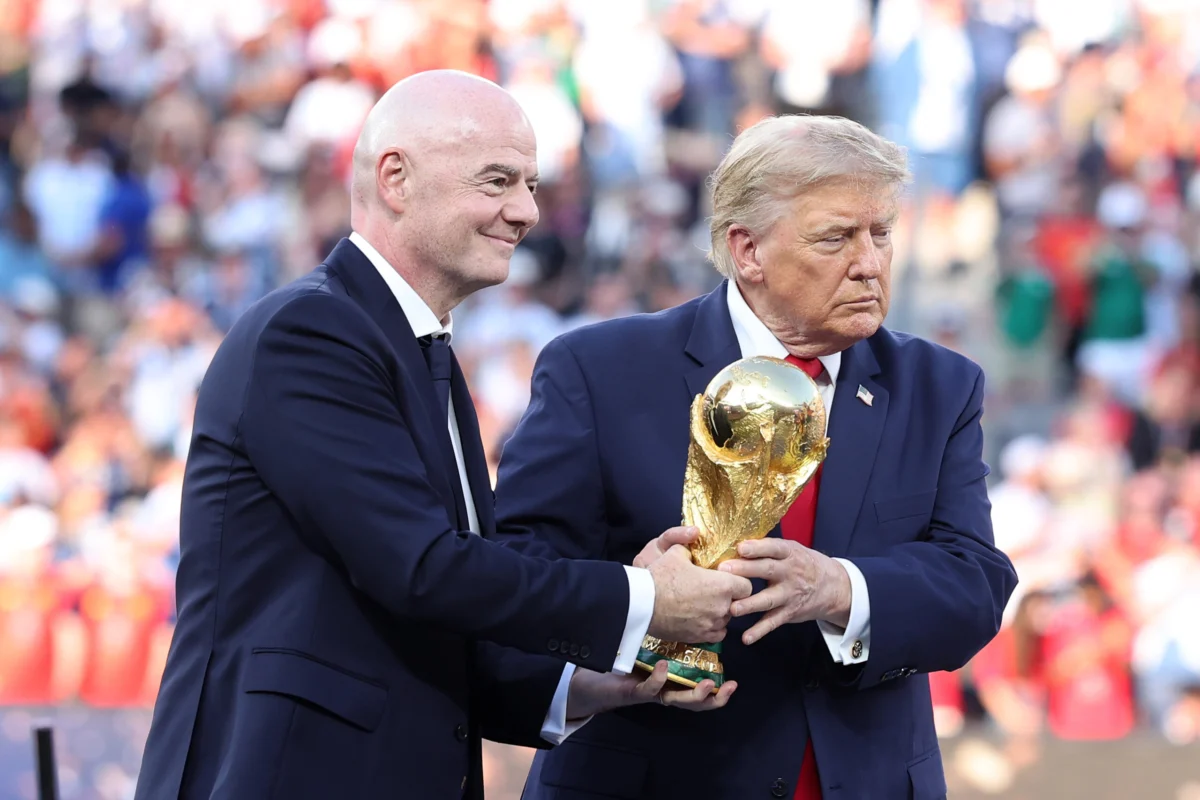
Infantino’s relationship with Trump has been subject to scrutiny in the past. Notably, after Trump reportedly expressed disappointment about not receiving the Nobel Peace Prize, Infantino created and awarded the "FIFA Peace Prize" to the then-President in December. More gravely, UEFA has previously claimed that FIFA undermined the integrity of the recent World Cup by intervening to overturn a red card issued to USA striker Folarin Balogun. This alleged intervention reportedly occurred after a direct call from President Trump to Infantino, requesting the decision be reversed. If true, such an act would represent a severe breach of sporting impartiality and a dangerous precedent of political interference in on-field decisions.
These alleged connections and interventions have prompted formal investigations. This week, Representative Jamie Raskin, the top Democrat on the House Judiciary Committee, announced the launch of a congressional investigation into Infantino and FIFA’s ties to the Trump administration and its related businesses. The probe seeks to uncover the extent of any undue influence or potential impropriety, adding a layer of political and legal risk to FIFA’s current World Cup sell off plan and Infantino’s leadership.
Analysis and Broader Implications for Global Football Governance
The proposed World Cup sell off plan carries profound implications for the future governance and integrity of global football. Critics contend that selling a "significant stake" in the FFE could irrevocably shift control and decision-making power away from the traditional footballing community and towards private investors whose primary motivation is profit maximization. This raises concerns that sporting considerations, fan experience, and long-term development might be subordinated to financial returns. Questions linger about the transparency of the deal, particularly regarding the identity of potential investors and the specific terms of the proposed ownership structure. A lack of clarity fuels fears that the "soul" of football could be diluted, turning the sport into a mere commodity.
The pushback from UEFA highlights a deepening schism within global football’s power structures. While the promise of increased funding may entice smaller national federations, major confederations like UEFA, with their established financial strength and historical influence, are wary of ceding control of the sport’s most valuable asset. This internal struggle for the direction of football could lead to significant governance challenges, potentially fracturing the sport’s unified structure. Furthermore, the precedent set by this World Cup sell off plan could inspire similar moves in other major sports, raising broader questions about the balance between commercial interests and the public good in professional athletics.
Reactions, Consequences, and the Path Forward
The immediate consequences of the proposed World Cup sell off plan include a severe crisis of confidence in FIFA’s leadership and a deepening divide among its constituents. FIFA must secure the approval of its member associations for the FFE plan to proceed, setting the stage for potentially contentious internal debates. The vocal opposition from UEFA and prominent political figures indicates that this will not be a straightforward process, and the proposed doubling of funding to national federations might not be enough to sway all votes.
Beyond internal politics, the ongoing congressional investigation by Representative Raskin introduces a layer of external pressure and potential legal repercussions for FIFA and its leadership. Should the investigation uncover evidence of impropriety or undue political influence, it could severely damage FIFA’s already fragile reputation and potentially derail the FFE initiative. The future of the World Cup, as a global spectacle and a symbol of sporting unity, hangs in the balance, caught between the conflicting visions of financial opportunism and the preservation of its fundamental sporting integrity. The battle over the World Cup sell off plan is poised to be a defining moment for FIFA and the global game.