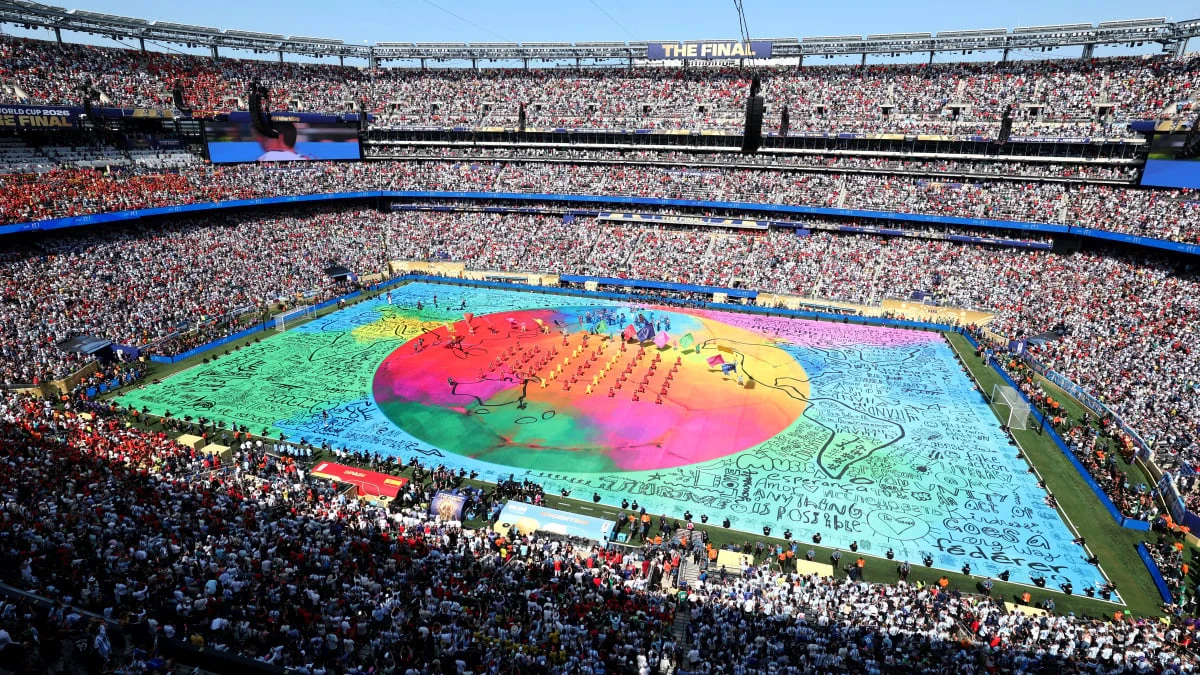
The FIFA World Cup final between Spain and Argentina reached a fever pitch on Sunday, but the conversation surrounding the match shifted dramatically following the debut of the first-ever World Cup halftime show. As the two footballing giants battled for global supremacy on the pitch in the United States, the governing body of world soccer attempted to bridge the gap between traditional sports and high-octane American entertainment. The result was a polarizing six-minute spectacle that has left fans, critics, and industry analysts debating the future of the tournament’s format.
This year’s edition of the FIFA World Cup, co-hosted across North America, has been described by many as the "Americanization" of the world’s most popular sport. With the final held on U.S. soil for the first time since 1994, FIFA sought to emulate the cultural impact of the NFL’s Super Bowl by introducing a mid-game musical performance. While soccer has traditionally relied on a strict 15-minute intermission for player recovery and tactical adjustments, the inclusion of the first-ever World Cup halftime show signaled a departure from decades of sporting tradition.
The move into what some have called the "American Sports Entertainment Vortex" was met with immediate scrutiny. Critics argued that the natural flow of the game was being sacrificed for commercial interests, pointing to the increased frequency of hydration breaks throughout the tournament. These pauses, while ostensibly for player safety in the North American heat, have been widely criticized by commentators as thinly veiled opportunities for the Fox network and other broadcasters to insert additional commercial blocks.
A Paradigm Shift in International Soccer Entertainment
The introduction of the first-ever World Cup halftime show was not merely a musical interlude but a strategic attempt by FIFA to capture a broader demographic of viewers. By moving away from the standard analysis-heavy halftime reports, organizers hoped to create a "must-see" television event that transcended the sport itself. However, the compressed nature of soccer’s halftime presented significant logistical hurdles that differed from the lengthy breaks seen in American football.
The production required a massive mobilization of stagehands and technical crews to transform the pitch into a concert venue and back into a playing surface within a 15-minute window. This tight turnaround likely contributed to the brevity of the performances, which ultimately clocked in at just under six minutes. The decision to prioritize speed over depth became a central point of contention for viewers who had been promised a landmark entertainment event.
Assessing the Star-Studded Lineup of the First-Ever World Cup Halftime Show
Despite the short duration, FIFA spared no expense in securing a lineup of global icons for the first-ever World Cup halftime show. The roster featured a cross-generational mix of talent, including Madonna, BTS, Justin Bieber, and Shakira, alongside guest appearances from the world of television and children’s programming. The ambition of the lineup was clear: to represent the global nature of the World Cup through music that appealed to different continents and age groups.
Madonna and Brazilian Legends Open the Set
The show commenced with a performance by Madonna, who utilized a heavily prerecorded segment to showcase tracks from her latest project, Confessions II. In a visual that many fans described as surreal, the "Queen of Pop" was seen entering the stadium area on an ATV, flanked by Brazilian soccer legends Ronaldinho and Ronaldo (R9). The inclusion of two of the sport’s most beloved figures appeared to be an attempt to ground the musical performance in soccer history, though the execution was met with mixed reactions on social media.
Viewers noted the peculiar juxtaposition of a 1980s pop icon and retired athletes on off-road vehicles in the middle of a high-stakes championship match. While the segment was high in star power, the use of prerecorded vocals drew criticism from fans expecting a live, high-energy performance to match the intensity of the Spain-Argentina final.
BTS and the Global Appeal of the Halftime Stage
Following Madonna, the South Korean phenomenon BTS took the stage to deliver a high-tempo rendition of their hit single "Dynamite" from the album BE. As arguably the most anticipated act of the first-ever World Cup halftime show, BTS brought a level of choreography and energy that briefly energized the stadium crowd. The group’s presence was a clear nod to the massive global "ARMY" fanbase and FIFA’s desire to engage with the Asian market.
The performance was notably brief, even by the standards of the short show. However, the K-pop stars managed to utilize the limited time to deliver a polished set that stood out as one of the more cohesive elements of the production. On digital platforms, the BTS segment generated the highest volume of engagement, underscoring the group’s unrivaled social media influence.
The Ted Lasso Introduction and Justin Bieber’s Polarizing Performance
In a nod to the hosting nation’s current pop culture landscape, the transition to the next act was handled by Jason Sudeikis and Brendan Hunt, stars of the hit Apple TV+ series Ted Lasso. Appearing in character, the duo performed a short comedic skit that "subbed" Justin Bieber into the halftime show. The crossover between the fictional world of AFC Richmond and the real-world FIFA final was intended to provide a lighthearted moment of "heart" for the broadcast.
However, the tone shifted when Justin Bieber took over. Choosing a slower, more melodic track, Bieber’s performance was criticized for stalling the momentum of the event. After the high energy of BTS, the acoustic-leaning set felt out of place to many viewers who were already anxious for the second half of the match to begin. Sports commentators noted that the choice of a ballad in a high-pressure final was a curious creative decision that failed to resonate with the stadium audience.
Shakira and Burna Boy Close the Event
The first-ever World Cup halftime show concluded with a performance by Shakira, a veteran of FIFA events. Returning to the World Cup stage, she was joined by Nigerian superstar Burna Boy to perform the track "Dai Dai." Shakira’s history with the tournament, dating back to the iconic "Waka Waka (This Time for Africa)" in 2010, provided a sense of continuity that the rest of the show lacked.
The collaboration with Burna Boy highlighted the growing influence of Afrobeats on the global music scene, further emphasizing the international theme of the tournament. As the final notes played, the stage was rapidly disassembled to allow Spain and Argentina to return to the field, leaving the audience with a whirlwind of disjointed musical styles and celebrity cameos.
Technical Constraints and the Six-Minute Limitation
The primary criticism leveled against the first-ever World Cup halftime show was its length. FIFA had spent months promoting the event as a revolutionary moment in sports history, yet the actual performance was shorter than the standard commercial break that preceded it. This discrepancy between the marketing hype and the reality of the broadcast led to widespread mockery online.
Industry experts suggest that the six-minute limit was a necessity born of the sport’s rigid structure. Unlike the Super Bowl, which can extend its halftime to 30 minutes or more, soccer matches are bound by international standards that prioritize player warm-ups and schedule consistency. The challenge of erecting a stage, performing four distinct acts, and clearing the field in such a short window proved to be a significant hurdle that organizers struggled to overcome.
Public Backlash and the Digital Response to the First-Ever World Cup Halftime Show
As the second half of the match got underway, social media platforms were flooded with memes and critiques of the halftime production. The "internet reacted accordingly," with many users pointing out the absurdity of the Sesame Street cameos and the ATV entrance. The brevity of the show became a recurring theme, with fans joking that they had "blinked and missed" the entire event.
Beyond the humor, there was a palpable sense of frustration among traditional soccer fans. Many expressed concern that the "spectacle" was overshadowing the sport, turning a prestigious world championship into a variety show. The term "American Sports Entertainment Vortex" trended as European and South American fans voiced their displeasure with the perceived dilution of the game’s purity.
The Commercialization of the Beautiful Game in the United States
The first-ever World Cup halftime show is being viewed by economists as a litmus test for the future commercialization of FIFA events. By integrating high-profile musical acts, FIFA is able to command higher advertising rates and attract sponsors that might not typically invest in soccer. The Fox network, in particular, stood to benefit from the increased viewership during the intermission, a time when audiences usually tune out or switch channels.
However, the backlash suggests that there is a limit to how much "entertainment" soccer fans are willing to tolerate. The universal dislike for the hydration-break-turned-commercial-break indicates a growing rift between the organizers’ financial goals and the fans’ desire for an uninterrupted sporting experience. As the U.S. continues to host major international events, the balance between profit and tradition will remain a central point of conflict.
Future Implications for FIFA and the World Cup Format
Despite the mixed reviews, the first-ever World Cup halftime show has set a precedent that may be difficult to reverse. If the television ratings show a significant spike during the halftime window, it is highly likely that FIFA will continue to experiment with this format in future tournaments. The organization has already expressed a desire to modernize its brand and compete with the entertainment value of major American sports leagues.
The question remains whether the 15-minute halftime can ever truly accommodate a Super Bowl-caliber show. Without fundamental changes to the rules of the game—such as extending the break or moving to a quarters-based system—any musical performance will likely feel rushed and fragmented. For many purists, the first-ever World Cup halftime show served as a cautionary tale of what happens when a sport tries too hard to be something it is not.
As Spain and Argentina concluded their battle on the pitch, the legacy of the final remained tied to the six minutes of pop music that divided the world. Whether this was a one-time experiment or the beginning of a new era for FIFA remains to be seen, but the conversation started in the United States has ensured that the "Beautiful Game" will never be viewed quite the same way again.