A U.S. service member was killed in northern Iraq on Saturday during a mission to dispose of unexploded ordnance from a downed Iranian one-way attack drone, marking a grim escalation in the ongoing Middle East crisis. U.S. Central Command (CENTCOM) confirmed the death on Sunday, stating that the incident occurred while military personnel were performing a "controlled detonation" of the captured device. A second service member sustained minor injuries during the blast and is currently receiving medical treatment at a regional facility.
The death in Iraq brings the total number of American fatalities to 17 since the United States and Israel launched a concerted military campaign against Iranian targets five months ago. According to military officials, more than 430 U.S. troops have been wounded in the theater of operations during this period. The casualty in northern Iraq was reportedly not a specialized bomb technician but a soldier struck by fragments or debris during the detonation process. An official investigation has been launched to determine why the controlled explosion resulted in a fatal outcome for personnel on the ground.
This latest loss follows a series of high-stakes engagements across the region. On Friday, an Iranian attack on a military facility in Jordan killed two U.S. Army soldiers and left a third missing in action. CENTCOM confirmed Sunday that unidentified remains have been located in Jordan, and a verification process is currently underway to determine if they belong to the missing service member. The volatility of the situation has prompted the Trump administration to order a fresh wave of airstrikes aimed at punishing the Islamic Revolutionary Guard Corps (IRGC) and degrading its ability to threaten regional stability.
Tragedy in Northern Iraq: The Risks of Unexploded Iranian Ordnance
The fatal incident in northern Iraq highlights the persistent danger posed by Iranian-manufactured drones, which have become a centerpiece of the current conflict. These one-way attack drones, often referred to as "suicide drones," are designed to explode on impact, but those that fail to detonate or are intercepted create a hazardous environment for recovery teams. The U.S. military has been tasked with clearing these devices to prevent them from being recovered by hostile militias or causing civilian casualties.
Military analysts suggest that the frequency of these drone attacks has strained U.S. explosive ordnance disposal (EOD) units. The death of a non-EOD soldier during a controlled detonation suggests that the operational tempo may be forcing personnel into high-risk environments where margins for error are razor-thin. As the Middle East crisis continues to expand, the technical sophistication of Iranian weaponry remains a primary concern for U.S. commanders overseeing force protection in Iraq and Syria.

The Pentagon has not yet released the identity of the fallen soldier, pending the notification of next of kin. However, the incident has already renewed debates in Washington regarding the safety protocols for U.S. troops stationed in Iraq. With 17 deaths and hundreds of injuries recorded in less than half a year, the human cost of the conflict is becoming a significant political factor for the Trump administration as it balances military objectives with public sentiment.
The Jordan Attack and the Rising U.S. Casualty Count
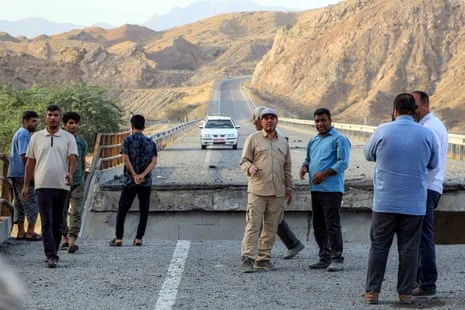
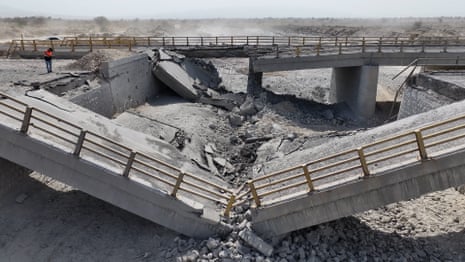
The deaths in Jordan on Friday represented the first instances of U.S. troops being killed by direct Iranian fire since the opening stages of the war. This specific escalation shifted the conflict from proxy skirmishes to a direct confrontation between Washington and Tehran. In response, President Donald Trump signaled his intent to increase the intensity of strikes against Iranian infrastructure, including bridges and power plants, moving beyond strictly military targets.
"They died in service of our country," President Trump said during a brief phone call with NewsNation, referring to the soldiers killed in Jordan. He emphasized that the primary objective of the war remains preventing Iran from obtaining a nuclear weapon. The President’s rhetoric suggests a transition toward a "maximum pressure" military strategy, which critics warn could lead to a full-scale regional conflagration.
The discovery of remains in Jordan provides some closure to the search for the missing soldier but also underscores the lethality of the Iranian strike on the facility. As the military verifies the identity of the remains, the Biden-era memorandum of understanding that previously governed U.S.-Iran relations has been declared "over" by the current administration. This collapse in diplomacy has left a vacuum that is currently being filled by tactical escalation on both sides.
Targeting Critical Infrastructure: A Regional Crisis in Kuwait and Jordan
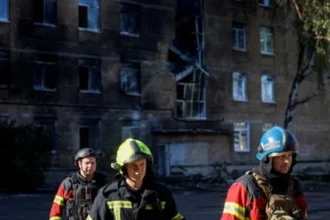
The Middle East crisis has rapidly spilled over into neighboring countries, with Kuwait becoming a primary target for Iranian retaliation. Kuwaiti officials reported on Sunday that a power and water distillation plant was attacked by Iranian forces for the second time in two days. These strikes have caused significant fires and forced the implementation of emergency plans to stabilize the national electricity grid.
Kuwait is particularly vulnerable to such attacks because it relies on desalination for approximately 90% of its drinking water. By targeting these vital facilities, Iran is exerting pressure on U.S. allies in the Gulf, demonstrating its ability to disrupt the basic needs of civilian populations. The Kuwaiti Ministry of Electricity, Water and Renewable Energy confirmed that the attacks impacted several generation units, though firefighters have been working to mitigate the damage.
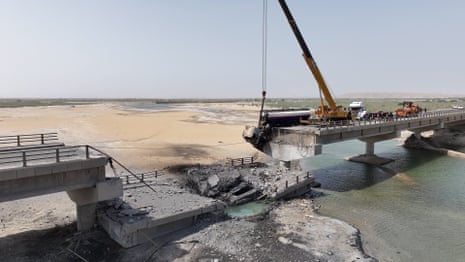
Simultaneously, Jordan has been forced to activate its air defense systems. On Sunday afternoon, Jordanian forces intercepted three Iranian missiles, while a fourth landed in a remote, uninhabited area. The Jordanian Ministry of Foreign Affairs summoned the Iranian chargé d’affaires in Amman to deliver a "strongly worded protest message." Jordanian officials have categorized the security of their kingdom and the safety of their citizens as a "red line" that Tehran must not cross.
Diplomacy Under Fire: The Role of Iraq and Lebanon in the Crisis
Amid the military strikes, a parallel diplomatic struggle is unfolding. Iraqi Prime Minister Ali al-Zaidi is scheduled to visit Tehran later this week, following a high-profile trip to Washington where he met with President Trump. Al-Zaidi, a businessman who rose to power with U.S. support, faces the daunting task of maintaining Iraq’s neutrality. Iraq has long served as a proxy battleground for the U.S. and Iran, and the Prime Minister’s visit to Tehran is seen as an attempt to de-escalate tensions that threaten his country’s fragile economy.
In Washington, U.S. Secretary of State Marco Rubio met with Lebanese President Joseph Aoun to discuss a trilateral framework aimed at securing peace between Lebanon and Israel. Rubio commended Aoun for his efforts to reclaim Lebanese sovereignty and disarm Hezbollah, the militant group that has long been funded and supported by Iran. President Aoun is expected to meet with Donald Trump on Tuesday to present a plan for removing Hezbollah’s influence and securing an Israeli withdrawal from southern Lebanon.
However, the path to peace remains obstructed. Hezbollah has firmly rejected any government-led talks with Israel and has vowed to retain its arsenal. The ongoing Israeli occupation of southern Lebanon, which Israel describes as a "security zone," has displaced hundreds of thousands of Lebanese civilians. Human rights organizations have warned that the destruction of villages in these occupied areas could constitute war crimes, further complicating the diplomatic landscape.
The Nuclear Flashpoint and the Darkhovin Strike
The central justification for the U.S. military campaign—the prevention of a nuclear-armed Iran—reached a new milestone on Sunday. Iran’s Atomic Energy Organization accused U.S. forces of attacking the under-construction Darkhovin nuclear power plant in Khuzestan province. According to state media, the facility was hit by multiple projectiles in what Tehran called an "aggressive and brutal act contrary to international law."
The International Atomic Energy Agency (IAEA) confirmed it is "looking into reports" of the attack. IAEA Director General Rafael Grossi noted that while the plant is in the very early stages of construction and contained no nuclear material during the last inspection, the strike represents a dangerous escalation. Grossi urged "military restraint in the vicinity of all nuclear-related sites" to avoid any future radiological risks.
President Trump has remained indifferent to Iran’s claims that it will no longer honor international nuclear agreements. "I couldn’t care less," Trump remarked when asked about Iran’s assertion that the memorandum of understanding was dead. This hardline stance suggests that the U.S. is prepared to target any facility it deems part of Iran’s nuclear infrastructure, regardless of its construction status or international legal standing.
Economic Consequences: Sanctions and the Strait of Hormuz Blockade
The Middle East crisis is not limited to physical combat; it has evolved into a comprehensive economic war. President Trump has urged congressional Republicans to add Iran to a pending Russian sanctions bill. The proposed legislation would allow the U.S. to place 100% tariffs on goods from countries that continue to buy oil and natural gas from sanctioned entities. This move is designed to cripple the Iranian economy, which is already reeling from the reimposition of oil sanctions earlier this month.
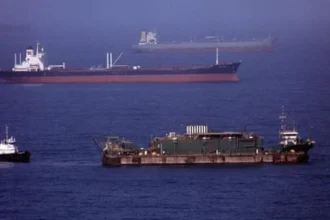
In response, the IRGC has tightened its grip on the Strait of Hormuz, a vital artery for global energy supplies. Iranian officials have warned that any vessels following "U.S.-backed" routes through the strait will face "accidents." On Sunday, the IRGC claimed that two ships were involved in such accidents after defying Iranian warnings. The U.S. has advised mariners to use the southern route through Omani waters, but Iran insists that all traffic must use lanes close to its coast.
The threat of a total blockade of the Strait of Hormuz, or a Houthi-led closure of the Red Sea oil route, looms over the global economy. As the U.S. midterms approach, the Trump administration is particularly sensitive to fluctuations in energy prices. Yet, the current trajectory suggests that neither side is willing to blink, raising the prospect that the "controlled detonation" in Iraq was just one small explosion in a much larger, and far more dangerous, regional firestorm.