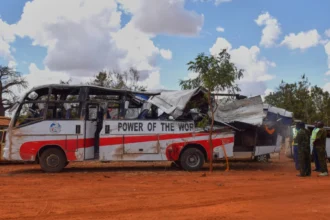
At least 10 people perished and six others sustained injuries following a catastrophic fuel tanker explosion on Iran’s Hamedan-Sanandaj highway, state media reported Saturday. The devastating incident, which occurred amid a road crash, has once again highlighted the persistent dangers of transportation infrastructure and vehicle safety within the Islamic Republic.
Tragic Fuel Tanker Explosion Rocks Western Iran
The fiery inferno erupted on the critical Hamedan-Sanandaj highway, a vital artery connecting major cities in western Iran. Initial reports from Iranian national broadcast media, IRIB, confirmed a grim casualty count, with the number of fatalities climbing to at least 10. The explosion was a direct consequence of a road accident involving the fuel tanker.
The precise cause of the initial crash was attributed to a technical malfunction. Officials, including the governor of Sanandaj, the provincial capital of Kurdistan, stated that a failure in the vehicle’s braking system precipitated the catastrophic event. This assertion, relayed by the Reuters news agency, points to a systemic issue rather than a simple driver error.
The governor further disclosed that at least six individuals suffered injuries in the blast and ensuing fire. He cautioned that these figures were preliminary and could potentially change as more information became available. Local authorities managed to bring the ensuing blaze under control relatively quickly, but the material and human cost of the incident was already substantial. No details regarding the identities of the deceased have been released by officials.
A Recurring Pattern of Road Fatalities in Iran
This latest deadly accident is tragically not an isolated event, but rather the most recent in a disturbing pattern of severe road collisions involving fuel tankers and passenger buses that have plagued Iran for years. The country grapples with a confluence of factors that contribute to its alarmingly high rate of traffic fatalities.
These contributing factors include inadequate road conditions, a consistently aging vehicle fleet that often lacks modern safety features, and a heavy volume of freight traffic. These elements combine to create a perilous environment for both drivers and passengers on Iranian roadways.
Historical Context of Highway Disasters
The Hamedan-Sanandaj highway has witnessed similar tragedies in the past. In 2018, a devastating collision occurred near Sanandaj when a fuel tanker slammed into a bus that had stopped to pick up passengers. That incident alone claimed the lives of at least 13 people, underscoring the long-standing risks associated with fuel transportation and road safety in the region.
The statistics paint a stark picture of the broader problem. According to UNICEF, Iran’s traffic crash rate is a staggering 20 times the global average. This alarming figure is attributed to a combination of poor road infrastructure and lax enforcement of traffic regulations.
Further data from a May 2017 report by the Tehran-based newspaper Financial Tribune revealed the immense scale of the issue. The report indicated that over 20,000 people are killed annually in road accidents across Iran, with an additional 800,000 sustaining injuries. These numbers represent a significant public health crisis and a constant drain on the nation’s resources and human capital.
Contributing Factors to Iran’s Road Safety Crisis
The persistent high rate of road accidents in Iran can be dissected into several interconnected issues that have resisted comprehensive solutions. The nation’s road infrastructure, while undergoing some development, often falls short of international standards, particularly in rural and less developed areas. Potholes, inadequate signage, and poorly maintained surfaces are common complaints.
Compounding these infrastructure challenges is the age of much of Iran’s vehicle fleet. Many trucks and buses, including those used for transporting hazardous materials like fuel, are decades old and do not incorporate modern safety technologies such as anti-lock braking systems (ABS), electronic stability control (ESC), or advanced airbags. The economic sanctions imposed on Iran have also made it difficult for the country to import newer, safer vehicles and parts for maintenance.
The regulatory framework and its enforcement also play a crucial role. While traffic laws exist, their consistent and rigorous application is often questioned. Corruption, a lack of sufficient resources for traffic police, and a culture of leniency can contribute to drivers taking greater risks.
The Hazardous Nature of Fuel Transportation
The specific incident involving a fuel tanker amplifies the inherent dangers. Fuel tankers are essentially mobile bombs. Any collision, rollover, or mechanical failure can lead to catastrophic explosions, as tragically demonstrated on the Hamedan-Sanandaj highway. The volatile nature of the cargo means that even minor accidents can escalate into life-threatening events.
The transportation of fuel is a critical component of Iran’s economy, supporting everything from transportation to industrial processes. However, the safe transport of such materials requires stringent oversight, well-maintained vehicles, and highly trained drivers. The recurring accidents suggest a systemic failure in these critical areas.
Broader Implications and Public Impact
The consequences of such frequent and deadly road accidents extend far beyond the immediate casualties. For families, the loss of loved ones is an immeasurable tragedy. The injured face long periods of recovery, often with permanent disabilities, placing a significant burden on both individuals and the healthcare system.
Economically, the loss of productive citizens and the strain on healthcare and emergency services represent a substantial cost to the nation. The disruption of transportation routes due to accidents can also impact commerce and the delivery of essential goods.
Furthermore, these recurring disasters erode public trust in the government’s ability to ensure basic safety and security for its citizens. The perception that preventable tragedies are occurring with alarming regularity can lead to public frustration and demands for accountability.
The Role of International Scrutiny and Aid
While the Iranian government is primarily responsible for addressing its internal road safety issues, international organizations and bodies occasionally highlight the severity of the problem. Reports from entities like UNICEF serve to draw attention to the scale of the crisis and can, in some instances, spur domestic action or open avenues for international cooperation on safety initiatives. However, the geopolitical landscape and sanctions often complicate such collaborations.
The recurring nature of these fuel tanker explosions and other road accidents in Iran necessitates a deep and sustained focus on improving transportation safety. This includes significant investment in modernizing the vehicle fleet, upgrading road infrastructure, enhancing driver training and licensing, and strengthening the enforcement of traffic laws. Without a comprehensive and sustained approach, the grim toll of Iran’s roadways is likely to continue.
The incident on the Hamedan-Sanandaj highway serves as a somber reminder of the critical need for urgent and effective measures to curb the devastating impact of road accidents in Iran. The loss of life and the injuries sustained are not just statistics, but profound human tragedies that demand a robust and systemic response.