President Donald Trump signaled a potential new phase in the protracted US-Iran conflict following recent exchanges of fire, stating, "We’re going to hit them hard… there will be a response," just days after Iran launched missile attacks on U.S. military sites in Jordan. This statement came as the war, marked by intermittent but significant clashes, approached its seventh month. Reports from U.S. media suggest Washington may be exploring a "no war, no peace" strategy, characterized by periodic strikes designed to deter Iran without escalating into a full-scale, sustained conflict. The viability and sustainability of such a strategy, however, remain subjects of intense scrutiny, particularly as the geopolitical landscape continues to shift.
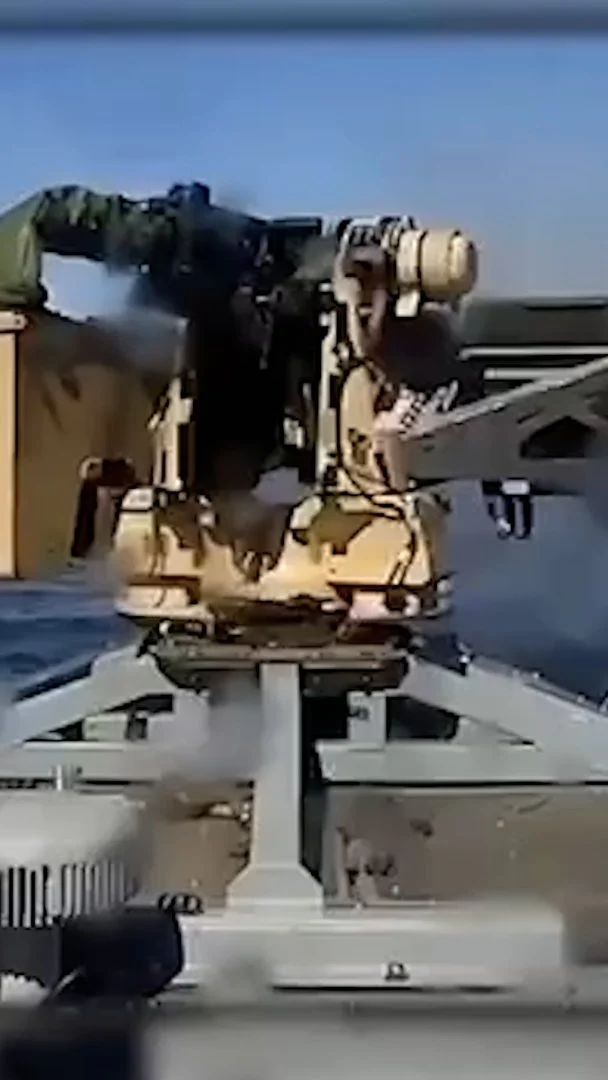
The recent escalation began when U.S. forces struck military targets on Iran’s Larak Island in the strategically vital Strait of Hormuz. The Pentagon asserted that the strikes neutralized two Iranian rocket launchers, which they claimed were being prepared by the Islamic Revolutionary Guard Corps (IRGC) to deploy sea mines. Iranian state media reported that three individuals were killed in the operation. In retaliation, Iran launched missile attacks targeting two airbases in Jordan that host U.S. military personnel and assets. Jordan confirmed the interception of eight missiles. President Trump’s subsequent vow to retaliate with force underscores the volatile nature of the current standoff and raises questions about the long-term trajectory of U.S. policy toward Iran.
Iranian President Masoud Pezeshkian, speaking at the Shanghai Cooperation Organisation (SCO) summit in Bishkek, Kyrgyzstan, offered a conditional cessation of hostilities, stating that Iran would cease fire if the U.S. reciprocated and fulfilled its commitments under a previous interim deal. This June agreement aimed to end the war, lift sanctions, and reopen the Strait of Hormuz. However, the deal expired and largely collapsed due to disagreements stemming from its ambiguous language, with both sides blaming the other for violations. The exchange of fire on Monday marked the first direct confrontation between the two nations in over a month, reigniting concerns of a potential return to a more intense military phase.
Trump, however, downplayed the immediate threat of a full-scale war, asserting that the Strait of Hormuz was in "extremely good shape." He also claimed that Iran’s financial system, military, and leadership had been significantly degraded. "That doesn’t mean we won’t smack them. We’ll see what happens," he told reporters at the White House, hinting at continued U.S. resolve without committing to a specific course of action. This statement suggests a preference for calibrated responses rather than an all-out military engagement.
Evolving U.S. War Strategy Amidst Shifting Dynamics
The Trump administration’s approach to the conflict with Iran has been marked by a series of strategic pivots since its inception. The war initially commenced with a concentrated military campaign that spanned approximately 40 days, followed by a period of ceasefire that was subsequently extended. This initial phase was characterized by direct, albeit limited, military engagements.
In June, a memorandum of understanding (MoU) was signed between Tehran and Washington, laying out terms for a ceasefire and paving the way for broader peace negotiations over a 60-day period. The ambiguity inherent in the MoU, particularly concerning the ultimate control of the Strait of Hormuz, proved to be its undoing. Within weeks, the agreement unraveled, with both the U.S. and Iran accusing each other of violating its provisions. This breakdown led to a resurgence of U.S. strikes against Iran in July, met with retaliatory attacks by Tehran targeting U.S. military assets and other infrastructure in neighboring Gulf states.
More recently, the Trump administration shifted its focus from sustained military action to economic pressure. This strategic adjustment coincided with reports in U.S. media suggesting that American forces were experiencing shortages in munitions in the Middle East, particularly concerning critical Patriot interceptor missiles essential for defending against Iranian drone and missile attacks. While the Trump administration has denied these claims of dwindling weapon supplies, the perceived need for alternative strategies became evident.
Last week, U.S. Treasury Secretary Scott Bessent announced an intensified economic pressure campaign targeting Iran’s global financial interests. This initiative aimed to disrupt Iran’s revenue streams, including its oil exports, by sanctioning approximately 60 entities allegedly facilitating Iranian oil sales. Furthermore, the administration threatened secondary sanctions against other countries and companies conducting business with Tehran. Bessent asserted that Iran’s recent missile strikes were a sign of economic desperation, arguing that the new sanctions were beginning to have a significant impact.
In response, Iran’s Central Bank Governor, Abdolnaser Hemmati, refuted the assertion that Iran’s economy was collapsing, stating, "I say to the American president that we have enough foreign currency." This exchange highlights the ongoing economic and diplomatic tensions underpinning the military confrontations.
The "No War, No Peace" Doctrine: A Sustainable Path?
The current situation in the U.S.-Iran conflict is increasingly described by observers as an unstable middle ground, where viable solutions appear to be rapidly diminishing. While neither side seems to be actively pursuing an immediate return to full-scale warfare, both have demonstrated a readiness to employ military force when they perceive their interests to be threatened.

According to reports from Axios, the Trump administration is contemplating a strategy of periodic attacks against Iran. The objective of this approach would be to maintain the unimpeded flow of oil tankers through the Persian Gulf region. This proposed strategy of sporadic military strikes, however, has yet to receive final approval from President Trump.
Since the onset of the war, Iran has effectively controlled the critical Strait of Hormuz, allowing only a select few vessels deemed "friendly" to pass through at times. Both nations now assert control over this vital waterway, with Iran intermittently targeting ships attempting to transit without its consent, while the U.S. claims its navy is successfully escorting vessels. The breakdown of the MoU in July, which saw the U.S. resume strikes, has led Iran to refuse further diplomatic engagement with Washington, opting instead for talks with Oman regarding the future administration of Hormuz.
Trita Parsi, director and co-founder of the Quincy Institute, a U.S.-based think tank, argues that the intermittent bombing of a country amounts to perpetual warfare. He suggests that the administration appears to be abandoning military, economic, or diplomatic solutions in favor of managing the problem through ongoing conflict. Parsi characterizes this as an "utter defeat" from the initial U.S. expectation that the war would conclude within four days.
Sustainability of Sporadic Warfare: Analysts Weigh In
Analysts point to several factors that could challenge the U.S.’s ability to sustain prolonged pressure on Iran, even through sporadic military actions. Mohammad Eslami, a research fellow at the University of Tehran, suggests that the Trump administration is pursuing a "calculated" conflict aimed at controlling the Strait of Hormuz, which was once open to all maritime traffic. He notes that the war was initiated based on miscalculations in Washington and that current confidence in the war’s trajectory may be misplaced.
Eslami warns that sporadic strikes, such as those witnessed this week, risk further escalating regional tensions. Negar Mortazavi, a senior fellow at the Center for International Policy in Washington, D.C., believes that renewed escalation became unavoidable following the collapse of the MoU. She states that Iran has made its position clear: a return to the MoU would prompt Tehran to reciprocate, while a continued emphasis on military pressure would lead to Iranian escalation. Mortazavi emphasizes that a mutual return to the MoU represents the clearest path toward de-escalation.
Otherwise, she cautions, both sides risk losing control of the situation. While Iran claims to have established a framework for managing the Strait of Hormuz with Oman, Mortazavi observes that "the Americans are thinking that they don’t need any kind of diplomatic settlement right now." Instead, she posits, they may be waiting for the U.S. midterm elections in November to continue exerting economic pressure.
However, maritime traffic through the Strait of Hormuz remains at historic lows, plummeting from approximately 100 ships daily to an average of seven during the conflict. Mortazavi also contends that "Tehran will not capitulate under [economic] pressure." She warns that while both sides may believe they can manage escalation, each new confrontation heightens the risk of a wider regional conflict.
Furthermore, questions persist regarding the U.S.’s capacity to maintain even infrequent strikes against Iran, given ongoing speculation about its dwindling munitions supplies. The political ramifications for President Trump are also significant, with his approval rating at home falling to 33 percent, fueled by rising gasoline prices and domestic pressure stemming from the prolonged conflict.
Israel’s Shifting Stance and Diverging Priorities
The war on Iran initially began as a collaborative military effort between the United States and Israel. However, the two allies now appear to hold diverging priorities. Last month, Israeli Prime Minister Benjamin Netanyahu reiterated his commitment to preventing Iran from acquiring nuclear weapons, despite a lack of concrete evidence that Tehran is currently pursuing such a program.
Israel has officially conducted only one strike against Iran since the initial ceasefire took effect in April. It has also been obstructive regarding the June MoU, refusing to withdraw from southern Lebanon despite the agreement’s stipulation of a ceasefire on all fronts.
In contrast, the United States’ primary objective appears to be finding an exit strategy from the war. This includes reopening the Strait of Hormuz and mitigating the economic and political costs of the conflict as the nation approaches the November midterm elections. Parsi of the Quincy Institute notes that the interests of the two allies no longer align, stating, "The U.S. does not have an interest in eternal war with Iran." This divergence in strategic goals could further complicate the ongoing efforts to achieve stability in the region.