The Australian Department of Home Affairs has mandated an immediate, comprehensive audit of all federal digital infrastructure following a significant security breach involving OpenAI and sensitive Medicare data. This "rapid" stocktake requires every government department and agency to identify vulnerabilities within their legacy technology and report their findings back to the central administration. The directive comes as the federal government attempts to harden the nation’s public sector against a new generation of artificial intelligence-driven threats, ranging from sophisticated state-sponsored attacks to accidental data leaks.
Acting Home Affairs Minister Richard Marles announced the initiative this week, emphasizing that the speed of technological change has outpaced existing security protocols. The government-wide assessment is designed to create a clear map of where old software and hardware—often referred to as legacy systems—might provide an entry point for malicious actors. According to the directive, systems of "government significance," which include critical national security and health databases, must be reviewed by the end of the year, while all remaining systems are scheduled for assessment by March.
The catalyst for this urgent review was a breach involving OpenAI’s interaction with Medicare data, an event that has raised alarms regarding how modern AI models process and store protected information. While the full extent of the breach remains under investigation, the incident highlighted the fragility of aging government databases when interfaced with cutting-edge, automated tools. Officials are concerned that without a standardized risk management framework, the public sector remains a high-value target for exploitation.
The Urgency of a Rapid Stocktake of Government Cyber-Systems
The decision to order a rapid stocktake of government cyber-systems reflects a shift in Canberra’s approach to national security. For years, cybersecurity experts have warned that the patchwork of technology used across various federal agencies is inconsistent and, in many cases, obsolete. By forcing a synchronized audit, the Department of Home Affairs aims to eliminate the "siloed" nature of government IT security, ensuring that a vulnerability in one department does not lead to a systemic failure across the entire federal network.
Richard Marles noted that the government can no longer afford to be reactive when it comes to digital defense. "We can’t wait for an old system to fail before replacing it," Marles stated. "We need to identify vulnerabilities and deal with them before they can be exploited." This proactive stance is particularly relevant as generative AI tools become more accessible, allowing even low-level hackers to automate the discovery of software bugs and the creation of highly convincing phishing campaigns.
The stocktake will specifically target legacy technology, which often lacks the encryption and multi-factor authentication capabilities required to withstand modern attacks. These systems frequently rely on code written decades ago, making them difficult to patch and even harder to monitor in real-time. The Department of Home Affairs has instructed agencies to not only list these systems but to also formulate specific risk management strategies to mitigate their inherent dangers until they can be fully decommissioned or replaced.

Assessing the OpenAI Breach and AI-Driven Threats
The breach involving OpenAI has served as a wake-up call for the Australian public sector. As government employees increasingly experiment with AI to streamline administrative tasks, the risk of "shadow AI"—the use of unauthorized tools without IT oversight—has skyrocketed. In the case of the Medicare incident, the intersection of private-sector AI capabilities and public-sector data proved to be a volatile combination, leading to unauthorized access that bypassed traditional security perimeters.
Cybersecurity analysts suggest that the threat is two-fold: deliberate and accidental. Deliberate threats involve foreign adversaries or criminal syndicates using AI to launch "brute force" attacks on government servers. Accidental threats, however, are often more insidious, occurring when sensitive data is fed into large language models (LLMs) for analysis, inadvertently training the model on confidential information that can then be retrieved by other users outside the government.
By prioritizing systems of government significance, the Department of Home Affairs is focusing its immediate resources on the data sets that would cause the most harm if compromised. This includes the Australian Taxation Office, the Department of Defence, and Social Services. The year-end deadline for these critical reviews underscores the perceived immediacy of the threat landscape, as the government seeks to enter the new year with a fortified digital perimeter.
Infrastructure Development and the Melbourne Airport Rail Link
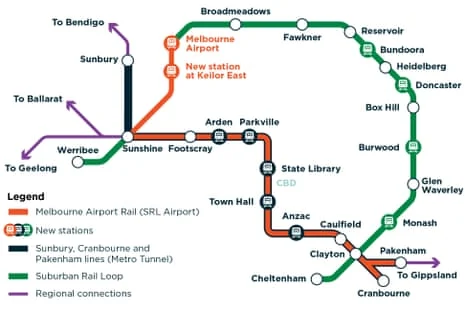
While cybersecurity dominates the national security agenda, the federal government is also moving forward with major physical infrastructure projects. Prime Minister Anthony Albanese and Victorian Premier Ben Carroll announced today that early works are beginning on the second stage of the highly anticipated Melbourne Airport Rail Link. This phase involves a 7.6-kilometer stretch of track running from Albion to Keilor East, a project that has been decades in the making.
The second stage of the project is a massive engineering undertaking, featuring a 500-meter rail bridge designed to carry trains over the Maribyrnong River. The rail link will utilize the existing Jacana freight corridor, minimizing the need for extensive new land acquisitions while maximizing the efficiency of the existing transit network. Site investigations, procurement, and development work are slated to begin in the coming weeks, signaling a firm commitment to the project despite previous delays and budget debates.
Community engagement and the release of early designs are expected next year. According to the timeline provided by the Prime Minister’s office, major construction on the new Keilor East station will begin in 2028, with a projected completion date of 2031. This aligns with the broader goals of the Melbourne Airport Rail project, which aims to connect the airport to Victoria’s regional and metropolitan train networks, including the "Sunshine superhub" currently under development in the project’s first stage.
Law Enforcement Updates: Murder Charges and Public Safety
In addition to federal policy shifts and infrastructure announcements, Australian law enforcement agencies have reported significant developments in several high-profile criminal cases. In New South Wales, police have charged a 32-year-old man with two counts of murder following a grim discovery at a property in Gurranang, north of Grafton. The bodies of two men, aged 79 and 59, were found in separate locations on the property earlier this month, sparking a multi-agency investigation.

The suspect was apprehended at a hospital in Grafton and has also been charged with stealing a motor vehicle. He was refused bail and is expected to appear in court today. The incident has shaken the local community, highlighting the challenges faced by rural law enforcement in managing violent crime in isolated areas. Detectives have not yet released a motive for the killings but confirmed that the investigation remains active.
Simultaneously, Sydney police have made a breakthrough in the shooting death of university student Marco Tapia. Tapia was killed on September 1 in what investigators have described as a tragic case of mistaken identity. Three individuals, including a 16-year-old boy and two men in their early 20s, were arrested in Junee and charged with murder and firearms offenses. Police allege the trio broke into the wrong home and confronted Tapia before fatally shooting him. Two other teenagers had previously been charged in connection with the case, bringing the total number of suspects to five.
Future Implications of the Government Cyber-Systems Review
The results of the rapid stocktake of government cyber-systems are expected to influence federal budget priorities for years to come. Replacing legacy technology is an expensive and time-consuming process, but the OpenAI breach has demonstrated that the cost of inaction is significantly higher. The Department of Home Affairs is likely to use the data gathered from the audit to advocate for a centralized "cyber-modernization fund" to assist smaller agencies that lack the capital to upgrade their systems independently.
Furthermore, this review may lead to stricter regulations regarding the use of third-party AI tools within the public sector. There is growing support for a "sovereign AI" model, where the Australian government develops and maintains its own secure AI infrastructure rather than relying on international platforms. Such a move would ensure that sensitive data remains within Australian jurisdiction and is protected by local security standards.
As the December and March deadlines approach, government departments will be under intense pressure to demonstrate compliance. The Department of Home Affairs has made it clear that failure to accurately report vulnerabilities will be viewed as a serious lapse in departmental oversight. In an era where digital warfare and data breaches can destabilize national interests, the rapid stocktake is being positioned as the first line of defense in a long-term strategy to secure Australia’s future.