A Honduran court has officially dismissed corruption charges against former President Juan Orlando Hernandez, a move that follows his controversial pardon in the United States for drug-trafficking convictions and his subsequent return to his home country. The decision marks a significant twist in the legal saga of the former leader, who was once considered a key ally in the U.S. war on drugs.
A Judicial U-Turn Amidst Political Maneuvering
The charges Hernandez faced in Honduras stemmed from allegations of money laundering and fraud, purportedly linked to a vast government corruption scheme that spanned from 2010 to 2013, predating his presidency. However, judicial spokesperson Carlos Silva announced Tuesday that prosecutors failed to demonstrate Hernandez’s direct responsibility for budgetary decisions during the period in question. This ruling effectively absolves the former president of these specific domestic charges.
Hernandez, a prominent figure within Honduras’s right-wing National Party, hailed the court’s decision as a personal vindication. He declared the end of what he described as a "chapter of political persecution," asserting that the case against him lacked any factual basis and was driven by political motives. He further alleged that those behind the charges aimed not only to banish him from Honduras but also to financially ruin his family.
The Long Shadow of Drug Trafficking Allegations
The former president’s legal troubles are deeply intertwined with his alleged involvement in international drug trafficking. Even during his tenure as president, from 2014 to 2022, reports surfaced indicating investigations by the U.S. Drug Enforcement Agency (DEA). Despite being publicly lauded as a partner in the U.S.-led "war on drugs," prosecutors later accused Hernandez of exploiting his presidential power to facilitate drug smuggling operations.
These accusations painted a starkly different picture, alleging that Hernandez accepted bribes to further his political ambitions while simultaneously aiding notorious drug cartels. The U.S. Department of Justice characterized him as a central figure in "one of the largest and most violent drug-trafficking conspiracies in the world." His alleged involvement was so significant that U.S. prosecutors quoted him as boasting about facilitating drug shipments directly into the United States.
Extradition, Conviction, and a Dramatic Pardon
The legal noose tightened around Hernandez in April 2022, mere months after he concluded his second presidential term. Honduran authorities extradited him to the United States, where he faced a federal indictment. In March 2024, a New York jury found him guilty of drug trafficking and weapons charges. He was subsequently sentenced to 45 years in prison, a penalty widely celebrated by many Hondurans who viewed it as a landmark moment of accountability for a powerful political figure.
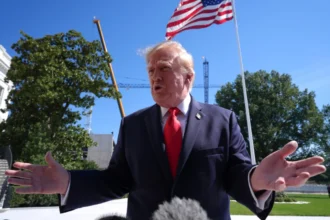
However, the narrative took an unexpected turn in late 2025. As Honduras approached its general elections in November, then-U.S. President Donald Trump announced his intention to pardon Hernandez. Trump, who had adopted a strategy of bolstering right-wing leaders across Latin America, framed the pardon as a response to what he termed the "harsh and unfair" treatment of Hernandez under the previous Biden administration.
The pardon was officially granted on December 2, 2025, just days after the Honduran presidential election concluded, with the final vote count stretching for weeks. The race saw Nasry Asfura of Hernandez’s National Party ultimately win the presidency against centrist candidate Salvador Nasralla. Trump’s intervention not only included the pardon but also a threat to withhold U.S. aid from Honduras if the election outcome was not to his liking, adding a layer of geopolitical pressure to the domestic political landscape.
Domestic Charges and a Suspension of Justice
Despite the presidential pardon in the U.S., Hernandez remained under legal scrutiny in Honduras. He was a central figure in the "Pandora case," a sprawling corruption scandal that implicated numerous high-ranking officials. Prosecutors alleged that these officials systematically siphoned public funds through government disbursements to finance their political campaigns.
The Pandora case specifically accused Hernandez and others of diverting approximately $10.8 million in state funds between 2010 and 2013. Hernandez himself was alleged to have personally received around $2.3 million, with a portion of these funds reportedly used to fuel his presidential ambitions. An arrest warrant was issued for him in connection with this scandal.
However, this domestic arrest warrant was eventually suspended, paving the way for Hernandez’s return to Honduras in July 2026. The suspension of the warrant and the subsequent dismissal of charges have raised significant concerns among analysts and observers regarding the integrity of Honduras’s judicial system.
Concerns Over Judicial Independence and Accountability
The decision to drop charges against Hernandez, coupled with the earlier pardon, has fueled widespread skepticism about the prospects for true accountability in Honduras. Critics and many Honduran citizens who had celebrated his U.S. conviction now worry that political influence and potential interference from the National Party’s continued control of the government could render any domestic legal processes a mere formality.
The judiciary’s assertion that the evidence did not establish Hernandez’s participation in the investigated events has been met with disbelief by those who have followed the corruption allegations closely. The dropping of charges against other prominent figures involved in the Pandora scandal, such as former President Porfirio Lobo and ex-Finance Minister Wilfredo Cerrato, further amplifies these concerns about a systematic effort to shield powerful individuals from justice.
The legal trajectory of Juan Orlando Hernandez highlights the complex interplay of international relations, domestic politics, and the persistent struggle against corruption in Central America. While Hernandez has secured a reprieve from charges in his home country, the broader implications for justice and governance in Honduras remain a subject of intense debate and concern. The former president’s freedom from domestic prosecution, following a U.S. pardon for drug trafficking, presents a challenging precedent and raises profound questions about the rule of law.
Broader Implications for Honduras and Regional Stability
The legal and political developments surrounding Juan Orlando Hernandez have far-reaching implications for Honduras and the wider Central American region. The perception of impunity for former leaders can erode public trust in democratic institutions and the justice system, potentially fueling social unrest and political instability. For a country grappling with persistent poverty, crime, and migration, such outcomes can exacerbate existing challenges.
The involvement of a U.S. president in issuing pardons that appear to influence domestic legal proceedings in allied nations also sets a complex international precedent. While presidents have broad pardon powers, the timing and context of Trump’s intervention in Hernandez’s case have been widely interpreted as politically motivated, aimed at supporting a fellow conservative leader. This raises questions about the U.S.’s role in promoting democratic governance and the fight against corruption abroad, particularly when such actions seemingly contradict stated commitments to justice.
Moreover, the dismissal of charges in the Pandora case, which involved the alleged diversion of public funds, underscores the ongoing battle against systemic corruption in Honduras. These funds could have been utilized for essential public services, infrastructure development, or social programs, highlighting the tangible impact of corruption on the lives of ordinary citizens. The failure to hold those responsible accountable perpetuates a cycle of illicit financial flows and undermines development efforts.
Public Reaction and the Fight for Accountability
The initial celebrations that followed Hernandez’s conviction in the U.S. demonstrated a strong public desire for accountability. Protests and demonstrations outside the New York City courthouse during his sentencing signaled a significant segment of the Honduran population’s demand for an end to corruption and impunity. However, the subsequent dropping of domestic charges may lead to disillusionment and a sense of injustice among those who had hoped for a thorough reckoning.
The future legal landscape for Hernandez remains uncertain, even with the dismissal of these specific charges. The international community, including the United States and various human rights organizations, will likely continue to monitor developments closely. The lingering allegations and the controversial nature of his pardon ensure that the former president’s legal and political legacy will remain a subject of intense scrutiny and debate for years to come. The fight for genuine accountability and the strengthening of judicial independence in Honduras continues to be a critical challenge.