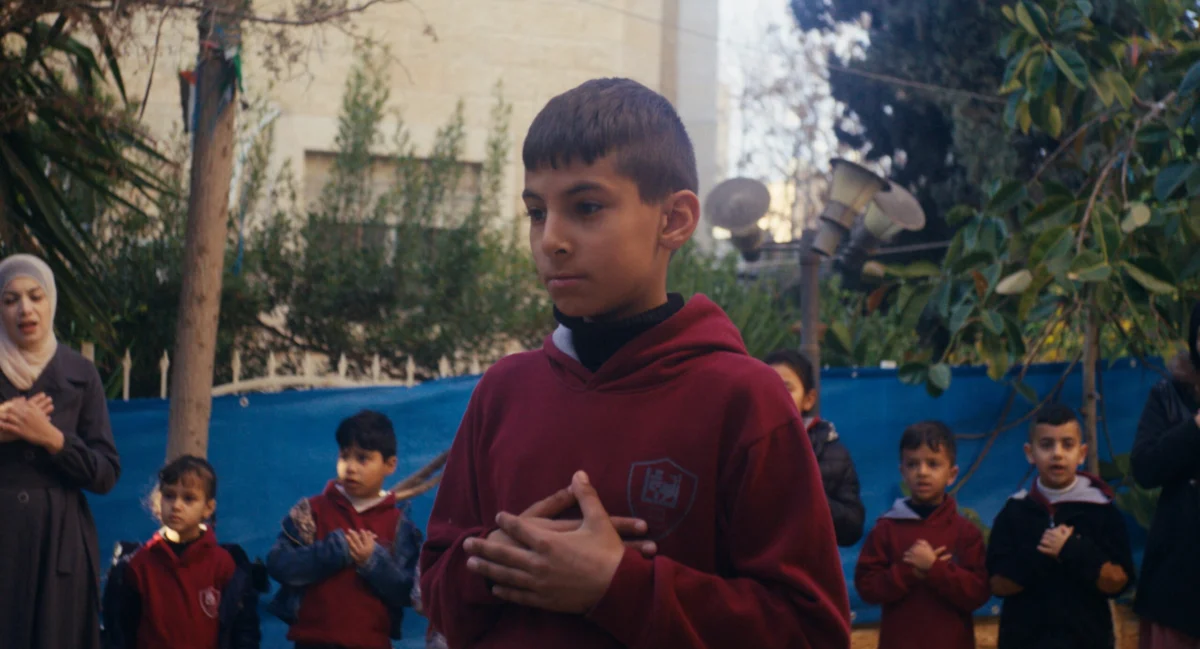
A new documentary, "House of Hope," offers an intimate and unflinching look at a unique educational initiative in the occupied West Bank, following the daily struggles and profound resilience of a Waldorf-inspired school founded by a Palestinian couple. The film captures raw moments, including the school’s founder, Manar Wahhab, experiencing emotional distress within the classroom, underscoring the immense pressures faced by those striving to nurture young minds amidst occupation. Director Marjolein Busstra explained her decision to continue filming during these vulnerable periods, stating her desire for the audience to witness the full spectrum of their experiences, the good and the difficult, together.
The documentary centers on Manar Wahhab and her husband, Milad Vosgueritchian, who established the House of Hope Vision Kindergarten & School in al-Eizariya. Their school is built upon the principles of the Waldorf philosophy, which emphasizes non-violent resistance and provides a crucial sanctuary for children to process and express their emotions. This approach is particularly vital for youngsters growing up in the challenging and often traumatic environment of the occupied West Bank.
Cultivating Resilience Through Education
The House of Hope school aims to shield children from the pervasive impact of occupation, fostering an environment where their inherent dignity is preserved. Busstra elaborated on this mission, highlighting that the school’s core purpose is to prevent the occupation from dictating the children’s inner lives. By allowing them space to be children and to exercise agency, the school empowers them. The Waldorf pedagogy, with its emphasis on artistic expression and emotional literacy, is instrumental in facilitating this emotional processing, according to Busstra.
Busstra, working alongside a Palestinian film crew, dedicated three years to documenting the lives of Wahhab and her family. This intensive period involved nine separate trips to the occupied West Bank. The initial connection between Busstra and Wahhab dates back 18 years, stemming from a film workshop held in the region.
While the film’s narrative arc encompasses the activities of the elementary school, Manar Wahhab emerges as the central, driving force of the story. The documentary explores her life both within the school’s walls and in her private life, sharing moments with her husband and their own children.
Busstra revealed that her initial intention was to film the school, but she soon realized that Wahhab’s personal journey and inner life were the true heart of the story. "I think hope is a difficult word at the moment, but I have a deep awe for Manar, who keeps creating and teaching even while carrying so much herself," Busstra commented.

A Foundation of Trust and Shared Values
Wahhab attributed her ability to allow the film crew access to her most vulnerable moments to the deep trust she held for Busstra and their pre-existing friendship. She explained that their shared belief in the power of education, the importance of children’s creativity and freedom, and the recognition of the human being as a complete entity—mind, soul, and spirit—forged a strong bond. This alignment of values created an openness that allowed for the creation of a film that transcends mere documentation of events, delving instead into the profound aspects of humanity.
The film was produced by Think-Film, a production company known for its impactful documentaries, including "The Voice of Hind Rajab." That earlier film shed light on the tragic story of a five-year-old Palestinian girl killed by Israeli forces in 2024, a case that became a stark symbol of the failure to protect children in Gaza.
Wahhab acknowledged that she made a conscious effort to be authentic and transparent throughout the filming process, even when facing exhaustion, anger, or illness. She understood that her portrayal was significant, representing not just herself but also her community, the concept of hope, the pursuit of peace, and the broader voice of Palestinians.
The Genesis of House of Hope
The founding of the House of Hope school by Wahhab and Vosgueritchian stemmed from a profound desire to offer Palestinian children an alternative educational experience. They envisioned a space that prioritized safety and provided children with the means to express their emotions freely. "The school was born many years ago when we saw the hardships surrounding our community and wanted to create something different, a space of love, safety, creativity and healing," Wahhab stated. She described "House of Hope" as more than just a physical location; it is an idea, a mission, and an energy that they carry with them.
In the context of an increasingly volatile Israeli occupation, Wahhab views the Waldorf philosophy as indispensable. She rejects the notion that non-violence signifies weakness, asserting instead that it demands immense courage, awareness, patience, and internal fortitude. For Wahhab, non-violence requires looking beyond personal pain and ego, maintaining humility even when circumstances attempt to erode it.
Wahhab believes in the interconnectedness of energy and its impact on the world. She expressed concern over the prevalent fear, anger, and violence, advocating for a greater emphasis on inner peace, interpersonal harmony, and a peaceful relationship with nature.
Navigating Escalating Tensions
The period following Hamas’s incursion into southern Israel on October 7, 2023, and Israel’s subsequent military response significantly heightened the daily challenges for Wahhab, Vosgueritchian, and the children at House of Hope. Despite the intensified difficulties, the film crew remained committed to documenting their evolving realities. Busstra noted that while her core narrative remained consistent, the events of October 7 cast a somber shadow, leaving the subjects deeply affected and seemingly devoid of hope for a time. She observed that the school, while a sanctuary, continuously faces the looming threat of the occupation.

The escalating Israeli military actions in the West Bank, including incidents of child fatalities, cast a persistent shadow over daily life. In one poignant scene, Wahhab is shown preparing her son for school, meticulously ensuring he has essentials like a phone charger and extra clothing, anticipating potential delays or detentions at checkpoints.
Wahhab conveyed the overwhelming sense of heaviness pervading the region, emphasizing that their aspirations are not extraordinary but fundamental. "The energy is so heavy now. I hope people understand that we are not asking for something extraordinary. We are asking for basic human rights, the right to live with dignity and freedom, the right to safety and the right to be fully human beings," she implored.
A Call for Empathy and Understanding
Busstra, having spent three years immersed in Wahhab’s life, hopes that the film will encourage audiences to move beyond divisive "us versus them" narratives. Her aspiration is for viewers to internalize the film’s message, seeing it not as a distant problem affecting others, but as a relatable exploration of love and humanity in precarious circumstances.
Wahhab believes the documentary offers a more nuanced and authentic portrayal of Palestinians, challenging the often-limited and stereotyped representations prevalent in the West. She expressed frustration with perceptions that cast Palestinians as terrorists or as less developed, stating, "I hope this film helps people look beyond those images. The news does not tell the full reality. It often shows only violence and people killing one another. It doesn’t show the essence of people’s lives. It shows negativity."
Wahhab urges viewers to approach the documentary with an understanding of shared humanity, encouraging a perspective that transcends political divides.
Recognition and Universal Resonance
"House of Hope" has garnered significant international recognition, including the Best International Feature Documentary award at the Hot Docs Canadian International Documentary Festival in May 2026. The film has also been screened at UNESCO in Paris and is slated for exhibition at the Jerusalem Arab Film Festival.
Despite its specific roots in the West Bank, Wahhab emphasized the universal message of the film. "Even though our story is deeply rooted in the West Bank, its message is universal. Our hope is that people everywhere can see our story and take something meaningful from it," she concluded. The documentary stands as a testament to the enduring spirit of those striving to create spaces of hope and resilience amidst profound adversity, offering a vital human perspective on a complex geopolitical reality.