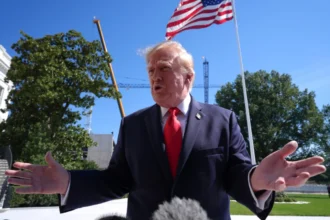
California is bracing for intensified scrutiny from former President Donald Trump and his allies regarding its widespread mail-in voting system as the midterm elections approach, prompting the state and other jurisdictions to mount a legal defense of their voting processes and voters’ rights. The Golden State, a leader in mail-in balloting, finds itself at the forefront of a national debate ignited by persistent challenges to the integrity of absentee voting, a method that surged in popularity during the COVID-19 pandemic and has since become a cornerstone of electoral participation for millions of Americans.
California’s Mail-In Voting Dominance
The sheer scale of mail-in voting in California underscores its significance in the state’s electoral landscape. In 2021, California solidified its commitment to accessible voting by enacting a law that automatically mails a ballot to every registered voter. This proactive measure has resulted in an overwhelming reliance on mail-in ballots, with over 80 percent of the state’s voters casting their ballots this way in 2024 alone.
In Santa Clara County, this trend is even more pronounced. Registrar Jesse Morelos reported that his county experiences an even higher rate of mail-in ballot usage, with more than 90 percent of voters in his jurisdiction opting for this method. The volume of mail-in ballots processed in Santa Clara County during the last general election surpassed that of the entire state of Texas. While Texas accepted approximately 342,000 mail-in votes, Santa Clara County alone sent out over a million, illustrating the vast difference in electoral practices and voter preferences.
Morelos suggests that this widespread adoption indicates a clear divergence between the preferences of California voters and the skepticism voiced by former President Trump. "They like the accessibility of it. They must believe it’s secure as well," he stated, emphasizing that the convenience and perceived security of mail-in voting resonate deeply with the electorate.
The Nuances of Vote Counting
A key point of contention for Trump and his supporters revolves around the extended timeframe required to count mail-in ballots. Unlike in-person voting, which concludes on election day, mail-in ballots can continue to arrive and be processed in the days and weeks following the election. In California, all mailed ballots are considered valid as long as they are postmarked by election day and received no later than seven days after.
This extended counting period can lead to fluctuations in vote tallies as ballots are received and tabulated, a phenomenon Trump has frequently cited as evidence of electoral fraud. However, election officials argue that this extended period is crucial for ensuring every eligible vote is counted. While the law mandates that elections be certified within 30 days, Morelos defended the deliberate pace. "For the folks who are living here and are used to it, it makes sense and, to a lot of people, is reassuring," he explained. "Taking the time to get it right is something that intuitively makes sense to people."
Legal Challenges and Executive Orders
The legal landscape surrounding mail-in voting took a significant turn on August 24, when the Supreme Court allowed the Trump administration to begin implementing a March executive order that introduced new restrictions on mail-in voting. This ruling, decided by a six-to-three majority, could potentially impact both the design of mail-in ballots and eligibility criteria for receiving them.
The feasibility of implementing such changes with limited time before the midterm elections, where early voting in some states begins as early as September, has raised concerns among state officials. There is also speculation that the legal wrangling could create confusion or discourage voters who rely on mail-in ballots.
In response to these developments, California has taken a leading role in challenging the executive order. On Wednesday, the state announced it was co-leading a coalition of 24 state attorneys general in filing a new lawsuit aimed at blocking the executive order. Governor Gavin Newsom issued a strong statement accompanying the suit, asserting, "Donald Trump does not run elections. States do. And his latest attack on democracy is proof of how weak he has become." He further pledged, "California will continue to lead the way in defending democracy—using every tool at our disposal and every minute in our day. This perilous moment in history demands no less from us."
A separate court order that temporarily halts a portion of Trump’s plan for mail-in ballots remains in effect, providing a temporary reprieve.
Broader Implications and Voter Confidence
The persistent challenges to mail-in voting, particularly those emanating from influential political figures, carry significant implications for voter confidence and the administration of elections. For many voters, particularly those who have embraced mail-in balloting for its convenience and accessibility, these attacks can sow seeds of doubt. The sheer volume of mail-in ballots cast in states like California suggests that voters trust the system and find it to be a secure and efficient way to participate in democracy.
Election integrity advocates argue that these challenges are largely unfounded and serve a political purpose. They emphasize that existing safeguards, such as signature verification, ballot tracking, and bipartisan oversight, are in place to ensure the accuracy and security of mail-in voting. The prolonged counting periods, often highlighted as a sign of malfeasance, are in fact a testament to the thoroughness of the process and the commitment to ensuring every valid vote is counted.
The legal battles and public pronouncements surrounding mail-in voting also place a burden on election officials, who must navigate complex legal challenges while simultaneously preparing for the logistical demands of administering elections. Their efforts to educate the public about the security and integrity of the voting process are crucial in countering misinformation and maintaining public trust.
The Fight for Voting Access
California’s aggressive stance in defending its mail-in voting system reflects a broader commitment to protecting voting access. The state’s leadership in this legal fight underscores the deep divisions in how voting processes are perceived and administered across the nation. As former President Trump continues to question the legitimacy of election outcomes, particularly those involving mail-in ballots, states like California are determined to safeguard their electoral processes and the rights of their voters.
The outcome of these legal challenges will have far-reaching consequences, potentially shaping how mail-in voting is conducted and perceived in future elections. The ongoing legal wrangling and public discourse surrounding these issues highlight the critical importance of ensuring that all eligible citizens can cast their ballots securely and with confidence, regardless of the method they choose.
The commitment of states like California to robust mail-in voting procedures, coupled with their willingness to challenge what they deem as politically motivated attacks on democratic processes, signals a determined defense of electoral integrity. This ongoing legal and political struggle is a crucial element in the broader national conversation about the future of voting in the United States.