President Donald Trump’s declared "economic D-Day" against Iran, a stringent campaign aimed at financially punishing any nation providing an economic "lifeline" to Tehran, faces significant headwinds from two of Iran’s key international partners: China and Russia. These global powers, with their own strategic interests and established trade relationships with Iran, possess the leverage to potentially undermine the effectiveness of the United States’ isolationist strategy. Trump’s strategy, a continuation of his administration’s assertive use of economic power to achieve foreign policy objectives, is being met with skepticism from analysts who point to the limited reach of U.S. influence over these recalcitrant economic actors.
The Trump administration has escalated its efforts to choke off Iran’s access to global financial markets, viewing such measures as crucial to compelling Tehran to alter its regional behavior and nuclear program. This latest offensive comes after a period marked by a series of challenging trade disputes initiated earlier in Trump’s second term, underscoring a broader pattern of leveraging economic pressure as a primary diplomatic tool. However, the specific challenge posed by China and Russia stems from their distinct geopolitical positions and their existing economic frameworks that operate with varying degrees of independence from U.S. oversight.
Limited Leverage Against Global Economic Powers
Analysts widely suggest that President Trump’s ability to exert significant pressure on China and Russia, both crucial trading partners with Iran, is considerably limited. Russia, already subject to extensive U.S. sanctions, largely operates outside the U.S.-dominated global financial system. This established insulation means that further sanctions from Washington may have a diminished impact on Moscow’s ability or willingness to engage economically with Tehran.
China, on the other hand, represents a different, yet equally formidable, challenge. Beijing has consistently demonstrated a pragmatic approach to international sanctions, prioritizing its own economic interests. This has translated into a willingness to overlook U.S. sanctions when engaging in trade with sanctioned entities, including Iran, particularly when such trade serves its strategic and economic imperatives.
Paul Musgrave, an associate professor of government at Georgetown University in Qatar, articulated the difficulties Trump faces. "It is going to be very difficult for Trump to pull off his pressure campaign effectively," Musgrave stated, emphasizing the unilateral nature of Trump’s approach.
Musgrave elaborated on the strategic deficit. "Trump is trying to unilaterally assert the kind of coordinated sanctions that traditionally has taken multilateral coordination, and that means getting on board China, Russia, the P5 of the UN Security Council," he explained, referencing the five permanent members of the United Nations Security Council. This lack of broad international consensus significantly weakens the potential impact of U.S. sanctions.
Trump’s "Most Crushing Economic Operation"
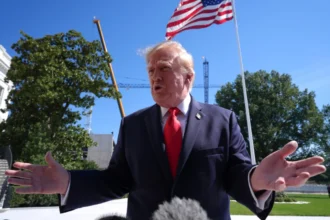
President Trump, in a post on his Truth Social platform, characterized his campaign against Iran as "the most crushing economic operation ever taken against any country." He further warned of "tremendous economic consequences" for any nation found assisting Iran in circumventing U.S. sanctions. These circumvention methods, he detailed, include illicit activities such as oil smuggling, the establishment of swap lines, clandestine cash transfers, the use of exchange houses, flag-of-convenience ship registries, and the creation of front companies.
"It all needs to stop NOW," Trump declared, underscoring the urgency and severity of his administration’s stance.
This aggressive economic posture coincided with a significant diplomatic development in the region. The United Arab Emirates, a critical hub for Iran’s access to essential imports and commercial markets, announced an indefinite trade embargo against Tehran. This move followed accusations that Iran’s military had launched two ballistic missiles targeting Emirati territory.
Nader Habibi, a professor of Middle East economics at Brandeis University, suggested that the U.S. likely played a role in influencing the UAE’s decision. He posited that the U.S. "strongly encouraged or induced" the UAE to impose the trade embargo and indicated that similar pressures might be applied to other Iranian trading partners, with China being the most significant.
Navigating the Complexities of China-Iran Trade
Any U.S. strategy aimed at disrupting the economic ties between China and Iran is expected to encounter substantial obstacles. Data from the analytics firm Kpler indicated that in 2025, China was the purchaser of approximately 80 percent of Iran’s exported oil. However, directly targeting China’s oil refineries presents a complex challenge, as many of these facilities operate independently and have limited reliance on the U.S. financial system.
Furthermore, while the U.S. Treasury has threatened to sanction major Chinese banks involved in processing Iranian funds, such actions could provoke retaliatory measures from Beijing, particularly during a period of delicate diplomatic engagement.
Yu Jie, a senior research fellow at Chatham House’s China, Asia Pacific Programme, expressed skepticism about the effectiveness of Trump’s threats. "Trump’s threat to target Iran’s economic allies won’t alter China’s involvement and the existing trading relationship with Iran," Yu stated.
She further suggested that Trump’s immediate objective might be to stabilize ties with China, aligning with Beijing’s interest in a "temporary truce with Washington." This perspective highlights the strategic calculations at play, where immediate economic pressures are weighed against broader diplomatic objectives.
Musgrave cautioned that while aggressive secondary sanctions could have a significant impact, Trump might be hesitant to jeopardize the broader U.S.-China economic relationship. He characterized the current dynamic as an "economic Cold War," implying a complex interplay of competition and interdependence that complicates the imposition of severe sanctions.
Beijing’s official response to Trump’s economic campaign has been measured but firm. China’s Foreign Ministry spokesman, Lin Jian, stated that further sanctions would "not help to solve the issue." He urged "relevant parties to take responsible measures and solve the issues through diplomatic and political means." This diplomatic stance underscores China’s preference for negotiation and dialogue over unilateral coercive measures.
The U.S. has also sought to maintain a degree of stability in its relations with China ahead of Chinese President Xi Jinping’s planned visit to Washington, a meeting intended to de-escalate tensions. During this and other potential high-level engagements later in the year, discussions are expected to include the prolonged conflict in the Gulf, though Yu noted it "won’t be the most important item."
Russia’s Parallel Economic and Military Ties with Iran
Russia presents a distinct, yet equally challenging, scenario for Washington’s isolationist ambitions. While Russia’s trade volume with Iran is considerably smaller than China’s, Moscow and Tehran have cultivated deep commercial and military ties over several years, specifically designed to circumvent Western sanctions and scrutiny.
In January 2025, the two heavily sanctioned nations formalized their deepening relationship by signing a 20-year partnership treaty. This accord has contributed to a notable increase in their trade volume, reaching $4.8 billion in the first eleven months of 2025, according to Russian Energy Minister Sergey Tsivilev.
Beyond sanctioned oil, Russia and Iran have reportedly engaged in exchanges of weapons and military equipment, often facilitated through maritime routes across the Caspian Sea. A recent report by NBC News, citing a European government document, detailed alleged Russian shipments of "drone components, ammunition and TNT" to Iran via sea. The U.S. has already imposed comprehensive economic sanctions against Russia in response to its actions in Ukraine, making further punitive measures against Russian entities involved in supporting Iran potentially more palatable to Washington but complex to implement without broader international buy-in.
Iran’s Response: "Economic Terrorism" and Diversification
Iran’s Foreign Minister, Abbas Araghchi, vehemently condemned President Trump’s economic campaign, denouncing it as a continuation of Washington’s "failed policies" that would ultimately lead to "further defeat." He characterized the U.S. actions as "economic terrorism" that threatens the global economy and national sovereignty worldwide.
In its pursuit of economic resilience, Iran has increasingly sought to leverage its membership in the BRICS organization, which includes Russia, China, India, Brazil, and other emerging global powers. This strategic alignment aims to open new financial avenues and reduce reliance on Western-dominated financial institutions.
Abdolnaser Hemmati, the governor of Iran’s Central Bank, announced plans for Iran to join the BRICS New Development Bank (NBD). Such a move would provide Iran with greater access to financing outside of Western markets. Furthermore, Hemmati indicated Iran’s belief that BRICS states can conduct transactions in their own currencies, signaling Tehran’s interest in bilateral and trilateral monetary cooperation with fellow BRICS members. The NBD has yet to formally comment on Iran’s potential membership application, which would necessitate an accession process.
Ali Akbar Dareini, an analyst at the Center for Strategic Studies in Tehran, expressed confidence in Iran’s ability to navigate the "suffocating" U.S. sanctions. He concluded that "Trump is stuck in a war he can’t win and he can’t get out of," reflecting a sentiment within Iran of enduring and ultimately overcoming external economic pressures. The ongoing diplomatic and economic maneuvering between the U.S., Iran, and its key international partners underscores the intricate geopolitical landscape and the challenges inherent in unilateral foreign policy initiatives.