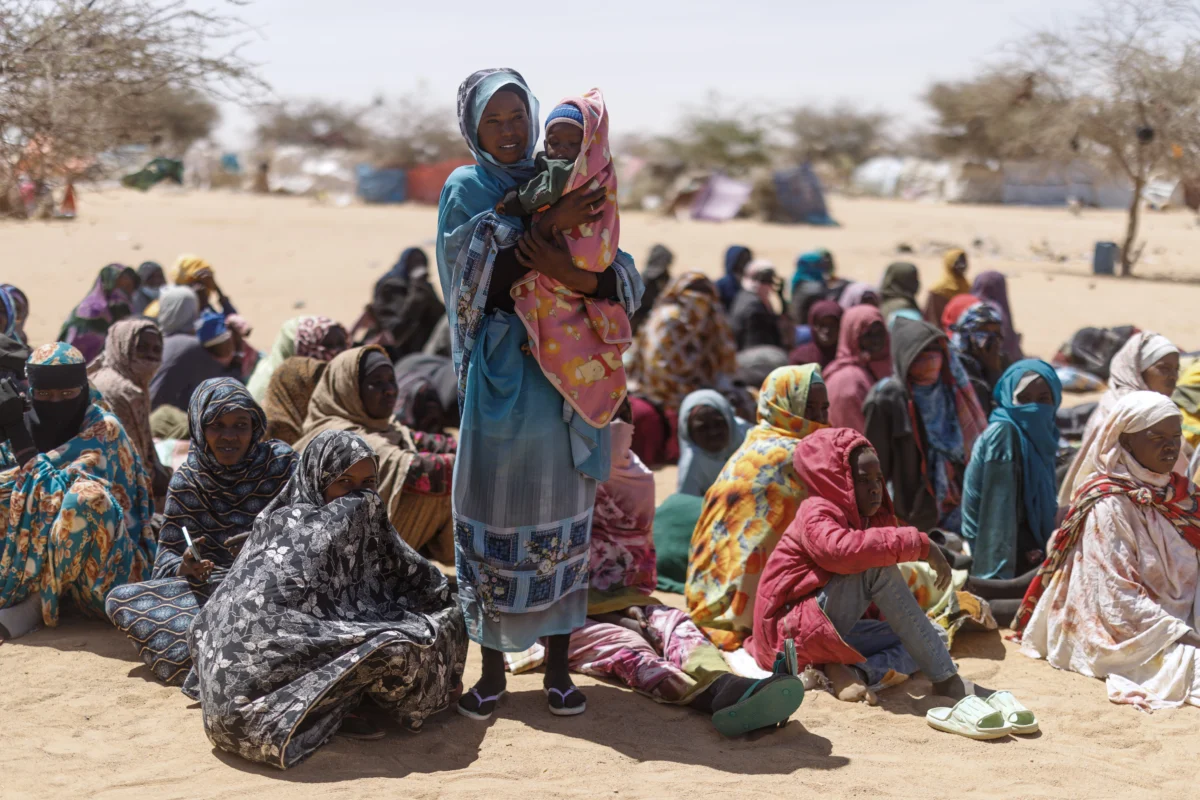
Under the vast, unforgiving skies of Sudan’s Darfur region, a grim daily reality is meticulously being recorded, piece by painstaking piece, by a clandestine network of human rights monitors. Families vanish without a trace, entire villages are reduced to ash, women endure unspeakable sexual violence, and cherished properties are systematically plundered. This systematic devastation is attributed to the paramilitary Rapid Support Forces (RSF), who have seized control of much of western Sudan and have been locked in a brutal conflict with the Sudanese Armed Forces (SAF) since April 2023.
Operating in territories where dissent is met with swift and brutal retribution, these covert monitoring teams, affiliated with Sudan’s National Commission for Human Rights (NCHR), are engaged in a high-stakes mission: documenting the alleged atrocities committed by the RSF. Their goal is to build an irrefutable body of evidence, a legal cornerstone intended to bring justice to the countless civilian victims of this protracted conflict. Their tools are rudimentary—small mobile phones used to capture fleeting but damning evidence under the shadow of constant threat.
Documenting a Campaign of Terror
Rahmatullah Mohammedin Abakar, director of the NCHR’s Darfur division, offered a stark account of the extreme conditions faced by his field teams in an interview. He emphasized that despite pervasive security threats and the constant risk of detection, the teams’ unwavering commitment stems from the NCHR’s fundamental mandate to observe and report on the human rights situation across Sudan. Their operations are characterized by extreme secrecy, relying on a robust network of local informants and employing secure communication channels to evade the RSF’s pervasive surveillance.
These clandestine efforts have revealed a chillingly consistent pattern of ethnic-based violence systematically targeting civilians in every city under RSF control. Abakar described the scale of these atrocities as staggering, detailing mass executions that, he asserted, amount to genocide. The NCHR possesses credible reports of mass graves discovered in el-Geneina and el-Fasher, cities that fell under RSF control in 2023 and 2025, respectively, underscoring the widespread and deliberate nature of the alleged crimes.
Furthermore, the NCHR has meticulously documented nearly 4,000 reported incidents of sexual violence across Darfur. Alarmingly, 20 percent of these victims are girls under the age of 18. This grim tally aligns with a United Nations Office of the High Commissioner for Human Rights report from June 2026, which highlighted the unprecedented brutality and scale of conflict-related sexual violence in Sudan, painting a horrifying picture of the RSF’s alleged conduct.
Corroborating International Investigations into RSF Abuses
The grassroots evidence painstakingly gathered by the NCHR’s secret monitors provides critical corroboration for the findings of several high-profile international investigations into the conflict. These independent probes have reached similar, devastating conclusions regarding the RSF’s alleged actions.
A recent United Nations fact-finding mission concluded that the RSF’s campaign of violence, both during and after its protracted siege of el-Fasher, constituted genocide. The UN investigation documented widespread mass killings, gang rapes, and the deliberate starvation of civilian populations, describing these acts as part of a calculated policy. Investigators reported harrowing accounts from survivors who endured rape in rooms still littered with the bodies of recently killed civilians, including their own family members.
Similarly, Amnesty International has accused the RSF of committing crimes against humanity and engaging in ethnic cleansing in el-Fasher between early 2024 and October 2025. During its prolonged siege of the city, the RSF imposed severe restrictions on humanitarian aid, deliberately creating conditions that led to widespread famine. Residents were reportedly forced to resort to consuming animal feed to survive, a testament to the deliberate deprivation imposed by the paramilitary forces.
Tens of Thousands Detained in RSF Strongholds
Beyond the overt acts of violence and sexual assault, arbitrary detention remains a critical and pervasive crisis within RSF-controlled territories. Abakar reported that in el-Fasher alone, the RSF is currently holding 1,480 civilians in various detention centers. This figure includes 446 children and 360 women, highlighting the indiscriminate nature of the detentions.
The situation is even more dire in Nyala, the capital of South Darfur. Abakar revealed that approximately 10,000 detainees are being held in the city’s Daqris prison, with an overwhelming majority, 9,000, being women. These detentions, often carried out without due process, represent a significant violation of international humanitarian law.
Abakar issued an urgent demand for the immediate release of all detainees, asserting that their continued incarceration without trial is a flagrant violation of international protocols governing armed conflicts. Such actions, he stressed, strip individuals of their fundamental rights and contribute to a climate of pervasive fear and impunity.
A Repeating Cycle of Violence Fueled by Impunity
The conflict that erupted in Sudan in April 2023 has already exacted a horrific toll, claiming tens of thousands of lives and displacing nearly 14 million people. Despite recent military gains by the Sudanese Armed Forces and their allies in West Darfur, the RSF continues to face accusations of perpetrating widespread atrocities in its remaining strongholds. The RSF has consistently denied these allegations, often dismissing them as “manufactured” claims.
Abakar noted that as SAF and allied forces advance towards el-Geneina, they are encountering increasingly damning evidence of human rights abuses in the villages along their path. The continued commission of alleged crimes, even as international scrutiny intensifies, raises profound questions about the efficacy of global accountability mechanisms. The absence of a credible deterrent appears to embolden the RSF to continue its alleged campaign of terror.
The NCHR field teams face immense logistical and security hurdles in their critical race against time to document these crimes. Abakar highlighted the extreme difficulties in accessing sites where violations have occurred and reaching detention centers due to the RSF’s firm territorial control. The paramilitary group and its allied militias have shown a consistent lack of cooperation, further complicating the monitors’ efforts. Moreover, the ongoing active conflict significantly obstructs evidence gathering and renders witness protection an almost insurmountable challenge.
The Legal Cornerstone for Future Justice and Accountability
Despite severe resource shortages and pervasive risks, the meticulous documentation work undertaken by the NCHR’s human rights monitors is indispensable for securing future prosecutions and ensuring accountability. This collected evidence is poised to become the legal cornerstone for any future judicial processes.
Abdul Nasser Salem, a security and crisis management expert and director of the East Africa program at the Sweden-based Fox Research Center, explained the profound challenge these abuses pose to international humanitarian law. He referenced the 1949 Geneva Conventions, which bind all parties to a conflict to respect the right to life and explicitly prohibit extrajudicial killings, torture, arbitrary detention, and assaults on human dignity.
Salem elaborated that the systematic targeting of ethnic groups, mass killings, widespread sexual violence, and unlawful detentions documented by the NCHR likely constitute war crimes and crimes against humanity under the Rome Statute of the International Criminal Court. He emphasized that the field documentation will serve as the foundational evidence for any subsequent legal proceedings, whether at the national or international level. The expert warned that continued impunity not only deprives victims of their fundamental rights but also erodes global faith in the rule of law.
Abakar echoed this urgent sentiment, imploring the international community to actively protect human rights teams operating on the ground and to bolster their vital documentation efforts. He issued a stark warning: without genuine accountability, civilians will remain perpetually trapped in a devastating cycle of violence, with no hope for lasting peace or security.
Al Jazeera made multiple attempts to contact the Rapid Support Forces for comment regarding the documented abuses and allegations. However, no response was received by the time of publication. The paramilitary group has previously denied targeting civilians and has stated that it would hold any violators within its ranks accountable.