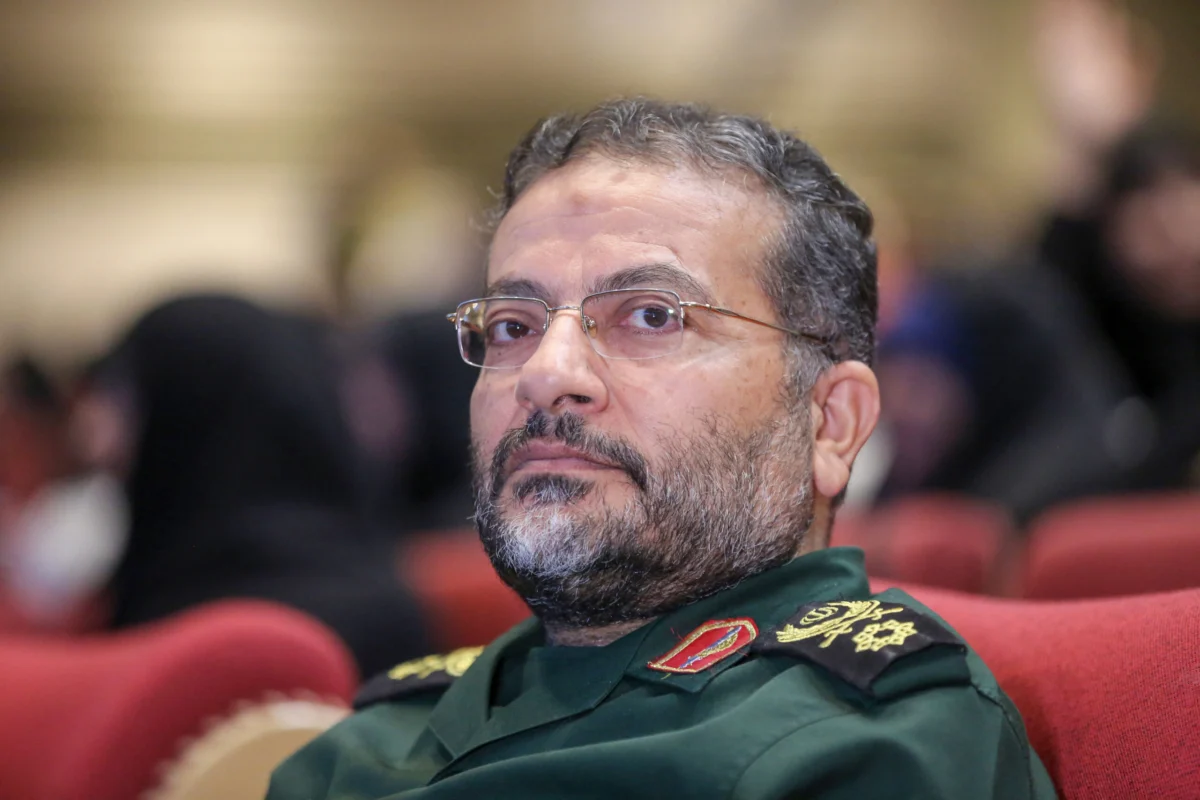
The Israeli military asserted on Tuesday that it has successfully eliminated Gholam Reza Soleimani, the commander of Iran’s Basij militia unit, in a targeted strike within the Iranian capital. The assertion, made via a post on the social media platform X, marks a significant escalation in the ongoing conflict and could represent the highest-profile assassination attributed to Israeli forces since the war’s inception.
High-Stakes Operation in Tehran
According to the Israeli military’s statement, the operation was executed by the Air Force, guided by what it described as "precise intelligence from Military Intelligence." The strike reportedly occurred "in the heart of Tehran," resulting in the death of Soleimani, who had reportedly commanded the Basij unit for the past six years.
The Basij, officially known as the Organization for Mobilization of the Oppressed, is a paramilitary volunteer militia operating under the umbrella of Iran’s Islamic Revolutionary Guard Corps (IRGC). It plays a crucial role in domestic security, often deployed to quell protests and enforce social and political norms within Iran.
Iran’s Silence and Historical Parallels
As of Tuesday, Iranian authorities had not officially confirmed or denied the Israeli claim. This silence, common in such sensitive situations, leaves the veracity of the alleged assassination pending independent verification.
If the Israeli claim is substantiated, Soleimani’s death would indeed be a pivotal event, potentially the most significant targeted killing in the war since the assassination of Iran’s former Supreme Leader, Ali Khamenei. Reports indicate Khamenei and several family members were killed in combined United States-Israeli strikes on February 28, the very day the current conflict commenced. This historical precedent underscores the gravity of the current Israeli assertion.
Soleimani’s Background and International Sanctions
Information available from the U.S. Treasury Department indicates Gholam Reza Soleimani was born in 1965. His alleged role in suppressing dissent through his leadership of the Basij has previously led to his designation for sanctions by the United States, the European Union, and other international bodies. These sanctions highlight his position within Iran’s security apparatus and his perceived involvement in human rights violations.
The Basij militia has been a recurring point of contention between Iran and Western nations, particularly for its documented use of force against civilian demonstrators. Soleimani’s leadership of this organization would have placed him at the forefront of such efforts, making him a significant figure within the IRGC’s broader network.
The Basij: A Pillar of Iranian Internal Security
To understand the potential implications of Soleimani’s alleged assassination, it is crucial to examine the role of the Basij. Established in 1979 by Ayatollah Ruhollah Khomeini shortly after the Islamic Revolution, the Basij was initially conceived as a popular mobilization force for national defense. However, its mandate quickly expanded to encompass internal security and social control.
Over the decades, the Basij has evolved into a vast network with millions of members, operating in various sectors of Iranian society, including universities, workplaces, and neighborhoods. Its operatives are often the first responders to protests and demonstrations, tasked with dispersing crowds and apprehending perceived dissidents. The organization has been instrumental in maintaining the ruling clerical establishment’s grip on power, particularly during periods of social unrest.
The IRGC, to which the Basij is subordinate, is itself a powerful entity within Iran, controlling significant portions of the country’s economy and military might. Soleimani’s command of the Basij would have made him a key figure in implementing the IRGC’s directives on the ground, particularly concerning internal security matters.
Escalation Dynamics and Regional Ramifications
The alleged Israeli strike against a high-ranking Iranian security official within Tehran itself represents a bold and potentially provocative act. Such actions inherently carry the risk of retaliatory measures from Iran, which could further destabilize an already volatile region.
The ongoing war, now in its fifth month, has seen numerous engagements between Israel and Iran-aligned groups, primarily in the northern Israeli front with Hezbollah in Lebanon, and in the Red Sea with the Houthi movement in Yemen. However, direct strikes within the heart of Iran, targeting its senior security leadership, suggest a deepening of the conflict’s direct confrontation.
Analysts suggest that such targeted assassinations are often aimed at disrupting an adversary’s command and control structures, degrading their operational capabilities, and signaling resolve. For Israel, eliminating a figure like Soleimani could be seen as a strategic move to weaken Iran’s ability to direct and support its proxy forces engaged in attacks against Israel.
Impact on International Relations and Future Conflict
The confirmation or denial of this assassination claim will undoubtedly have significant repercussions on international relations. If confirmed, it could lead to heightened diplomatic tensions between Israel and Iran, and potentially draw in other global powers.
The United States, a key ally of Israel, has consistently condemned Iran’s destabilizing activities in the region and has its own sanctions regime against Iranian officials and entities. A confirmed strike by Israel on a sanctioned Iranian commander would likely be met with a complex diplomatic response, balancing support for Israeli security with efforts to avoid a broader regional conflagration.
The European Union, which also has sanctions in place, would likely issue strong statements condemning the act if confirmed, while also calling for de-escalation. Iran’s response, whether through direct retaliation or by escalating support for its proxies, will be closely watched by global powers.
The Psychological and Political Dimensions
Beyond the immediate military and political implications, the alleged assassination carries significant psychological and political weight. For the Iranian regime, the death of a commander responsible for internal security could be a blow to its image of invincibility and control. It could also embolden domestic opposition, though the regime’s apparatus is adept at managing such narratives.
For Israel, such an operation, if successful, would be portrayed as a demonstration of its intelligence capabilities and its unwavering commitment to neutralizing threats originating from Iran. It could also serve to rally domestic support and project strength in the face of ongoing hostilities.
The war has already seen a devastating human toll, with widespread destruction and displacement. Any further escalation, particularly involving direct strikes on leadership figures, raises the specter of an even more protracted and destructive conflict. The international community’s efforts to mediate a de-escalation and find a diplomatic resolution will face renewed challenges in the wake of such events.
Uncertainty and the Path Forward
The developing nature of this story means that many questions remain unanswered. The ultimate confirmation of Gholam Reza Soleimani’s death, the precise circumstances of the strike, and Iran’s official response are all crucial elements that will shape the narrative and the future trajectory of the conflict.
The role of intelligence agencies in verifying such claims is paramount. In situations of high geopolitical tension, disinformation and propaganda are often employed by all sides. Therefore, a cautious approach to reporting and a reliance on credible, corroborated information are essential.
The coming days and weeks will be critical in assessing the full impact of this alleged assassination. The actions taken by both Israel and Iran, as well as the responses from regional and international actors, will determine whether this event leads to a further spiral of violence or opens avenues for de-escalation. The world watches closely as the conflict continues to unfold, with the potential for significant shifts in its dynamics.