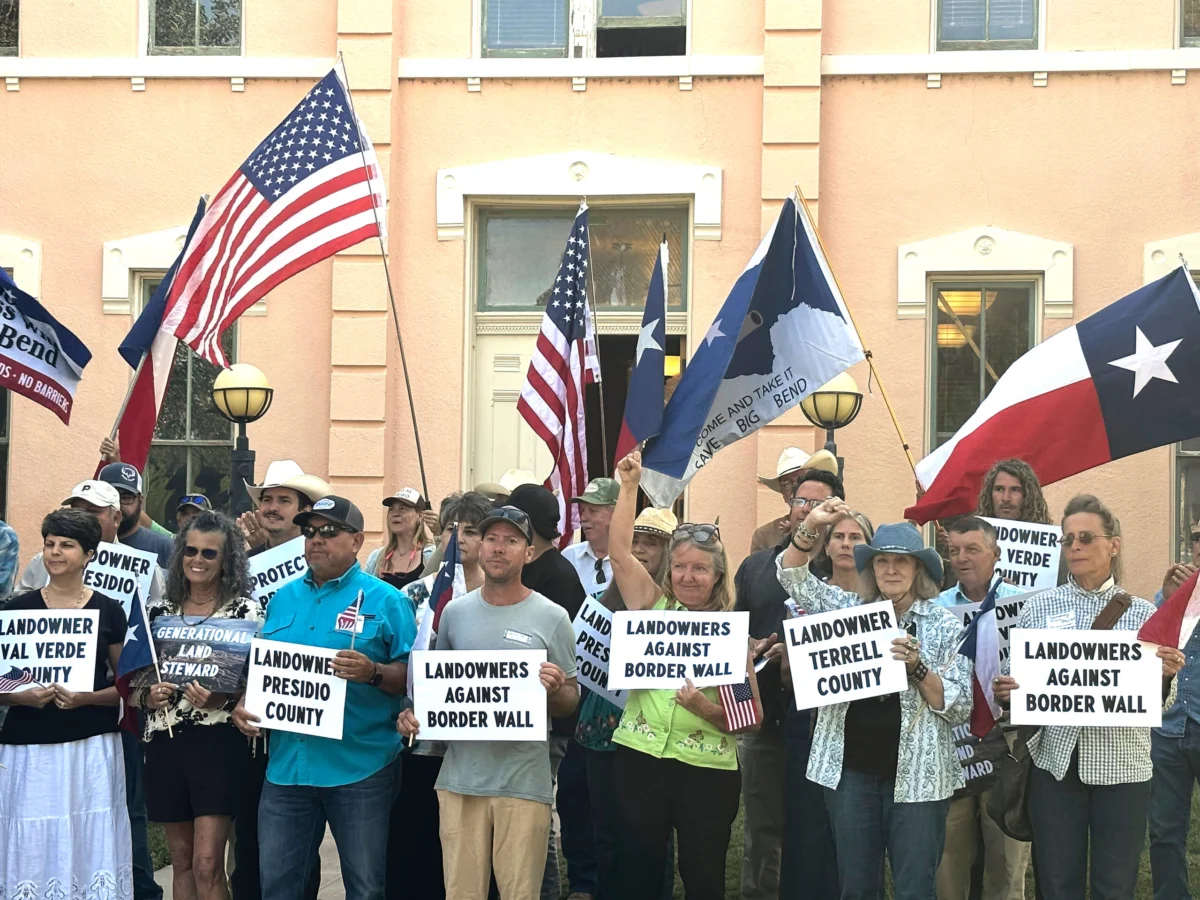
A coalition of Texas landowners, ranchers, businesses, and a conservation organization has filed a lawsuit seeking to halt the construction of President Donald Trump’s signature border wall in the remote Big Bend region of Texas, a move that highlights escalating legal and public opposition to the controversial project. The legal challenge, announced Monday, asserts that the administration’s justifications for accelerated construction in this specific area are unfounded and ignore the profound environmental and cultural significance of the land.
Legal Battle Erupts Over Big Bend Border Wall
The lawsuit, spearheaded by the non-profit Conserve Big Bend and joined by six individual landowners, represents a significant escalation in the fight against the Trump administration’s ambitious plan to fortify the U.S.-Mexico border. This legal action underscores the deep-seated resistance the wall project has encountered from diverse groups across several states, including Indigenous communities, environmental advocates, and local residents who view the barrier as a destructive imposition on their lands and heritage.
David Keller, an archaeologist and historian specializing in the Big Bend area and a resident of the region, articulated the sentiment driving the lawsuit during a press conference. "Trump officials were woefully unprepared for the hornet’s nest they stirred up because they had no idea how much we love this place," Keller stated, emphasizing the emotional and historical connection residents have to the rugged landscape. He further elaborated, "For us, the Big Bend is not an empty place on the map. It is our home."
Ramping Up Border Security Efforts
The legal challenge comes as the Trump administration intensifies its $46 billion initiative to construct a comprehensive border security system. This plan involves erecting a formidable barrier along the approximately 2,000-mile U.S.-Mexico border, comprising a mix of 30-foot steel bollard walls, vehicle barriers, and advanced surveillance technology. The stated objective is to curb the flow of undocumented immigrants and illicit trafficking.
However, the implementation of this expansive project has been fraught with controversy and legal hurdles. In Arizona, federal authorities are proceeding with construction that encroaches upon land belonging to the Tohono O’odham Nation. This Indigenous tribe has unequivocally stated its opposition to the barrier, deeming it both unnecessary and harmful to their ancestral territories.
Bipartisan Opposition and Environmental Concerns in Texas
In Texas, the border wall effort has been met with a wave of lawsuits and widespread opposition that transcends political divides. Local sheriffs, elected officials, tour operators, environmental organizations, and landowners have all voiced their concerns and actively challenged the administration’s approach. This broad-based resistance paints a complex picture of public sentiment regarding the border wall’s necessity and its impact.
A critical aspect of the administration’s strategy to expedite wall construction has been the invocation of national security waivers. These waivers permit the bypassing of numerous environmental, archaeological, and wildlife protection statutes. The Department of Homeland Security has cited areas of "high illegal entry" as justification for these expedited measures, aiming to streamline the process and overcome regulatory obstacles.
Challenging the "High Illegal Entry" Justification
The plaintiffs in the Big Bend lawsuit directly challenge the administration’s assertion that the region qualifies as an area of urgent need due to high illegal crossings. Their legal filing presents data from U.S. Customs and Border Protection, indicating that the Big Bend sector, despite encompassing roughly 500 miles of the border – approximately one-quarter of the entire U.S.-Mexico frontier – accounts for a disproportionately small percentage of border arrests. According to the lawsuit, this region represented only about 1 percent of total arrests along the border.
Historical Context and Cultural Significance of Big Bend
The Big Bend region is renowned for its vast, rugged terrain, encompassing dramatic mountain ranges, desert landscapes, and the winding Rio Grande. This unique geography has historically presented natural barriers to migration and smuggling, contributing to lower apprehension rates compared to other more accessible border sectors. The area is also rich in archaeological sites, with evidence of human habitation dating back thousands of years. These sites hold immense historical and cultural value, potentially offering insights into the lives of ancient peoples and early frontier settlers.
Conserve Big Bend, the non-profit organization leading the lawsuit, emphasizes the ecological fragility of the region. The construction of a border wall could fragment wildlife habitats, disrupt delicate ecosystems, and impede the movement of animals critical for biodiversity. The organization, along with its supporters, argues that the environmental and cultural heritage of Big Bend is of paramount importance and should not be sacrificed for a border security measure that is demonstrably less effective in this particular area.
Implications of Land Seizures and Eminent Domain
Beyond the environmental and historical arguments, the border wall project often involves the use of eminent domain – the government’s power to take private property for public use, even if the owner is unwilling to sell. This process has been a source of significant contention for landowners along the border. Many express deep resentment over the potential loss of their ancestral lands, which have been in their families for generations, and the disruption to their livelihoods as ranchers and farmers.
The legal battles initiated by landowners like those in Big Bend raise fundamental questions about property rights, the balance between national security and individual liberties, and the long-term consequences of large-scale infrastructure projects on fragile environments and communities. The sheer scale of the border wall project necessitates extensive land acquisition, and the legal challenges highlight the complexities and potential injustices inherent in such endeavors.
Broader Impact on Border Communities
The construction of a border wall has far-reaching implications for communities living along the U.S.-Mexico frontier. For decades, these areas have been characterized by a unique cultural exchange and a degree of interdependence between neighboring communities on both sides of the border. The physical barrier can disrupt established social networks, hinder cross-border commerce, and alter the very fabric of life in these border towns and rural areas.
Furthermore, the allocation of billions of dollars towards wall construction has drawn criticism from those who argue that these resources could be better utilized for other pressing needs, such as improving infrastructure, addressing the root causes of migration, or investing in border communities themselves. The debate over the border wall is therefore not just about physical security, but also about national priorities and the kind of society the United States aims to be.
The Path Forward: Legal Challenges and Political Debate
The lawsuit filed by Conserve Big Bend and the Texas landowners represents just one front in a larger, ongoing struggle against the border wall. Similar legal actions have been filed in other states, and political opposition continues to simmer. The outcome of these legal battles could have significant implications for the future of border security policy and the administration’s ability to complete its signature project.
As the Trump administration pushes forward with its border wall agenda, the resistance from landowners, environmentalists, and Indigenous groups underscores the deep divisions and complex considerations surrounding this monumental undertaking. The courts will ultimately play a crucial role in determining the legality and feasibility of the border wall, while the public debate continues to shape the national conversation about immigration, security, and the preservation of natural and cultural landscapes. The Big Bend challenge, in particular, focuses attention on the administration’s claims of necessity in areas where evidence suggests otherwise, potentially setting a precedent for future legal confrontations.