The Liberal Democrats’ annual conference in Brighton has become an unexpected staging ground for a political realignment as several prominent young Tory defectors explore Lib Dems conference activities and signal a growing exodus from the Conservative Party’s rightward-leaning leadership. Among those navigating the Brighton Centre this week is 21-year-old Cody Butler, the former chair of the One Nation Conservative Network, who officially joined the Liberal Democrats just days ago after concluding that his former party no longer had room for centrists or environmental advocates. Butler’s transition from a lifelong "Tory boy" to a Liberal Britain tote-bag-carrying activist highlights a burgeoning trend of moderate youth leaders who feel alienated by the current trajectory of British conservatism.
The shift comes at a critical juncture for U.K. politics, as the Liberal Democrats celebrate their most successful election cycle in over a century. By securing 72 seats in the last general election, the party has re-established itself as a formidable third force, largely by cannibalizing the Conservative "Blue Wall" in southern England. The presence of young Tory defectors at the conference suggests that the party’s appeal is expanding beyond tactical voting and into the realm of ideological conversion for the next generation of political organizers.
The Motivation Behind Young Tory Defectors Who Explore Lib Dems Conference
For many of these young activists, the decision to defect was not a sudden impulse but the result of a multi-year drift within the Conservative Party toward populist and hard-right positions. Cody Butler described his arrival at the Brighton conference as "odd" but necessary, comparing the experience of finding a new political home to "finding a new family." Raised within the infrastructure of a Conservative association, Butler represented the traditional "One Nation" wing of the party—a faction that emphasizes social obligation, moderate social policy, and international cooperation.
However, the rise of Kemi Badenoch and other right-wing figures within the Conservative hierarchy has signaled a narrowing of the "big tent" philosophy. According to the defectors, the party’s increasing hostility toward net-zero climate targets and its skepticism regarding the European Convention on Human Rights (ECHR) have created an environment where moderate voices are effectively silenced. Butler noted that those concerned with the climate crisis and conservation are increasingly made to feel unwelcome, prompting a search for an alternative platform that aligns with their core values.
Joining Butler in this transition is 26-year-old Josh Bancroft, a former Conservative councillor from Cannock Chase. Bancroft, who joined the Liberal Democrats earlier this month, argued that his personal politics have remained consistent while the Conservative Party has moved the goalposts. He stated that moderates are being "forced out" of the party they once called home, suggesting that the Liberal Democrats are the natural successor for those who believe in centrist, evidence-based governance.
A Growing Movement: The Rise of One Nation Liberals
The influx of these young leaders has led to the formation of a new internal pressure group: the One Nation Liberals. This organization aims to provide a structured environment for former Conservatives who still hold "One Nation" values but believe those values can only be realized through the Liberal Democrat platform. Organizers of the group suggest that their numbers are poised to grow as more members of the Conservative parliamentary party and its youth wing monitor the ongoing leadership contest and the potential for further ideological purges.
Political analysts suggest that the "Badenoch factor" is a significant catalyst for this movement. As Kemi Badenoch moves to consolidate power, her rhetoric regarding the "purge" of those supporting net-zero or the ECHR has sent shockwaves through the party’s moderate wing. High-profile figures like former minister Gavin Barwell and former cabinet member Grant Shapps have already faced internal pushback or have been blocked from standing as candidates, reinforcing the narrative that the Conservative Party is undergoing a fundamental transformation into a more ideologically rigid entity.
How Young Tory Defectors Explore Lib Dems Conference and Impact Party Strategy
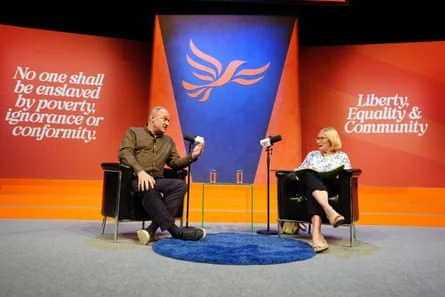
Liberal Democrat leader Ed Davey has been quick to capitalize on this internal Conservative strife. During a question-and-answer session on the first full day of the conference, Davey repeatedly referenced Badenoch, positioning the Liberal Democrats as the only viable alternative for voters and activists who value climate action and human rights. Davey’s strategy appears to be working; the party is currently operating with a level of confidence not seen since the pre-coalition era of the early 2010s.

While the Liberal Democrats are currently hovering around 11% in national polling, their geographical concentration gives them outsized influence. Of the 27 seats where the party finished in second place during the 2024 election, 20 are currently held by Conservatives. This "orange wall" strategy is designed to systematically dismantle the Tory presence in affluent, suburban areas where moderate voters are most likely to be repelled by right-wing populism.
The young Tory defectors who explore Lib Dems conference events are viewed as essential assets in this strategy. These individuals bring with them deep knowledge of Conservative campaigning techniques, local association structures, and the specific grievances of the moderate electorate. By integrating these defectors into their ranks, the Liberal Democrats are not just gaining individual members; they are gaining a roadmap for further incursions into Conservative territory.
The Shift to a Multi-Party Reality
The defection of young leaders like Butler and Bancroft also reflects a broader change in the British political landscape. For decades, the U.K. was effectively a two-party system where those seeking political influence felt compelled to choose between Labour or the Conservatives. Butler argues that this "reality doesn’t exist anymore," noting that the rise of a five-party system has made the Liberal Democrats a viable "kingmaker" in future governments.
This perspective is bolstered by the Liberal Democrats’ refusal to rule out future arrangements with the Labour Party. While Ed Davey has explicitly ruled out any pact with the Conservatives, he has been more ambiguous regarding Labour. By maximizing their number of MPs, the Liberal Democrats hope to hold the balance of power, potentially dictating terms on major policy issues such as electoral reform, environmental regulations, and economic strategy. For a young activist, the prospect of being part of a party that "writes the budget" while the Conservatives remain in opposition is a powerful draw.
Reactions and the Road Ahead
The Conservative response to these defections has been a mix of dismissal and doubling down on current rhetoric. Some party loyalists have labeled the defectors as "careerists" or "Tories in name only," arguing that their departure allows for a more unified and ideologically pure party. However, more pragmatic voices within the Conservative ranks warn that losing young, capable organizers to a direct rival is a recipe for long-term electoral decline.
As the Liberal Democrat conference continues, the focus remains on whether this trickle of defections will turn into a flood. The One Nation Liberals are actively recruiting, and many eyes are on the upcoming Conservative party conference to see how the leadership candidates address the concerns of the moderate wing. If the rhetoric remains exclusionary, the Liberal Democrats stand ready to welcome a new wave of members.
For Cody Butler and his peers, the Brighton conference is more than just a political event; it is a declaration of independence from a party they believe has lost its way. Their presence serves as a reminder that political loyalty is increasingly fluid in a post-Brexit, climate-conscious era. As these young Tory defectors explore Lib Dems conference halls and engage with their new colleagues, they are not just changing their party affiliation—they are attempting to redraw the map of British politics for the next generation.
The long-term impact of this shift will likely be measured in the "Blue Wall" constituencies during the next election cycle. If the Liberal Democrats can successfully integrate these former Conservatives and use their insights to win over moderate voters, the Conservative Party may find itself permanently locked out of the suburban heartlands that were once its most reliable strongholds. For now, the "new family" found by Butler and Bancroft in Brighton represents a significant victory for Ed Davey’s party and a sobering warning for the Conservative leadership.