In a landmark legal reversal that has reignited long-standing sectarian tensions, a loyalist parade in Northern Ireland was given the go-ahead as an almost 30-year ban was overturned in a series of dramatic, late-night court hearings. The decision, finalized in the early hours of Sunday morning, clears the way for the Orange Order to march through the predominantly nationalist Garvaghy Road in Portadown. The move has prompted immediate warnings from political leaders and judicial figures who fear the event could trigger a return to the widespread civil unrest that defined the region’s past.
The legal battle reached its climax just hours before the scheduled 8:00 a.m. start time for the procession. After a marathon series of appeals and emergency sittings, the judiciary determined that a previous injunction to stop the march was legally flawed. The ruling marks the first time since the late 1990s that such a demonstration has been permitted on this specific stretch of road, a location that remains a potent symbol of Northern Ireland’s divided history.
The Legal Battle to Overturn the Decades-Long Ban
The path to the current crisis began on Saturday morning during a five-hour hearing at a special sitting of the High Court. Justice Patricia Smyth initially issued an order to temporarily suspend the parade, expressing grave concerns about the stability of the region. During the proceedings, Smyth urged all involved parties to "step back from the abyss" and prioritize the collective safety of the public over political or traditional interests. Her ruling was seen as a measure to prevent the escalation of a dispute that has historically led to violence.
However, the legal landscape shifted rapidly as Saturday night progressed. At approximately 11:30 p.m., the Court of Appeals convened to review the injunction. Lady Chief Justice Siobhan Keegan ruled that the initial decision to block the march had "unfortunately erred in law." This assessment paved the way for a final emergency hearing in the High Court, which commenced at 12:20 a.m. on Sunday before Justice Michael Humphreys.
Justice Humphreys acknowledged the "unusual if not unprecedented circumstances" of a court sitting at 1:45 a.m. to decide on a public event scheduled to begin only six hours later. In his final decision to dismiss the application to stop the march, Humphreys cited established case law regarding the autonomy of public bodies. He argued that the court must respect the judgment of administrative entities like the Parades Commission, noting that their decisions should not be lightly interfered with unless they are found to be fundamentally unreasonable.
Historical Context: The Drumcree Conflict and the Garvaghy Road
To understand why the loyalist parade in Northern Ireland given go-ahead as almost 30-year ban overturned is so controversial, one must look back to the summer of 1998. The Garvaghy Road in Portadown was the site of the infamous Drumcree standoff, a period of intense sectarian violence that followed the banning of an Orange Order march through the Catholic area. The standoff became a focal point of "The Troubles," resulting in massive riots, road closures, and a heavy military presence that lasted for years.
For 28 years, the Parades Commission and the courts maintained a ban on the route to preserve a fragile peace. The residents of the Garvaghy Road, who are primarily nationalist and Catholic, have long argued that the marches are a form of sectarian intimidation. Conversely, the Orange Order and its supporters view the right to march as a fundamental expression of their Protestant culture and civil liberties.
The 1998 violence led to the establishment of the Parades Commission, an independent body tasked with mediating these disputes. For nearly three decades, the commission consistently ruled that the potential for public disorder outweighed the right to march on that specific route. The sudden reversal of this precedent has left community leaders on both sides of the divide scrambling to manage the fallout.
Political Fallout and Reactions from Northern Ireland Leaders
The political reaction to the news has been swift and divided along traditional party lines. Michelle O’Neill, the First Minister of Northern Ireland and a senior member of Sinn Féin, condemned the court’s decision in scathing terms. She described the move to force an "unwanted orange march" through the Garvaghy Road as "disgraceful."
"This march is steeped in a history of hate, sectarian violence, and murder," O’Neill stated following the appeal decision. She reaffirmed her party’s support for the local residents, stating that there is "no going back" to the era of forced marches. Sinn Féin leader Mary Lou McDonald echoed these sentiments, labeling the court’s ruling as "utterly reckless" given the delicate state of community relations.

On the other side of the political spectrum, Unionist leaders have defended the right of the Orange Order to proceed. Carla Lockhart, a Democratic Unionist Party (DUP) Member of Parliament, insisted that the nationalist residents had "nothing to fear" from the Sunday morning procession. Unionist advocates argue that the march is a peaceful tradition and that the legal system has finally recognized their right to assembly after decades of what they characterize as unfair restriction.
Security Concerns and the Risk of Sectarian Violence
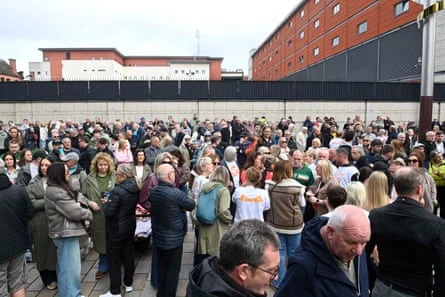
As news of the overturned ban spread, security forces across Northern Ireland were placed on high alert. The Police Service of Northern Ireland (PSNI) faces the daunting task of policing a flashpoint area with very little lead time. During the court hearings, it was revealed that a request had already been made for a counter-protest, with initial estimates suggesting up to 5,000 people might attend. Although that number was later revised to 300, the potential for spontaneous mobilization remains high.
The Parades Commission has attempted to mitigate the risk by placing strict conditions on the march. The procession is limited to just 35 participants and must begin promptly at 8:00 a.m. While these restrictions aim to minimize the physical footprint of the parade, they do not address the symbolic weight of the route itself. Justice Smyth’s warning that this "long-running dispute has the potential to escalate" reflects a broader fear that a single morning event could unravel years of progress in community relations.
In London, British government officials have called for restraint. Prime Minister Andy Burnham appealed to local leaders to "work calmly" through the weekend, while Northern Ireland Secretary Chris Bryant emphasized the need for "cool heads." Bryant noted that while the region has "withstood many moments of sharp disagreement," the current situation requires a high degree of civic responsibility to prevent violence.
The Role of the Parades Commission and Judicial Review
The core of the legal debate rests on the authority of the Parades Commission. In his early-morning ruling, Justice Humphreys noted that the commission appeared to have weighed the evidence from relevant sources and arrived at a reasoned decision. Under the law, a court can only overturn such a decision if it meets the "Wednesbury unreasonableness" threshold—meaning the decision is so irrational that no reasonable authority could have ever come to it.
In this instance, the court found that the threshold for intervention had not been met. This highlights a significant shift in how the judiciary views the balance between public order and the right to protest. For years, the threat of violence was often cited as a primary reason to uphold bans. However, the recent rulings suggest a stricter adherence to the procedural validity of the commission’s decisions, even when those decisions carry significant social risks.
Critics of the decision, including SDLP leader Claire Hanna, have described the plan as "provocative." Hanna expressed sympathy for the residents of the Garvaghy Road, accusing "bad faith actors" of being intent on reopening the traumas of the past. The tension between legal proceduralism and the lived reality of community trauma remains at the heart of the Northern Ireland peace process.
Broader Implications for Northern Ireland’s Peace Process
The fact that a loyalist parade in Northern Ireland given go-ahead as almost 30-year ban overturned has become a national crisis illustrates the fragility of the Good Friday Agreement’s legacy. While the region has moved away from the daily violence of the 20th century, the "marching season" remains a period of annual tension. The Garvaghy Road dispute, in particular, is a barometer for the health of the power-sharing government in Stormont.
If the parade proceeds without violence, it may be seen by some as a sign of a maturing democracy where even the most contentious traditions can be accommodated. However, if clashes occur, it could lead to a protracted period of political instability. The involvement of the highest levels of the judiciary in a 2:00 a.m. hearing underscores the gravity of the situation and the fear that Northern Ireland is once again standing at a crossroads.
As the 8:00 a.m. deadline approaches, the eyes of the international community are on Portadown. The ability of the PSNI to maintain order and the willingness of community leaders to prevent escalation will determine whether this weekend is remembered as a legal footnote or a catalyst for a new era of unrest. For the residents of the Garvaghy Road and the members of the Orange Order, the stakes could not be higher.