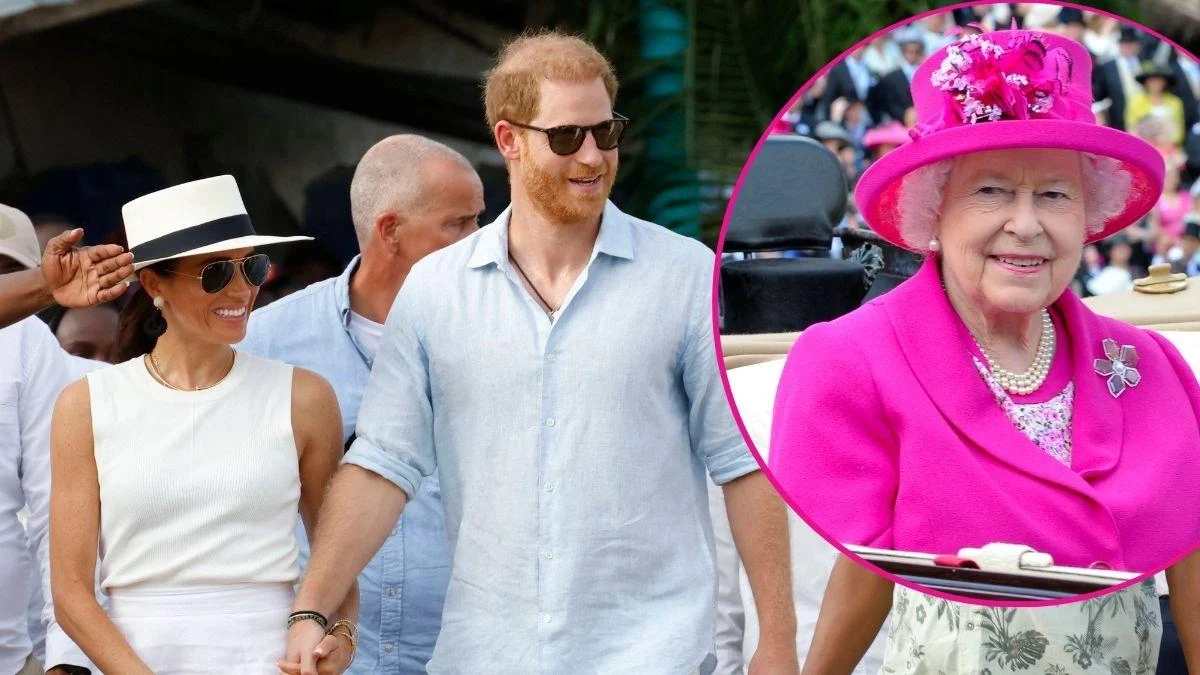
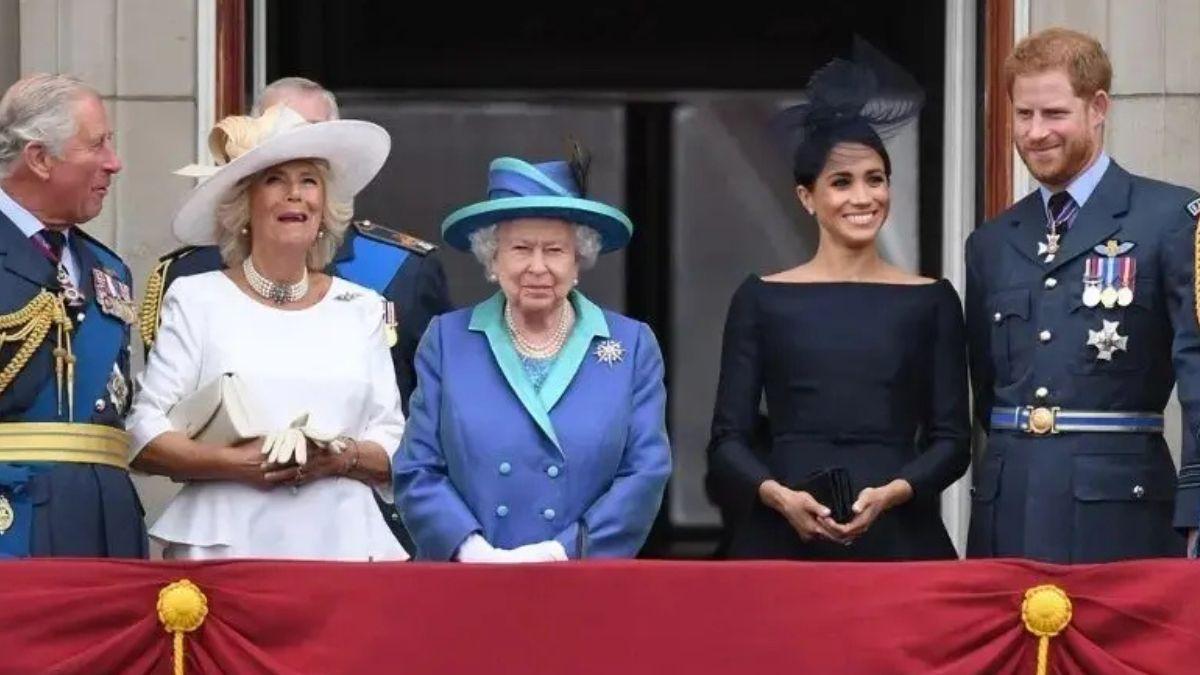
A newly published biography suggests that the complex relationship between Meghan Markle and Prince Harry significantly contributed to the personal distress experienced by Queen Elizabeth II during the final years of her historic reign. Royal biographer Hugo Vickers’s account details a monarch burdened by various family and political issues, with the actions of the Duke and Duchess of Sussex reportedly weighing heavily on her mind.
According to Vickers, Queen Elizabeth, who passed away in September 2022 after seven decades on the throne, found herself navigating a challenging period marked by numerous internal and external pressures. The book highlights "family problems with Prince Harry and the then-Prince Andrew, and an increasingly maverick Prime Minister in Boris Johnson" as key sources of the Queen’s concern. This period saw the monarch grappling with significant shifts within her family and the political landscape, testing her renowned resilience.
The Queen’s Private Concerns Regarding the Sussexes
Vickers’s biography offers a rare glimpse into the Queen’s private anxieties, specifically noting her interactions with her grandson, Prince Harry. The author claims that whenever Prince Harry would call his grandmother, she would request her lady-in-waiting to remain with her. This detail suggests a need for emotional support or perhaps a witness during these sensitive conversations, underscoring the gravity of the issues being discussed. The book emphasizes that "the distress the Sussexes caused the Queen in the last years of her life cannot be overestimated," painting a picture of a sovereign deeply affected by her grandson’s choices and their wider implications for the Royal Family.
The biographical insights are particularly compelling given Vickers’s long-standing connection to the Royal Family. His extensive access and observations, stemming from over 40 meetings with the Queen during the last 55 years of her life, lend considerable weight to his assertions. His perspective positions him as an informed observer of the monarchy’s inner workings, especially during pivotal periods of transition and turmoil.

Early Royal Romance and Unheeded Advice
The narrative traces the origins of this distress back to Meghan Markle’s introduction to the Royal Family. The American actress began dating Prince Harry in mid-2016, a romance that quickly captivated global attention. The speed and intensity of their relationship, according to Vickers, prompted a rare piece of advice from the Queen herself. The monarch reportedly suggested that Harry should consider waiting a year before proceeding with marriage.
However, Prince Harry did not heed his grandmother’s counsel. Instead, the couple’s engagement was announced in November 2017, just over a year after their relationship became public. The wedding followed swiftly, taking place in May 2018. This accelerated timeline, contrary to the Queen’s subtle guidance, is presented as an early indicator of Harry’s independent spirit and, perhaps, a sign of future divergences from established royal protocols.

The Grand Nuptials and the Question of Permission
The wedding of Prince Harry and Meghan Markle was a global spectacle, held at St. George’s Chapel at Windsor Castle. It drew a dazzling array of celebrity guests and numerous members of the British Royal Family, signifying a moment of modernity and optimism for the monarchy. Despite the public celebration, the book implies that underlying tensions were already beginning to manifest.
Prince Harry himself later recounted his experience of seeking the Queen’s blessing for his marriage in his 2023 memoir, Spare. He detailed a somewhat unconventional request, made in the middle of a field where the Queen was with her hunting dogs. Harry described the Queen’s initial response as somewhat blunt, yet ultimately affirmative. "I saw her waiting for me to speak, and not waiting patiently. Her face radiated: ‘Out with it,’" Harry wrote. He continued, describing how he explained the need for her permission to propose. The Queen’s eventual reply, "Well, then, I suppose I have to say yes," was ultimately interpreted by Harry as her granting permission, albeit with a characteristic lack of effusiveness. This anecdote from Harry’s own account offers a glimpse into the dynamic between grandson and monarch, even as the new biography sheds light on the Queen’s broader concerns.
Escalating Tensions and the ‘Megxit’ Aftermath
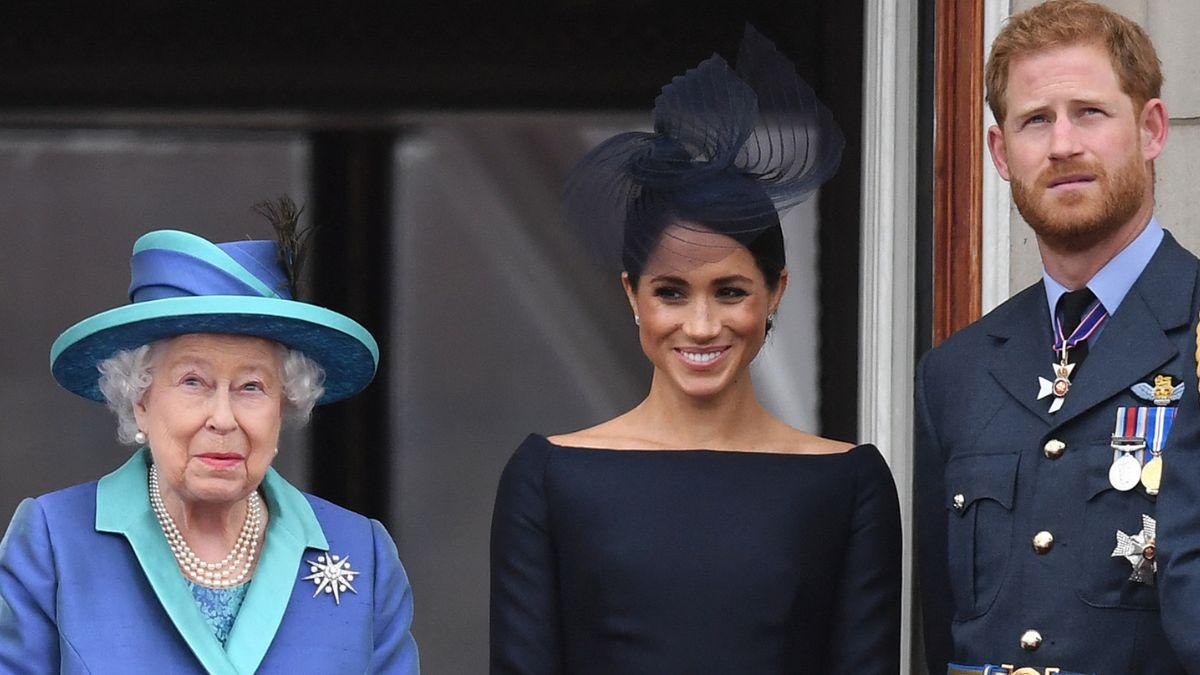
The period following the wedding saw a rapid escalation of events that would profoundly reshape the Royal Family. The Duke and Duchess of Sussex, as they became known, embarked on royal duties, but they also faced intense media scrutiny, particularly directed at Meghan. Reports of discontent and a desire for greater privacy and financial independence began to surface, culminating in their shocking announcement in January 2020 that they intended to step back as senior members of the Royal Family. This decision, dubbed "Megxit" by the media, sent shockwaves through the institution and the public alike.
The Queen, known for her steadfast commitment to duty and the stability of the monarchy, was reportedly deeply affected by this development. The Sandringham Summit, a hastily arranged meeting involving the Queen, Prince Charles, Prince William, and Prince Harry, was convened to discuss the Sussexes’ future roles. The outcome was a compromise: Harry and Meghan would relinquish their HRH titles for official purposes, cease receiving public funds, and repay renovation costs for their Frogmore Cottage residence. They subsequently relocated to California, effectively severing their direct ties to the working monarchy.
Broader Implications for the British Monarchy
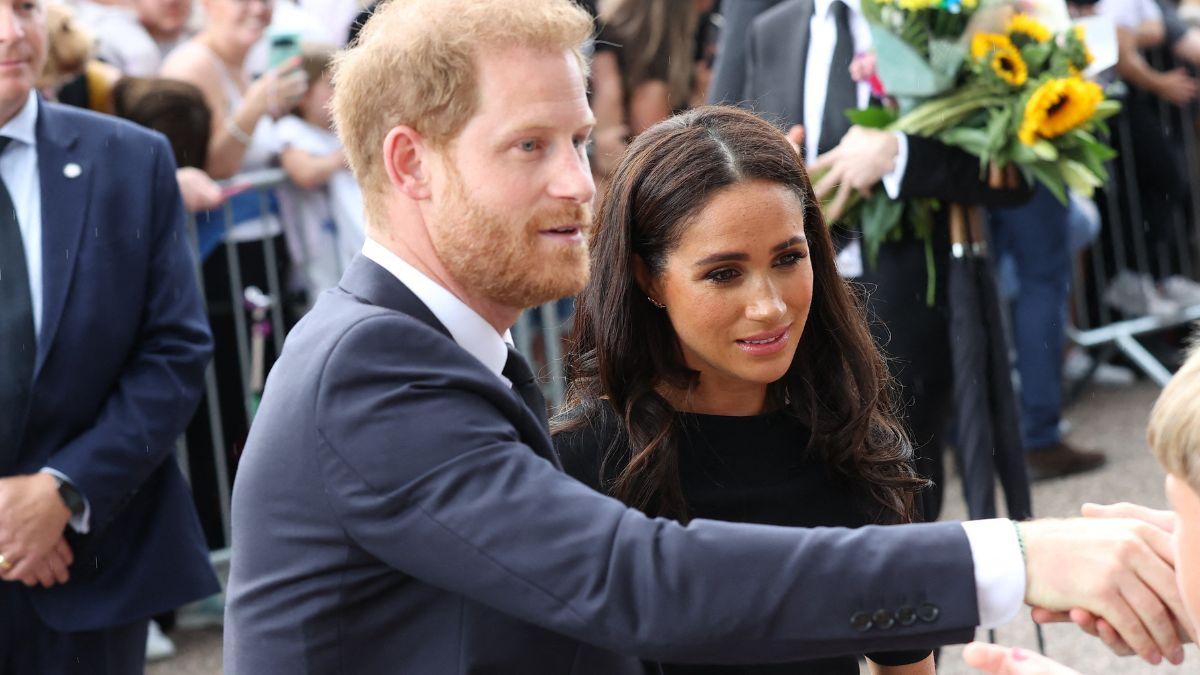
The departure of Meghan Markle and Prince Harry had far-reaching implications for the British monarchy. It created a significant void, particularly given Harry’s popularity and his role in modernizing the royal image. The ensuing public and media narrative was often polarized, with some supporting the Sussexes’ quest for independence and others criticizing what they perceived as a betrayal of duty. The global media coverage intensified, putting the Royal Family under an unprecedented spotlight.
The revelations that followed their move to the United States, including a bombshell interview with Oprah Winfrey and later a Netflix docuseries and Harry’s memoir, further exposed internal family rifts and challenged the monarchy’s traditional "never complain, never explain" approach. These public disclosures, which detailed claims of racism and a lack of support from within the institution, undoubtedly added to the Queen’s burdens in her final years. The book’s assertion that the Sussexes caused "distress" finds resonance in the context of these highly public and often damaging events.
The Queen’s Enduring Legacy Amidst Turmoil
Queen Elizabeth II consistently prioritized the stability and continuity of the Crown above all else. During her long reign, she navigated numerous personal and national crises with unwavering dedication. The challenges posed by Prince Andrew’s association with convicted s*x offender Jeffrey Epstein and the political controversies surrounding then-Prime Minister Boris Johnson, particularly the "Partygate" scandal, also contributed to the difficult landscape of her later years. These concurrent pressures meant that the issues with the Sussexes were not isolated but part of a broader period of strain for the monarch.
The book underscores that the Queen’s stoicism and sense of duty remained undimmed, even as she faced these profound personal and institutional challenges. Her passing in September 2022 marked the end of an era, but the ripple effects of the decisions made by Meghan Markle and Prince Harry continue to shape the narrative and future trajectory of the British monarchy. Their relationship, from its fairytale beginning to its contentious evolution, will undoubtedly remain a significant chapter in the history of the modern Royal Family, and a source of considerable discussion for royal historians and biographers for years to come.