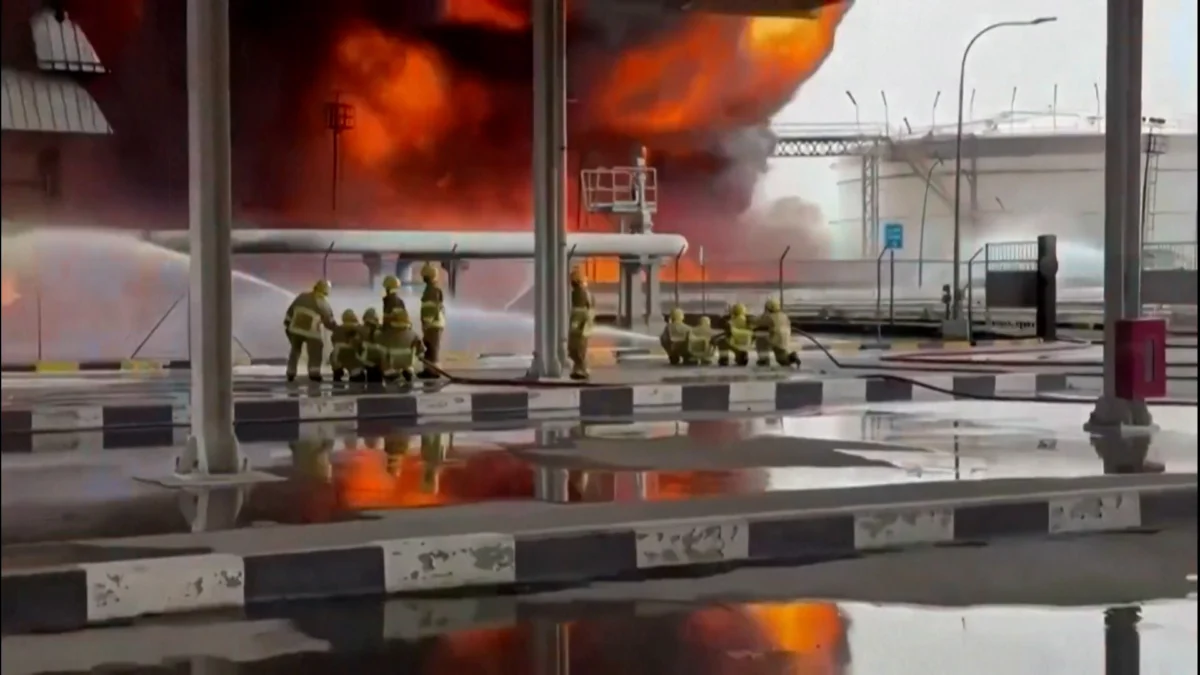
Thick plumes of black smoke billowed into the Kuwaiti sky on Saturday as suspected Iranian drone strikes inflicted significant damage upon key infrastructure at Kuwait International Airport, including vital radar systems and fuel storage facilities, according to state media reports. The precise nature of the attack and the full extent of the damage are still being assessed, but initial reports indicate a severe disruption to airport operations. Fortunately, no fatalities have been reported in the immediate aftermath of the strikes, a stark contrast to the escalating regional tensions that have seen such attacks become an increasingly grim reality.
The airport, a vital hub for regional and international travel, has become a focal point in the ongoing proxy conflicts and heightened hostilities that have engulfed the Middle East. This latest incident marks a significant escalation, directly impacting a civilian aviation facility and raising serious concerns about the safety and security of air travel in the region. The timing of the strikes, amidst a protracted period of heightened geopolitical stress, suggests a deliberate targeting aimed at disrupting critical infrastructure and signaling a broader, more aggressive stance by the perpetrators.
Escalation in Regional Airspace Incursions
The attack on Kuwait International Airport is not an isolated event but rather an alarming development within a rapidly deteriorating security landscape. For months, the region has been on edge, with a series of incidents pointing towards a deliberate pattern of aggression. The US-Israeli war on Iran, a conflict that has been simmering for an extended period, has unfortunately spilled over into neighboring territories, creating a volatile environment where civilian infrastructure is increasingly vulnerable. This latest strike underscores the growing reach and sophistication of drone warfare, now being employed to target strategically important locations far from direct conflict zones.
Radar systems, essential for air traffic control and the safe navigation of aircraft, are critical components of any modern airport. Their damage directly compromises the ability of the airport to function, potentially grounding flights and rerouting traffic. Furthermore, the targeting of fuel storage facilities presents a significant fire hazard and poses a long-term challenge for restoring full operational capacity. The scale of the damage to these facilities will dictate the timeline for any potential resumption of normal airport operations and the extent of the economic fallout.
Background of the US-Israeli War on Iran and Regional Tensions
The broader context for these strikes lies in the protracted and multifaceted conflict often referred to as the US-Israeli war on Iran. This conflict, while not a direct, declared war between sovereign nations in the traditional sense, has manifested through a series of proxy engagements, cyberattacks, economic sanctions, and targeted assassinations across the Middle East. Iran has consistently accused the United States and Israel of instigating and perpetuating this conflict, employing a strategy of asymmetric warfare and support for various regional actors to counter perceived threats.
In response to these perceived aggressions, Iran and its allied groups have been accused of orchestrating retaliatory actions. These actions have ranged from attacks on shipping in the Persian Gulf to strikes against military installations and, increasingly, civilian infrastructure in countries perceived as aligned with the US and Israel. The use of drones, with their relative low cost and increasing range and payload capabilities, has become a favored tool in this asymmetric warfare. Kuwait, situated in a strategically sensitive location bordering Iraq and Saudi Arabia, and possessing significant oil reserves, has often found itself caught in the crossfire of these regional power struggles.
Timeline of the Kuwait Airport Drone Strikes
The events unfolded rapidly on Saturday morning, beginning with reports of unusual aerial activity over Kuwait International Airport. Eyewitness accounts and initial emergency service responses confirmed the presence of drones in the airspace surrounding the facility. Shortly thereafter, explosions were heard, followed by the visible eruption of thick, black smoke from multiple locations within the airport perimeter.
The Kuwaiti Ministry of Interior, in a preliminary statement released through state news agency KUNA, confirmed that "explosions were heard and smoke was observed" at the airport. The statement alluded to the possibility of drone activity, initiating immediate investigations by security forces. Further updates from state media, citing unnamed security officials, pointed towards a coordinated drone attack targeting specific areas of the airport. The focus of the damage was quickly identified as the air traffic control radar installations and adjacent fuel storage depots.
Emergency services were immediately deployed to the scene, working to contain any potential fires and assess the extent of the damage. The immediate priority was to ensure the safety of any personnel still within the affected areas and to prevent the escalation of fires. Fortunately, the lack of reported fatalities, while a significant relief, does not diminish the severity of the attack on critical infrastructure.
Analysis: Strategic Implications of Targeting Airport Infrastructure
The targeting of a major international airport represents a significant strategic escalation by any actor employing such tactics. Beyond the immediate physical damage, the implications are far-reaching and designed to exert maximum pressure. By striking at the heart of a nation’s logistical and economic arteries, the attackers aim to sow widespread disruption and instill a sense of vulnerability.
The choice of radar systems is particularly telling. These are the eyes and ears of air traffic control, essential for the safe and efficient operation of any airport. Disabling them not only halts air traffic but also raises serious questions about the security of airspace in the broader region. The damage to fuel storage facilities, meanwhile, directly impacts the operational capacity of the airport for an extended period, creating logistical nightmares for airlines and travelers alike.
This attack can be interpreted as a clear message from Iran or its proxies, demonstrating their ability to strike at sensitive civilian targets within territories allied with their adversaries. It serves as a potent reminder of the asymmetric capabilities at their disposal and their willingness to employ them to achieve strategic objectives, even at the risk of international condemnation and further isolation.
Broader Impact on Regional Aviation and Global Trade
The repercussions of such an attack extend far beyond Kuwait’s borders. Kuwait International Airport is a significant transit point for passengers and cargo moving between Europe, Asia, and Africa. Disruptions to its operations can trigger a domino effect, leading to flight cancellations, delays, and rerouting that impact numerous airlines and their schedules. This, in turn, can affect global supply chains, leading to increased shipping costs and potential shortages of goods.
For the aviation industry, already navigating a complex geopolitical landscape, this incident adds another layer of uncertainty. Airlines will likely reassess flight paths and consider the security implications of operating in and out of the region. Increased insurance premiums for flights operating in the Middle East could also become a reality, further impacting the cost of air travel.
Furthermore, the psychological impact on travelers and the global perception of the region’s stability are significant. Such attacks erode confidence in the safety of travel and can deter tourism and foreign investment, with long-term economic consequences for Kuwait and its neighbors.
Public Reaction and Government Response
News of the drone strikes spread rapidly through social media and state-controlled news channels, eliciting a mixture of shock, anger, and concern among the Kuwaiti populace. Many expressed fear for the safety of their loved ones who might be traveling or working at the airport. The government of Kuwait, while confirming the incident, has been cautious in its public statements, likely seeking to avoid further inflaming regional tensions while also assuring its citizens of its commitment to security.
The Kuwaiti authorities have vowed to conduct a thorough investigation into the incident and to hold those responsible accountable. This will likely involve close cooperation with international partners, particularly the United States and other Gulf Cooperation Council (GCC) states, who share similar concerns about regional security. The government will be under pressure to demonstrate its ability to protect its sovereign territory and to prevent future attacks.
The incident also raises questions about the effectiveness of existing regional security mechanisms and the need for enhanced air defense capabilities. Discussions are expected to intensify regarding the deployment of more advanced surveillance systems and the strengthening of joint security protocols to counter the growing threat of drone warfare.
Future Implications and Next Steps
The attack on Kuwait International Airport is a stark reminder of the persistent and evolving nature of conflict in the Middle East. The use of drones as weapons of war is no longer a theoretical threat but a tangible reality with the capacity to inflict significant damage and disrupt civilian life.
Moving forward, several key developments are anticipated. Firstly, a period of heightened diplomatic activity is expected as regional powers and their international allies engage in intense consultations to de-escalate the situation and prevent further escalation. Secondly, security measures at airports and other critical infrastructure across the region are likely to be significantly upgraded. This may include enhanced aerial surveillance, improved air defense systems, and stricter protocols for identifying and intercepting Unmanned Aerial Vehicles (UAVs).
Thirdly, the economic impact on Kuwait will be a significant concern. The cost of repairs, the potential loss of tourism and trade, and the increased insurance premiums for air travel will all contribute to a challenging economic outlook. The government will need to implement robust measures to mitigate these economic consequences and to restore confidence in Kuwait’s stability and security.
Finally, the international community will be watching closely to see how this incident plays out. The response from major global powers will be crucial in shaping the future trajectory of regional security. The continued use of such tactics by state and non-state actors alike threatens to plunge the region into further instability, with potentially devastating consequences for global peace and security. The ability of regional actors to find a path towards de-escalation and dialogue, rather than further aggression, will be paramount in determining the future stability of the Middle East.