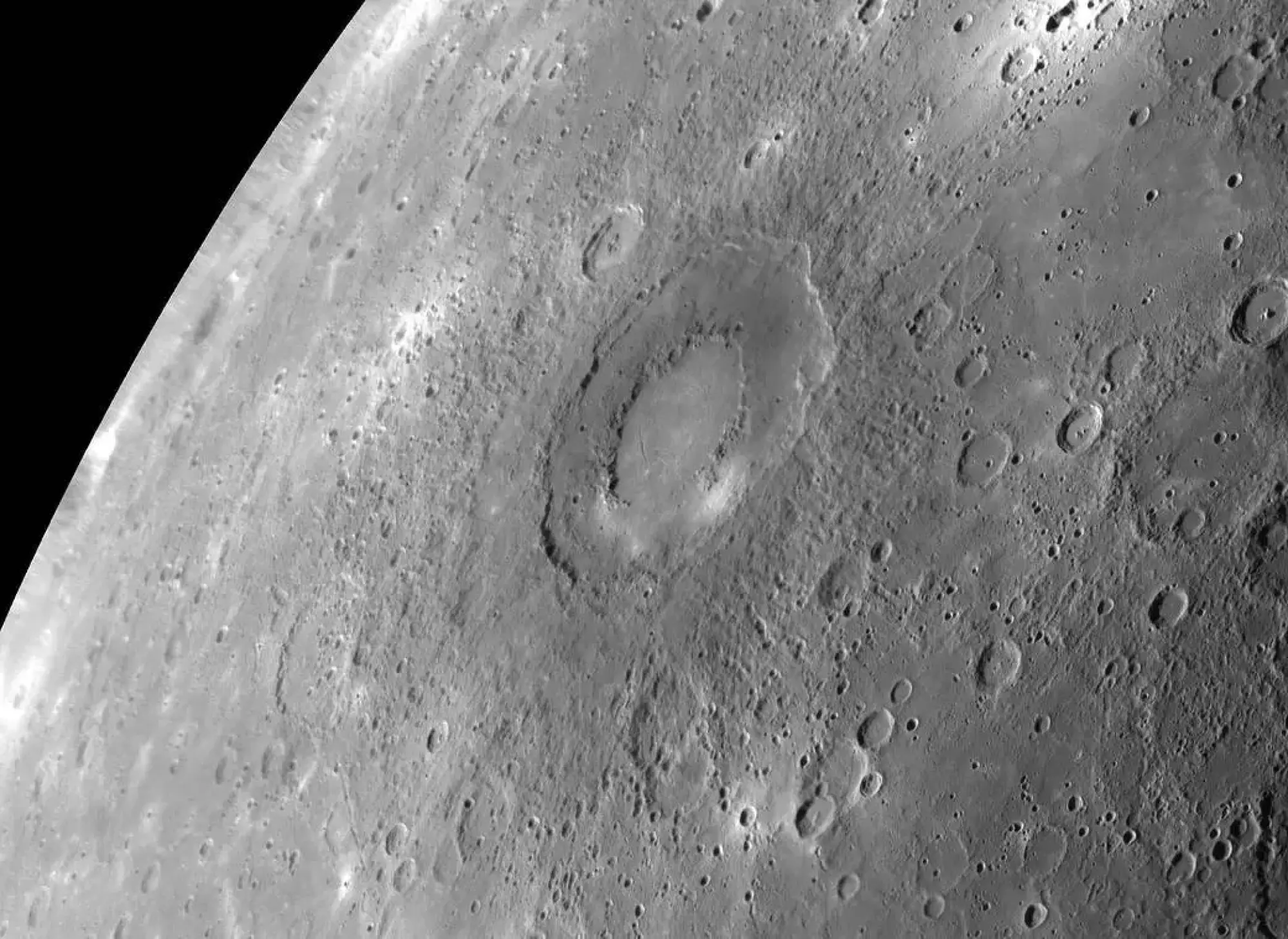
Recent geological assessments of the solar system’s smallest and innermost planet indicate that Mercury has undergone a dramatic reduction in size, with new data suggesting the contraction is 30 percent greater than previous scientific models had estimated. This discovery challenges long-held assumptions about the thermal evolution of rocky planets and suggests that the history of the solar system may be more violent and complex than previously understood.
Mercury, a scorched world orbiting closest to the sun, has been steadily losing its internal heat to the vacuum of space for approximately 4.5 billion years. This cooling process causes the planet’s massive iron core to solidify and contract, which in turn pulls the entire planetary structure inward. Because the planet’s outer crust is brittle and solid, it cannot simply shrink smoothly; instead, it buckles and cracks, creating massive geological features known as lobate scarps.
These scarps are effectively giant wrinkles on the planet’s surface, manifesting as towering cliffs and mountainous ridges that can stretch for hundreds of miles. For decades, planetary scientists used these visible markers to calculate how much Mercury had "shriveled" over eons. However, a new study led by Gaku Nishiyama, a planetary scientist at the German Aerospace Center Institute of Space Research, suggests that these visible scars only tell part of the story.
New Evidence Suggests Mercury is Shrinking Much More Than Scientists Realized
The revised calculations indicate that Mercury has lost as much as 14.5 miles (23.3 kilometers) of its total diameter since its formation. While a 14-mile reduction might seem marginal for a celestial body, it represents a significant portion of a planet that is only 3,000 miles wide. The discrepancy between old models and new findings stems from the fact that much of the planet’s tectonic record has been obscured by billions of years of cosmic activity.
"Thirty percent is a little bit surprising, but the corrected amount of contraction actually makes sense to me," Nishiyama said in a public statement regarding the research. The findings, published in the journal Geophysical Research Letters, suggest that the "missing" shrinkage was hidden beneath layers of debris and geological noise that earlier surveys failed to penetrate.
The primary culprit for this concealment is the constant barrage of meteors that have pockmarked Mercury for billions of years. Without a substantial atmosphere to burn up incoming space rocks, Mercury’s surface is a graveyard of impact craters. These impacts hurl vast amounts of shattered rock and dust across the landscape, creating a layer of regolith that acts like a gravel shroud over the planet’s tectonic features.
Geological Obstructions and the Rachmaninoff Crater
To test the hypothesis that the planet’s wrinkles were being hidden, Nishiyama’s team conducted a rigorous comparison between global maps of Mercury’s surface roughness and known maps of contraction structures. Their analysis revealed a distinct pattern: regions of the planet that appeared the most rugged and crater-dense also showed the fewest visible wrinkles.
One of the most prominent examples of this phenomenon was observed around the Rachmaninoff crater, a massive double-ring impact basin roughly 180 miles wide. In the areas surrounding this impact site, tectonic cracks and ridges seemed to vanish entirely. The researchers concluded that the sheer volume of debris ejected during the Rachmaninoff impact, along with subsequent volcanic activity in the basin, effectively buried the evidence of the planet’s shrinking crust.
By accounting for these hidden features and the "smoothing" effect of impact debris, the team was able to recalculate the total shortening of the planet’s radius. The result was a figure that aligned much more closely with theoretical models of how a planet with Mercury’s composition should behave as it cools.
Implications for Mercury’s Massive Metallic Core
The realization that Mercury is shrinking much more than scientists realized has profound implications for our understanding of the planet’s internal structure. A higher rate of contraction suggests that Mercury possesses a much larger and more volatile metal core than earlier estimates indicated. It also suggests that the core may contain fewer light elements, such as silicon or sulfur, which would have slowed the cooling process.

This oversized core has long been a point of contention among astronomers. Mercury is disproportionately dense for its size, with its iron core making up about 85 percent of the planet’s radius. In comparison, Earth’s core makes up only about half of its radius. The accelerated shrinkage supports the "Giant Impact Hypothesis," which posits that an enormous object struck a young, larger Mercury billions of years ago, stripping away most of its original rocky mantle and leaving behind a metallic husk.
Furthermore, an oversized, churning iron core helps explain one of Mercury’s greatest mysteries: its global magnetic field. Small planets usually cool so quickly that their cores become solid, ending the "dynamo" effect required to generate a magnetic field. Mercury, however, has maintained a magnetic field despite its size. The new data on its contraction provides clues into how the interior has remained active enough to sustain this field over billions of years.
Comparing Planetary Evolution Across the Solar System
Mercury is not the only rocky body in our solar system undergoing a "shrinking" phase. Earth’s Moon is also cooling and contracting, leading to "moonquakes" and the formation of similar scarp features on the lunar surface. However, the scale of Mercury’s contraction is far more extreme due to its unique composition and its proximity to the sun’s intense gravitational and thermal influence.
Understanding the mechanics of Mercury’s contraction allows scientists to refine their models for other terrestrial planets, including Earth and Mars. While Earth’s plate tectonics largely mask the effects of global cooling, Mercury serves as a "pure" laboratory for studying how a single-plate planet evolves. The findings suggest that the thermal history of a planet is written in its crust, but that reading that history requires looking past the surface-level damage caused by external factors like meteor strikes.
This research also provides a framework for studying exoplanets—planets orbiting other stars. As telescopes become more advanced, astronomers are discovering many "super-Mercuries" orbiting close to their parent stars. Knowing how our own Mercury shrinks and cools helps scientists predict the geological activity and potential magnetic protections of these distant worlds.
Future Missions and the BepiColombo Arrival
The scientific community will soon have the opportunity to verify these new findings with high-resolution data. The BepiColombo spacecraft, a joint mission between the European Space Agency (ESA) and the Japan Aerospace Exploration Agency (JAXA), is currently in the final stages of its journey to the innermost planet.
Launched in 2018, BepiColombo is scheduled to enter a stable orbit around Mercury in late 2025. The mission consists of two separate orbiters that will work in tandem to map the planet’s surface, analyze its composition, and measure its magnetic field with unprecedented precision. Unlike previous missions, BepiColombo is equipped with advanced laser altimeters that can detect minute variations in surface elevation.
These instruments will allow researchers to see "through" some of the surface roughness that hampered previous studies. By measuring the exact height and slope of the lobate scarps, BepiColombo will provide the definitive measurement of Mercury’s contraction. To date, only two missions have visited Mercury: NASA’s Mariner 10 in the 1970s and the MESSENGER mission, which orbited the planet from 2011 to 2015.
A New Chapter in Planetary Science
The discovery that Mercury is shrinking much more than scientists realized marks a significant shift in the field of planetary geology. It resolves a long-standing "tension" between observed data and physical theory, providing a more cohesive picture of how rocky worlds age.
As researchers prepare for the influx of data from BepiColombo, the focus has shifted to the broader narrative of Mercury’s life. From a violent birth involving a possible planetary collision to a middle age marked by dramatic physical shrinkage, Mercury continues to defy the expectations of a "dead" world.
The findings underscore the importance of re-evaluating old data with new methodologies. By looking at the "roughness" of the terrain rather than just the visible cracks, Nishiyama and his team have unlocked a secret that was hidden in plain sight for decades. As the smallest planet continues to cool and buckle, it remains one of the most dynamic and revealing subjects in the study of our solar system’s history.