The United States military has initiated a major new offensive in the Persian Gulf and surrounding territories as the US launches new round of airstrikes to ‘swiftly punish’ Iran after American troops killed in a Friday attack in Jordan. President Donald Trump authorized the mission, which targeted the Islamic Revolutionary Guard Corps (IRGC) and its strategic infrastructure, marking the eighth consecutive night of American kinetic operations. The strikes were concentrated in the southern Iranian province of Hormozgan, specifically targeting coastal surveillance installations, air defense batteries, and missile storage facilities.
Central Command (CENTCOM) confirmed the operations began at approximately 6:00 p.m. ET on Saturday, signaling a definitive end to the fragile ceasefire framework established just one month ago. The escalation follows a deadly strike on a U.S. position in Jordan that resulted in the deaths of two American service members, with another remains missing and four others hospitalized with critical injuries. The deaths represent the first instances of American troops being killed by direct Iranian fire since the initial phase of the current conflict, significantly raising the political and military stakes for the Trump administration.
US launches new round of airstrikes to ‘swiftly punish’ Iran after American troops killed in Jordan
The White House and the Pentagon have characterized this latest wave of strikes as a necessary response to Iranian aggression. President Trump, speaking to reporters, described the loss of American life as a "shame" and reaffirmed that the military objective remains the total prevention of Iran’s nuclear weaponization. "They did it because they don’t want to see Iran have a nuclear weapon," Trump stated, referring to the fallen service members. He added that the nature of the attack "shows you how bad" the Iranian leadership is, suggesting that diplomatic avenues have been exhausted.
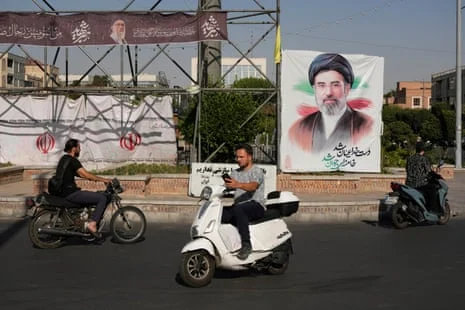
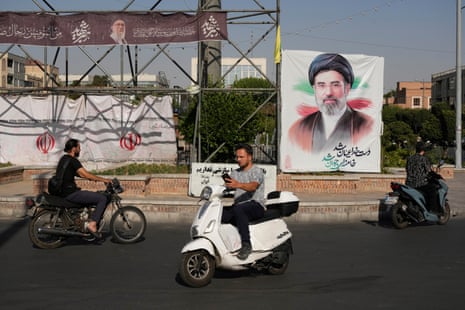
Iranian state media, including the IRNA news agency, reported that explosions were heard in the port city of Bandar Abbas and near the strategic island of Qeshm. Targets also included sites near Sirik and Hajiabad, areas critical to Iran’s control over energy shipping lanes. Tehran’s supreme leader, Mojtaba Khamenei, issued a defiant statement prior to the strikes, asserting that Washington would face "even heavier costs and further humiliation" for what he termed an illegal escalation of the conflict. The Iranian leadership has signaled that it no longer feels bound by the memorandum of understanding signed in June, a development to which President Trump responded by stating he "couldn’t care less."

Targeting the Strait of Hormuz and maritime capabilities
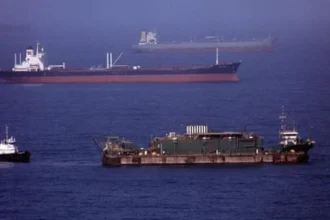
A primary objective of the Saturday night strikes was the degradation of Iran’s ability to threaten commercial shipping in the Strait of Hormuz. The US launches new round of airstrikes to ‘swiftly punish’ Iran after American troops killed specifically because the IRGC has been utilizing "unsafe routes" and "accidents" to disrupt global energy supplies. According to the IRGC-affiliated Tasnim news agency, two vessels were recently involved in "accidents" after allegedly defying Iranian warnings to avoid certain corridors. The IRGC claimed these vessels were operating with U.S. backing and warned that any ship influenced by "the words of the Americans" would face similar consequences.
The maritime dispute centers on shipping lanes within the narrow strait. The U.S. has advised commercial mariners to utilize the southern route through Omani territorial waters to minimize the risk of seizure or harassment. Conversely, Iran has attempted to force all traffic through a system of lanes in the north, close to the Iranian coastline, under the threat of military intervention. By targeting coastal surveillance and maritime capabilities, CENTCOM aims to re-establish freedom of navigation in a waterway that carries approximately one-fifth of the world’s total oil consumption.
Regional contagion and attacks on Kuwaiti infrastructure
The conflict has rapidly spread beyond the borders of Iran and the immediate U.S. military footprint, with Kuwait emerging as a primary target for Iranian retaliation. For the second time in 48 hours, Kuwaiti authorities reported that a power and water distillation plant was struck by Iranian missiles and drones. The Ministry of Electricity, Water, and Renewable Energy stated that the attack caused significant fires and forced the implementation of emergency plans to prevent a total collapse of the national power grid.
Kuwait is uniquely vulnerable to this form of hybrid warfare. As an extremely arid nation, it relies on desalination for approximately 90% of its drinking water. Iranian strikes on these civilian facilities represent a major escalation in the "infrastructure war," aiming to pressure U.S. allies by threatening their basic survival. The Kuwaiti army confirmed it was actively engaging "hostile missile and drone attacks" and warned residents that loud explosions heard across the country were the sounds of air defense systems intercepting Iranian projectiles.
Credible threats in Jordan and civil defense in Bahrain
In Jordan, the situation remains tense following the death of American troops on its soil. The U.S. Embassy in Amman issued an urgent security alert, claiming that Jordanian authorities had evacuated the international airport and seaport in the city of Aqaba due to a "specific and credible threat." While a Jordanian government spokesperson later denied that an evacuation order had been issued, the U.S. State Department continues to advise all Americans to avoid military bases, seaports, and airports in the region. The embassy had previously ordered the departure of non-emergency government employees in early March, citing unmanageable safety risks.

Simultaneously, Bahrain has become a focal point of Iranian aerial aggression. The Bahraini Defence Force reported the successful interception and destruction of several Iranian drones and missiles launched early Sunday morning. Sirens were heard throughout the capital, Manama, as the Ministry of Interior urged residents to seek immediate shelter. Bahrain, which hosts the U.S. Navy’s 5th Fleet, has been a frequent target of Iranian threats since the collapse of the ceasefire. The Bahraini government has condemned the attacks as flagrant violations of international humanitarian law, particularly the deliberate targeting of civilian areas.
US launches new round of airstrikes to ‘swiftly punish’ Iran as nuclear sites come under fire
One of the most contentious developments in the latest round of fighting involves Iran’s nuclear program. The Atomic Energy Organization of Iran claimed that U.S. forces targeted the under-construction Darkhovin nuclear power plant in Khuzestan province. According to state television, the site was hit by multiple projectiles on Sunday morning. While the U.S. has not officially commented on this specific target, the reported strike aligns with the administration’s stated goal of preventing Iranian nuclear development at any cost.
The Darkhovin site has been under construction for roughly four years and represents a significant piece of Iran’s long-term energy and strategic planning. If confirmed, a strike on a nuclear facility—even one under construction—would mark a crossing of a major red line in international conflict. Military analysts suggest that while the U.S. has the capability to destroy such sites, the environmental and political fallout of hitting active or near-active nuclear infrastructure could lead to an uncontrollable regional catastrophe.
The strategic dilemma and the cost of attrition
Despite the intensity of the American response, military experts warn that the U.S. faces a difficult path toward a decisive victory. Analysis from the Center for Strategic and International Studies (CSIS) indicates that the sustained nature of the conflict is rapidly depleting U.S. stockpiles of sophisticated munitions. Estimates suggest that air defense interceptors have been depleted by nearly 50%, while the inventory of expensive cruise missiles has dropped by a third.
Furthermore, Iran maintains significant leverage through its regional proxies. Reports indicate that Tehran has requested Yemen’s Houthi rebels to prepare for a closure of the Red Sea oil route should the U.S. continue to target Iranian power infrastructure. Such a move would have immediate and devastating effects on the global economy, potentially driving energy prices to historic highs. For President Trump, these economic risks are particularly sensitive as the U.S. approaches the midterm elections, where domestic fuel prices often dictate voter sentiment.
Humanitarian impact and the toll of the renewed conflict
The human cost of the three-week escalation continues to mount. Since the war began, 16 U.S. service members have been killed and over 430 have been injured. The toll on the Iranian side is also significant; the Iranian health ministry reported on Saturday that 50 people were killed and more than 500 were injured in U.S. strikes over the past 21 days. These figures do not include the growing number of civilian casualties in allied countries like Kuwait and Bahrain, where infrastructure damage is creating long-term humanitarian challenges.
In Iraq, the violence has also touched dissident groups. A base near Irbil belonging to the Kurdistan Freedom party, an Iranian Kurdish dissident organization, was reportedly struck by a drone early Sunday. The attack wounded eight members of the group, further complicating the security landscape in northern Iraq, where various factions are being drawn into the broader U.S.-Iran confrontation.
Future outlook and the risk of all-out war
As the US launches new round of airstrikes to ‘swiftly punish’ Iran after American troops killed, the prospect of returning to the negotiating table appears remote. The rhetoric from both Washington and Tehran has shifted from tactical disagreement to existential threat. With the ceasefire effectively dead and the U.S. committed to a campaign of "degradation" against Iranian military assets, the region is bracing for a prolonged period of high-intensity conflict.
The international community remains divided on the path forward. While U.S. allies in the Gulf have largely supported the strikes as a necessary defense against Iranian expansionism, other global powers have expressed concern over the potential for a total regional collapse. For now, the focus remains on the Strait of Hormuz and the vital infrastructure that sustains the modern world, as both sides prepare for the next phase of a war that shows no signs of abating.