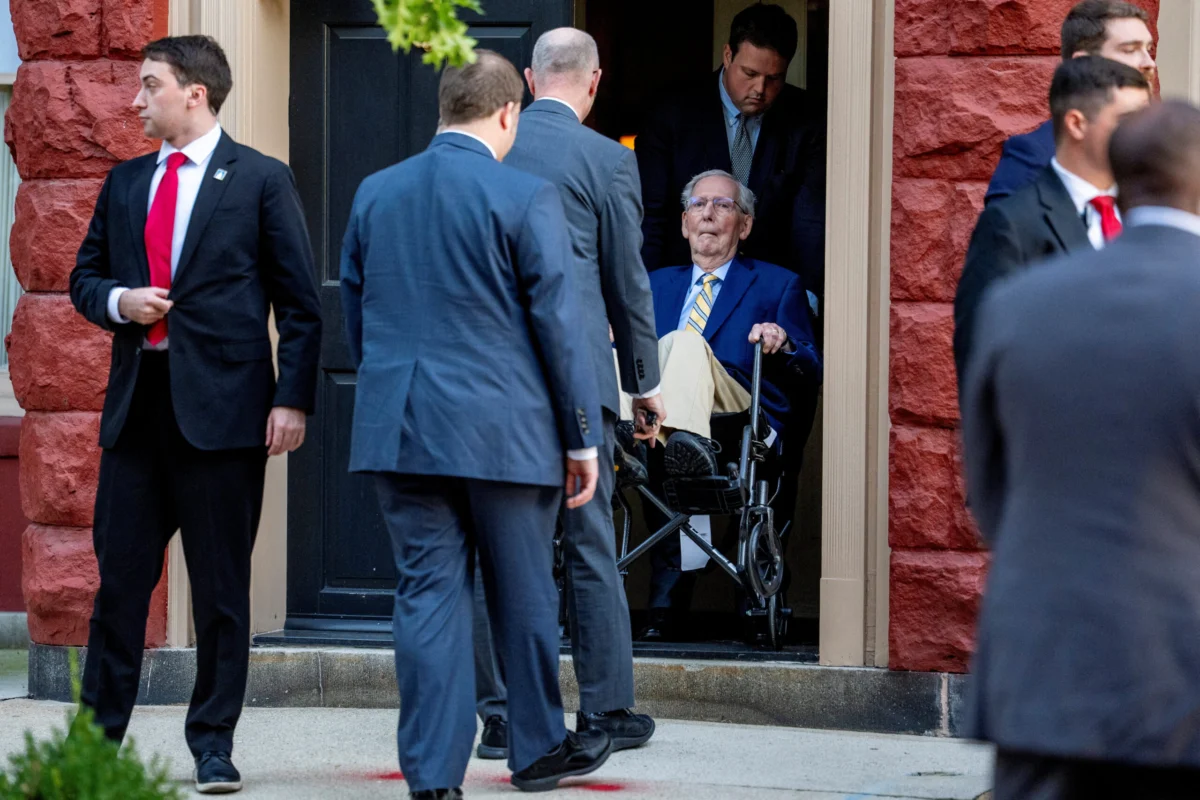
United States Senator Mitch McConnell made his highly anticipated return to the Senate floor on Monday, casting his first vote since a debilitating fall in June that kept him away from Capitol Hill for three months and ignited widespread speculation about his future in leadership. The 84-year-old Kentucky Republican, the longest-serving Senate leader in U.S. history, reappeared amidst a critical legislative period, signaling his intent to remain an active participant in key Senate decisions.
McConnell’s prolonged absence had cast a shadow over Republican strategy, particularly given the party’s slim majority in the chamber. His return, however, offers a measure of stability for his caucus, even as he openly acknowledged that his recovery is not yet complete. He admitted to reporters gathered outside the Senate chamber that he was not "quite back to 100%," attributing some of the challenges to the lingering effects of childhood polio.
"I must admit. After two years of – decades, actually – dodging your questions, I wasn’t sure how many of you would be here today," McConnell quipped to the press, his characteristic dry wit present despite the circumstances. "But I’m glad to see you. Time to get back to work, finish the job for this Congress." The remarks, delivered with a sense of purpose, aimed to assuade concerns that his health would prevent him from fulfilling his duties.
The absence of the veteran senator had amplified existing fissures within the Republican Party and created opportunities for political maneuvering by Democrats. His return is thus a significant development for the GOP, which relies heavily on his seasoned leadership and strategic acumen to navigate the complex legislative landscape. The party currently holds a narrow 53-47 majority in the Senate, making every vote and every member’s presence crucial.
The Road Back: A Three-Month Hiatus and Growing Concerns
Senator McConnell’s medical journey began in early June when he suffered a fall at his Washington, D.C. home. The incident led to his hospitalization and subsequent rehabilitation, marking the longest period he has been away from the Senate during his tenure as Republican leader. During his absence, questions about his cognitive and physical fitness to lead and serve resurfaced, fueled by his limited public appearances and the perceived silence from his office.
These concerns were not confined to the media or political observers. Within the Republican Party itself, there were undoubtedly private discussions and anxieties regarding the impact of McConnell’s incapacitation on their legislative agenda and their ability to present a united front. The Senate, a body where razor-thin margins often dictate the outcome of major policy battles, is particularly sensitive to the absence of any member, let alone its top Republican strategist.
In a statement posted on X, formerly Twitter, on Monday, McConnell explicitly addressed his return and his intentions. "Today, I’ll cast my first Senate vote since I took a bad fall back in June," he wrote. "I’m really looking forward to being back on the Senate floor and seeing my colleagues." The post served as a clear signal that he was ready to re-engage with his legislative responsibilities.
Political Ramifications of McConnell’s Absence
McConnell’s absence from the Senate had tangible political consequences. The bipartisan resolution passed by the Senate in August, which sought to limit President Donald Trump’s ability to engage in military action against Iran without congressional approval, highlighted the vulnerability created by his absence. The resolution passed with the support of four Republicans who broke ranks with the party, a development that may have been influenced by the leadership vacuum or the perceived opportunity for Democrats to advance their agenda.
This vote underscored the precariousness of the Republican majority and the importance of McConnell’s role in maintaining party discipline and strategizing on key votes. His ability to unite his caucus and negotiate effectively with the opposing party is a cornerstone of his leadership. His extended absence thus created a void that proved challenging for Republicans to fill.
McConnell’s Legacy and Future Tenure
Mitch McConnell’s political career is marked by his significant influence on the Senate and the judiciary. He is renowned for his strategic prowess, his disciplined approach to legislative strategy, and his instrumental role in reshaping the federal judiciary during the Trump administration. He announced in early 2023 that he would not seek an eighth term as a senator, meaning his current term will conclude in January 2027.
The health of elected officials, particularly those in senior leadership positions, inevitably becomes a subject of public interest and political consequence. For McConnell, who has served in the Senate since 1985 and as Republican leader since 2007, his continued ability to perform his duties has been a focal point of discussion.
Kentucky’s Democratic Governor, Andy Beshear, had previously raised questions about McConnell’s capacity to complete his final term, especially following a similar health scare in 2023 where he froze during a press conference. These public expressions of concern from a political opponent underscore the broader anxieties about McConnell’s long-term effectiveness and the potential implications for the state of Kentucky and the nation.
The Path Forward: Commitment Amidst Ongoing Recovery
Despite his assurance of presence for crucial votes, McConnell’s candid admission of not being at full strength suggests that his recovery will be an ongoing process. His commitment to being present for "tough votes" and when "our conference needs me" indicates a strategic understanding of his role and the demands of his position. This implies a careful management of his energy and schedule, prioritizing key legislative battles where his leadership is most vital.
The Senate’s agenda is packed with critical issues, from appropriations bills and potential government shutdowns to judicial nominations and national security matters. McConnell’s return allows him to reassert his leadership in these complex negotiations and strategic planning sessions. His presence can help rally his caucus, facilitate bipartisan discussions, and potentially steer legislative outcomes in a direction favorable to Republican interests.
His remarks about the lingering effects of polio offer a personal insight into the challenges he faces. Polio, a viral disease that can cause paralysis, has long-term consequences for those who contract it, and it is not uncommon for individuals to experience renewed or exacerbated symptoms later in life. This context adds another layer to the understanding of his current health status and the dedication required to continue serving at such a high level.
The Republican Party will be closely watching McConnell’s performance and stamina in the coming weeks and months. His ability to effectively lead and advocate for his party’s agenda will be a key factor in the GOP’s legislative successes and its overall standing as the 2024 election cycle intensifies. His return, therefore, is not merely a personal victory in his recovery but a significant strategic development for the Republican Party in the U.S. Senate. The coming legislative sessions will undoubtedly test his resolve and his capacity, but his stated commitment suggests a determination to finish his term with impact.